18 Birch Leaf Spirea
Names
Common name – Birch Leaf Spirea
Scientific name – Spiraea betulifolia
 General information
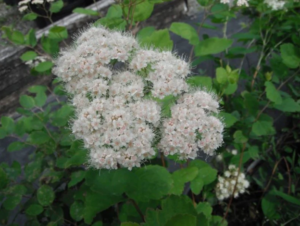
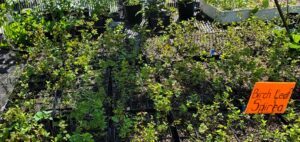
Birch Leaf Spirea (Spiraea betulifolia) is a low-growing, deciduous shrub in the rose family (Rosaceae) that typically reaches 1-4 feet in height with an equal spread. This compact, rounded shrub is characterized by its distinctive birch-like, oval to elliptical leaves that are 1-3 inches long with serrated margins and prominent veining. The plant produces dense, flat-topped clusters of tiny white to cream-colored flowers in late spring to early summer, creating a spectacular display that covers the entire shrub. In autumn, the foliage transforms into brilliant shades of red, orange, yellow, and purple. Birch leaf spirea thrives in cool climates and well-drained soils. The plant is extremely hardy and adaptable, growing in USDA zones 3-8. Indigenous peoples across its native range have recognized this species for its medicinal properties, utilizing various parts of the plant for treating digestive ailments, pain, and inflammatory conditions.
Traditional Indigenous Uses
Its leaves and roots were used to settle the stomach and ease abdominal pain, with teas and infusions prepared to treat digestive upset and diarrhea. When the body was burdened by fever or general illness, the stems and bark were boiled into a decoction to draw the heat away and restore balance. The roots, when steeped or used as an enema, served as a cleansing medicine to purify the body and support reproductive health
Teas or topical washes from the leaves soothed aching joints and rheumatism, while poultices eased minor cuts and skin irritations. The whole plant was valued for its ability to relieve general pain and headaches, bringing calm to the body after strain or sickness. Its flowers, when inhaled as steam or drunk as tea, helped clear the lungs and relieve coughs and congestion.
Beyond its physical healing, Birch Leaf Spirea was also used in ceremony. Burned as smoke, it cleansed the spirit and renewed the energy of those who carried heavy burdens. Its antioxidant properties made it a daily tonic for maintaining strength and vitality.
Biochemical Compounds and Their Medicinal Properties
- Flavonoids (Primary Bioactive Compounds)
Three Most Important Compounds:
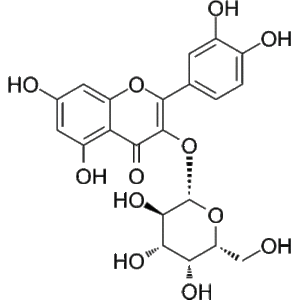
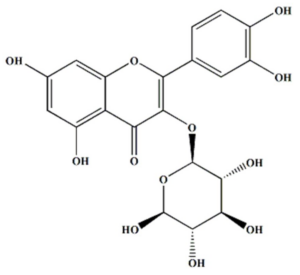
- Hyperoside (Quercetin-3-O-galactoside) (C₂₁H₂₀O₁₂) – 3.36-9.99 mg/g
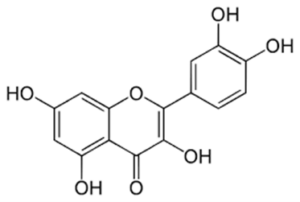
- Quercetin (C₁₅H₁₀O₇) – 2.86-5.07 mg/g
- Isoquercitrin (Quercetin-3-O-glucoside) (C₂₁H₂₀O₁₂)
 Medicinal Properties:
- Anti-inflammatory: Inhibits cyclooxygenase and lipoxygenase pathways
- Antioxidant: Powerful free radical scavenging activity
- Hepatoprotective: Protects liver cells from oxidative damage
- Antimicrobial: Broad-spectrum antibacterial and antifungal effects
- Phenolic Acids (Supporting Compounds)
Three Most Important Compounds:
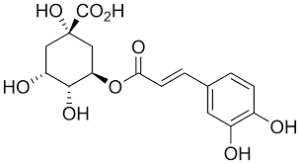
- Chlorogenic Acid (C₁₆H₁₈O₉) – High concentration in vitro cultures
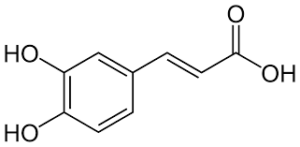
- Caffeic Acid (C₉H₈O₄)
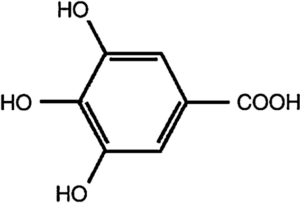
- Gallic Acid (C₇H₆O₅)
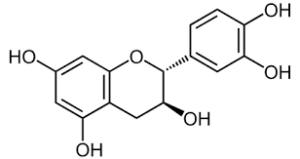
- Catechins and Proanthocyanidins
Most Important Compound:
Catechin (C₁₅H₁₄O₆)
Proposed Biochemical Mechanisms for Traditional Uses
Digestive Aid (Leaf Teas)
- Flavonoids (hyperoside, quercetin) provide:
- Anti-inflammatory effects in gastrointestinal tract
- Spasmolytic action on smooth muscle
- Antimicrobial activity against pathogenic bacteria
- Phenolic acids contribute:
- Astringent properties for diarrhea control
- Anti-inflammatory effects on intestinal mucosa
- Protection against oxidative stress in gut tissues
Anti-inflammatory Effects (Various Preparations)
- Quercetin derivatives inhibit:
- Nuclear factor-κB (NF-κB) activation
- Inflammatory mediator release (TNF-α, IL-1β, IL-6)
- Cyclooxygenase-2 (COX-2) enzyme activity
- Catechins provide:
- Direct radical scavenging
- Metal chelation properties
- Membrane stabilization effects
Pain Relief (Root Decoctions)
- Flavonoid compounds act through:
- Inhibition of pain mediators (prostaglandins, leukotrienes)
- Modulation of nociceptor sensitivity
- Central nervous system analgesic effects
- Phenolic compounds provide:
- Local anesthetic properties
- Anti-inflammatory action at pain sites
- Improved microcirculation
Chemical Reactions and Molecular Interactions
Anti-inflammatory Mechanism (Quercetin)
Quercetin → NF-κB inhibition → ↓ IκB degradation → Reduced translocation to nucleus → ↓ Inflammatory gene transcription
Quercetin → COX-2 enzyme inhibition → ↓ PGE₂ synthesis → Reduced inflammation and pain
Antioxidant Mechanism (Flavonoids)
Hyperoside + ROS → Oxidized hyperoside + H₂O (Radical scavenging)
Quercetin + O₂•⁻ → Quercetin radical + H₂O₂ (Superoxide dismutase-like activity)
Catechin + Fe³⁺ → Catechin-Fe complex (Metal chelation and Fenton reaction prevention)
Digestive Support Mechanism (Multiple Compounds)
Phenolic acids → Bacterial membrane disruption → Antimicrobial effect
Flavonoids → Smooth muscle relaxation → ↓ Intestinal spasms → Pain relief and improved digestion
Catechins → Astringent action → Reduced intestinal secretions → Antidiarrheal effect
Hepatoprotective Pathway (Flavonoids)
Quercetin → Nrf2 activation → ↑ Antioxidant enzyme expression → Enhanced cellular defense against oxidative stress
Hyperoside → Mitochondrial protection → ↓ Hepatocyte apoptosis → Liver cell preservation and regeneration
Bioactivity and Modern Research Validation
Antioxidant Activity
Research has confirmed that S. betulifolia exhibits significant antioxidant properties with IC₅₀ values demonstrating potent free radical scavenging activity. The high flavonoid content, particularly hyperoside and quercetin, accounts for these effects through multiple mechanisms including direct radical neutralization and metal chelation.
Anti-inflammatory Effects
Modern studies validate traditional anti-inflammatory uses, showing that extracts inhibit pro-inflammatory cytokines and mediators. The quercetin derivatives are particularly effective in reducing inflammation through NF-κB pathway modulation.
Antimicrobial Properties
The plant’s phenolic compounds demonstrate broad-spectrum antimicrobial activity against both gram-positive and gram-negative bacteria, supporting traditional uses for treating infections and digestive disorders.
Safety and Traditional Preparation Methods
Traditional Indigenous preparation methods emphasize proper dosing and preparation techniques that maximize therapeutic benefits while minimizing potential adverse effects. The use of whole plant preparations rather than isolated compounds provides natural buffering and synergistic effects that enhance safety profiles.
References
1) Elders and Community members of the Cayoose Creek Band of Sekw’el’was
2) Kostikova, V. A., & Petrova, N. V. (2021). Phytoconstituents and bioactivity of plants of the genus Spiraea (Rosaceae): A review. International Journal of Molecular Sciences, 22(20), 11163. https://doi.org/10.3390/ijms222011163
3) Muraseva, D. S., & Kostikova, V. A. (2021). In vitro propagation of Spiraea betulifolia aemiliana (Rosaceae) and comparative analysis of phenolic compounds of microclones and intact plants. Plant Cell, Tissue and Organ Culture, 144, 493–504. https://doi.org/10.1007/s11240-020-01971-7
4) Zheleznichenko, T. V., Muraseva, D. S., Erst, A. S., Kuznetsov, A. A., Kulikovskiy, M. S., & Kostikova, V. A. (2023). The influence of solid and liquid systems in vitro on the growth and biosynthetic characteristics of microshoot culture of Spiraea betulifolia aemiliana. International Journal of Molecular Sciences, 24(3), 2362. https://doi.org/10.3390/ijms24032362
5) Kostikova, V. A., & Shaldaeva, T. M. (2017). The antioxidant activity of the Russian Far East representatives of the genus Spiraea (Rosaceae Juss.). Russian Journal of Bioorganic Chemistry, 43, 790–794. https://doi.org/10.1134/S1068162017070081
6) Lis, R. (2020). Spiraea lucida (syn. Spiraea betulifolia lucida)—Flora of North America, Vol. 9. Flora of North America Association. https://floranorthamerica.org/Spiraea_lucida Flora North America
7) Moerman, D. E. (n.d.). Spiraea betulifolia Pallas—Native American Ethnobotany (BRIT). Retrieved September 16, 2025, from https://naeb.brit.org
8) Li, Y., Yao, J., Han, C., Yang, J., Chaudhry, M. T., Wang, S., Liu, H., & Yin, Y. (2016). Quercetin, inflammation and immunity. Nutrients, 8(3), 167. https://doi.org/10.3390/nu8030167