78 Wild Strawberry
Names
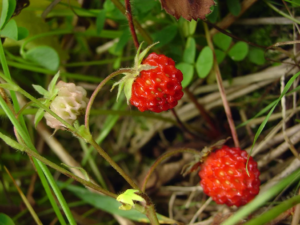
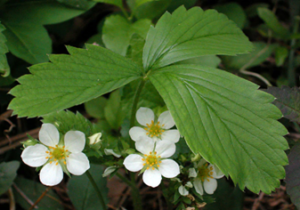
Common name – Wild Strawberry
Scientific name – Fragaria virginiana
Other names – skw’eláp
General Information
Wild Strawberry, primarily Fragaria virginiana (Wild Strawberry) and Fragaria vesca (Woodland Strawberry), holds profound cultural and medicinal significance for Indigenous peoples across North America. These small, perennial plants of the Rose family (Rosaceae) are revered not only for their nutritious fruits but also for the therapeutic properties of their leaves, roots, and runners. In many Indigenous traditions, the strawberry is considered sacred – the “leader of all plants” and often associated with the heart, love, and the life force itself. The entire plant contains a rich array of bioactive compounds including ellagitannins, flavonoids, phenolic acids, and vitamin C, which contribute to its wide-ranging medicinal applications. Traditional Indigenous knowledge systems have recognized wild strawberry as a gentle yet effective remedy for numerous ailments, particularly those affecting the digestive system, skin, and urogenital tract.
Traditional Indigenous Uses
Its leaves were steeped into gentle teas that supported the body’s water flow, cleansing the kidneys and bladder and helping those who suffered from urinary troubles or water retention. These same teas were used for heart and circulation health, believed to strengthen the spirit and calm the emotions. For women, the leaves were taken as a mild infusion and they brought balance to the body, easing menstrual irregularities and supporting the womb during pregnancy.
The roots, when prepared as astringent teas, were used to calm diarrhea and settle the stomach, while the leaves, chewed fresh or dried into poultices, were pressed onto burns, sores, or cuts to cool inflammation and draw out infection. They were also used as washes for the eyes, to soothe redness and irritation caused by smoke or illness. When mixed with animal fat, the leaves and runners formed salves that treated rashes, eczema, and skin infections, restoring the skin’s strength and softness. During fever or weakness, a cold infusion of the entire plant was given to bring the body back to balance and renew its energy.
Biochemical Basis for Medicinal Properties
Primary Bioactive Compounds
1. Ellagitannins (Hydrolyzable Tannins)
Major Ellagitannins in Fragaria:
- Agrimoniin – Primary ellagitannin
- Potentillin – Secondary ellagitannin
- Sanguiin H-6 – Complex ellagitannin
- Lambertianin C – Large molecular weight ellagitannin
Properties:
- Strong astringent activity
- Antimicrobial effects
- Anti-inflammatory properties
- Antioxidant capacity
- Wound healing promotion
2. Ellagic Acid and Derivatives
Ellagic Acid
- Chemical Formula: C₁₄H₆O₈
- Source: Released from ellagitannin hydrolysis
- Concentration: Variable in leaves and fruits
- Properties: Potent antioxidant, anti-inflammatory, antimicrobial
Ellagic Acid Glycosides:
- Enhanced bioavailability
- Improved water solubility
- Extended biological activity
3. Flavonoids
Quercetin and Derivatives
- Quercetin-3-glucoside (Isoquercitrin)
- Quercetin-3-glucuronide
- Properties: Anti-inflammatory, antioxidant, cardiovascular protective
Kaempferol Derivatives
- Kaempferol-3-glucoside
- Properties: Antioxidant, anti-inflammatory, diuretic
Catechins and Proanthocyanidins
- (-)-Epicatechin
- Procyanidin dimers and oligomers
- Properties: Vascular protective, astringent, antimicrobial
4. Phenolic Acids
Hydroxybenzoic Acids
- Gallic acid – Strong antioxidant
- Ellagic acid precursors
Hydroxycinnamic Acids
- Caffeic acid – Anti-inflammatory
- Chlorogenic acid – Antioxidant, antimicrobial
- Ferulic acid – Antioxidant, wound healing
5. Additional Bioactive Compounds
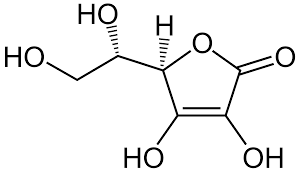
Vitamin C (Ascorbic Acid)
- High concentrations in leaves and fruits
- Antiscorbutic properties
- Immune system support
- Collagen synthesis
Organic Acids
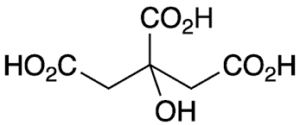
- Citric acid – Antimicrobial, preservation
- Malic acid – Flavor, antimicrobial
- Quinic acid – Astringent properties
Chemical Structures of some Key Compounds
Ellagic Acid

Citric Acid
Vitamin C
Caffeic Acid
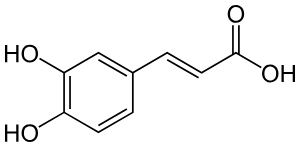
Mechanism of Action
Astringent Properties
- Protein precipitation by tannins and ellagitannins
- Tissue contraction reducing inflammation and bleeding
- Antimicrobial activity through protein binding in pathogens
- Wound healing through tissue tightening and protection
Antioxidant Mechanisms
- Free radical scavenging by phenolic compounds
- Metal chelation by flavonoids and ellagic acid
- Enzyme protection (catalase, superoxide dismutase)
- Lipid peroxidation inhibition
Anti-inflammatory Activity
- Cyclooxygenase (COX) inhibition by flavonoids
- Lipoxygenase inhibition by ellagic acid
- Nuclear factor-κB (NF-κB) pathway modulation
- Cytokine production reduction (TNF-α, IL-1β, IL-6)
Diuretic Effects
- Osmotic activity of organic compounds
- Kidney function enhancement through flavonoids
- Electrolyte balance regulation
- Renal blood flow improvement
Antimicrobial Activity
- Cell membrane disruption by tannins
- Protein denaturation in microbial cells
- DNA binding by ellagic acid
- Biofilm inhibition by phenolic compounds
Pharmacological Activities
| Activity | Responsible Compounds | Mechanism | Traditional Application |
| Astringent | Ellagitannins, condensed tannins | Protein precipitation, tissue contraction | Diarrhea, wounds, skin conditions |
| Anti-inflammatory | Quercetin, ellagic acid, catechins | COX/LOX inhibition, cytokine modulation | Skin inflammation, digestive irritation |
| Antioxidant | Ellagic acid, flavonoids, vitamin C | Free radical scavenging, metal chelation | General health, aging, wound healing |
| Diuretic | Flavonoid glycosides, organic acids | Kidney function enhancement | Urinary tract health, edema |
| Antimicrobial | Ellagitannins, phenolic acids | Cell membrane disruption, protein binding | Infections, wound care |
| Cardioprotective | Proanthocyanidins, flavonoids | Vascular protection, circulation improvement | Heart health, circulation |
Biochemical Reactions
Ellagitannin Hydrolysis
Ellagitannin + H₂O → [Enzymatic/Acid hydrolysis] → Ellagic acid + Glucose + Gallic acid
Antioxidant Reaction (Ellagic Acid)
Ellagic acid + Free Radical → Ellagic acid radical + Neutralized radical ↓ Stable quinone form
Tannin-Protein Binding
Tannin + Protein → Tannin-Protein Complex (Precipitate)
Flavonoid Metal Chelation
Quercetin + Metal Ion (Fe³⁺, Cu²⁺) → Quercetin-Metal Complex
Safety and Dosage Considerations
Safety Profile
- Generally safe when used in traditional preparations
- Low toxicity compared to many medicinal plants
- Possible allergic reactions in sensitive individuals
- Mild gastrointestinal effects with excessive use
Traditional Dosage Guidelines
- Leaf tea: 1-2 teaspoons dried leaves per cup of hot water
- Root decoction: Small amounts, well-diluted for astringent effects
- Fresh applications: Direct application of chewed leaves for topical use
- Maintenance doses: Regular, small amounts for ongoing health support
Modern Research Validation
Confirmed Activities
- Antioxidant properties: Extensively validated through multiple assay methods
- Anti-inflammatory effects: Confirmed in various laboratory and clinical studies
- Antimicrobial activity: Demonstrated against bacteria, fungi, and viruses
- Astringent properties: Validated for wound healing and digestive health
- Cardiovascular benefits: Supported by research on flavonoids and proanthocyanidins
Clinical Applications
- Topical preparations: Commercial products for wound care and skin health
- Dietary supplements: Standardized extracts for antioxidant support
- Functional foods: Enhanced strawberry products for health benefits
- Cosmetic applications: Anti-aging and skin protection formulations
Bioavailability and Metabolism
Absorption Patterns
- Ellagic acid: Limited absorption, converted to urolithins by gut bacteria
- Flavonoids: Variable absorption depending on glycoside forms
- Tannins: Limited systemic absorption, primarily local effects
- Vitamin C: Readily absorbed, water-soluble
Metabolic Pathways
Ellagitannins → [Gut bacteria] → Urolithins A, B, C, D Flavonoid glycosides → [Intestinal enzymes] → Aglycones + Sugars
Important Disclaimers
Cultural Respect: Wild strawberry holds sacred significance in many Indigenous traditions. This information should be approached with respect for Indigenous knowledge systems and cultural protocols.
Medical Disclaimer: This information is provided for educational purposes only. Traditional preparations should not be attempted without proper guidance from qualified practitioners familiar with both traditional methods and modern safety considerations.
Sustainable Harvesting: Always follow sustainable harvesting practices and respect local regulations. Wild strawberry populations should be preserved for future generations and ecosystem health.
Identification Accuracy: Proper botanical identification is essential. While wild strawberries are generally safe, other plants may be confused with them. Always ensure correct identification before any medicinal use.
References
1) Elders and Community members of the Cayoose Creek Band of Sekw’el’was
2) Staudt, G. (2020, November 5). Fragaria virginiana subsp. virginiana. In Flora of North America North of Mexico (Vol. 9). Flora of North America Association. https://floranorthamerica.org/Fragaria_virginiana_subsp._virginiana
3) Moerman, D. E. (1998). Native American ethnobotany. Timber Press
4) Turner, N. J. (1995). Food plants of coastal First Peoples. Royal BC Museum / UBC Press
5) Vrhovsek, U., Guella, G., Gasperotti, M., Pojer, E., Zancato, M., & Mattivi, F. (2012). Clarifying the identity of the main ellagitannin in the fruit of the strawberry (Fragaria vesca and Fragaria × ananassa Duch.). Journal of Agricultural and Food Chemistry, 60(10), 2507–2516. https://doi.org/10.1021/jf2052256
6) Giampieri, F., Tulipani, S., Alvarez-Suarez, J. M., Quiles, J. L., Mezzetti, B., & Battino, M. (2012). The strawberry: Composition, nutritional quality, and impact on human health. Nutrition, 28(1), 9–19. https://doi.org/10.1016/j.nut.2011.08.009
7) Kirsch, J., Jung, A., Hille, K., König, B., Hannig, C., Kölling-Speer, I., Speer, K., & Hannig, M. (2020). Effect of Fragaria vesca, Hamamelis, and tormentil on the initial bacterial colonization in situ. Archives of Oral Biology, 118, 104853. https://doi.org/10.1016/j.archoralbio.2020.104853