44 Mock-Orange
Names
Common name – Mock-Orange
Scientific name – Philadelphus lewisii
Other names – wáxwaz’, Lewis’ mock-orange, wild mock-orange, western mock-orange, or syringa
 General Information
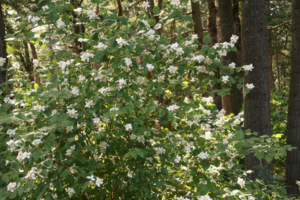
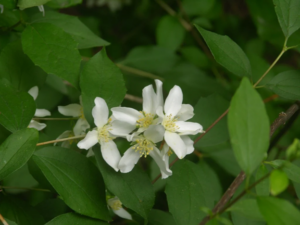
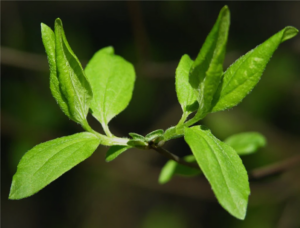
Mock-Orange (Philadelphus lewisii) is a deciduous shrub in the hydrangea family (Hydrangeaceae) native to western North America. This shrub grows 3-12 feet tall with multiple stems arising from the base, forming a rounded to vase-shaped crown. The plant is renowned for its spectacular display of fragrant, white, four-petaled flowers that bloom from June to July, resembling orange blossoms in appearance and scent, hence the common name “mock-orange.” The ovate leaves are 1-3 inches long with prominent veins and slightly toothed margins. This hardy shrub thrives in diverse habitats including rocky slopes, canyons, stream banks, open woodlands, and forest edges from near sea level to moderate mountain elevations.
Traditional Indigenous Uses
Mock-orange is remembered as a plant of both strength and gentleness – a medicine for the body and the spirit. Elders speak of how its leaves, wood, and branches were used in many ways to bring healing and balance to those in need. The dried leaves, when powdered and rubbed on the skin, helped reduce swelling and inflammation, easing the pain of sores and aching joints. The powdered wood carried similar properties, used as a dry rub to soothe muscles and calm the body after hard work or illness.
For nursing women, the fresh bruised leaves were applied as a poultice to relieve mastitis and other breast infections, bringing comfort and restoring the ability to feed their children. Infusions made from the branches were used in baths to soothe sore chests, aching muscles, and general body pain. When the branches and flowers were prepared together, the infusion became a wash for the skin, used to treat rashes, eczema, and other irritations.
The people also knew Mock- Orange as a plant that could stop bleeding. A decoction from the branches served as a hemostatic wash for wounds, helping to cleanse and close them. The leaves and bark, when mixed with water, were used as a natural soap for washing the body, cleaning wounds, and maintaining personal hygiene. Beyond its healing uses, the wood of Mock Orange was valued for its strength and was shaped into hunting tools, fishing implements, and household items, connecting the plant to daily life and survival.
The stems and branches could be boiled to make a wash for cuts and abrasions, helping to prevent infection. As a tonic, a mild tea from the bark supported general wellness and aided those recovering from sickness. The fragrant flowers were also appreciated for their calming properties; they were used fresh or dried to comfort the mind, ease the breath, and lift the spirit.
In ceremony, Mock Orange was more than a medicine – it was a protector. The whole plant was used in spiritual cleansings and blessings, bringing purification and harmony to both people and places.
Biochemical Compounds and Their Medicinal Properties
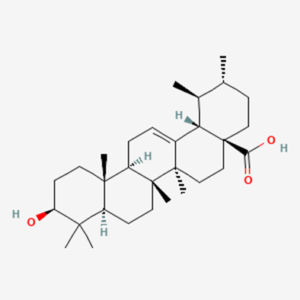
- Triterpenoid Saponins (Primary Bioactive Compounds)
Three Most Important Compounds:
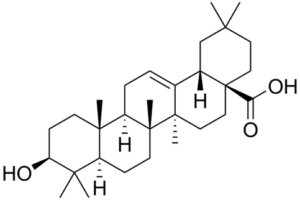
(i) Oleanolic Acid Saponins (C₃₀H₄₈O₃ + sugar moieties)
(ii) Betulinic Acid Derivatives (C₃₀H₄₈O₃)

(iii) Ursolic Acid Glycosides (C₃₀H₄₈O₃ + sugars)
 Medicinal Properties
- Anti-inflammatory: Potent inhibition of inflammatory pathways
- Antimicrobial: Broad-spectrum antibacterial and antifungal activity
- Wound healing: Enhances tissue repair and collagen synthesis
- Cleansing: Natural surfactant properties for soap-like action
- Flavonoids (Supporting Compounds)
Three Most Important Compounds:
(i) Quercetin (C₁₅H₁₀O₇) – Primary flavonol
(ii) Kaempferol (C₁₅H₁₀O₆) – Flavonol compound
(iii) Apigenin (C₁₅H₁₀O₅) – Flavone
- Phenolic Acids and Tannins
Most Important Compound:
Gallic Acid (C₇H₆O₅) – Hydrolyzable tannin precursor
Proposed Biochemical Mechanisms for Traditional Uses
Anti-inflammatory Action (Topical Powder Applications)
- Triterpenoid saponins act through:
- Nuclear factor-κB (NF-κB) pathway inhibition
- Cyclooxygenase (COX-2) enzyme suppression
- Reduced pro-inflammatory cytokine production
- Flavonoids contribute:
- Direct free radical scavenging activity
- Lipoxygenase pathway inhibition
- Antioxidant protection of inflamed tissues
Wound Healing and Antimicrobial Effects (Poultices and Washes)
- Saponins provide:
- Natural surfactant action for wound cleansing
- Antimicrobial activity disrupting bacterial membranes
- Enhanced cell membrane permeability for nutrient delivery
- Phenolic compounds facilitate:
- Astringent properties reducing bleeding
- Antimicrobial protection preventing infection
- Enhanced collagen synthesis and tissue repair
Dermatological Applications (Infusions and Soaks)
- Saponins and flavonoids act as:
- Anti-inflammatory agents reducing skin inflammation
- Antioxidants protecting skin cells from damage
- Soothing compounds reducing irritation
- Tannins provide:
- Astringent effects tightening tissues
- Antimicrobial protection for skin conditions
- Barrier protection for healing skin
Chemical Reactions and Molecular Interactions
Anti-inflammatory Mechanism (Triterpenoid Saponins)
Oleanolic acid saponins → NF-κB pathway inhibition → ↓ IκB degradation → Reduced nuclear translocation → ↓ Pro-inflammatory gene expression
Ursolic acid → COX-2 enzyme inhibition → ↓ Prostaglandin E₂ synthesis → Reduced inflammation and pain signaling
Antimicrobial Action (Saponins)
Triterpenoid saponins → Bacterial membrane disruption → Cell lysis → Cholesterol binding → Membrane destabilization → Cell death
Saponins → Fungal cell wall interaction → Ergosterol binding → Increased membrane permeability → Growth inhibition
Wound Healing Mechanism (Multiple Compounds)
Saponins → Fibroblast proliferation ↑ → Enhanced collagen synthesis → Improved tissue tensile strength → Faster healing
Flavonoids → VEGF expression ↑ → Enhanced angiogenesis → Improved blood supply → Accelerated wound closure
Hemostatic Action (Tannins + Saponins)
Gallic acid (tannins) → Protein precipitation → Blood coagulation → Clot formation → Bleeding cessation
Saponins → Vasoconstriction → Reduced blood flow → Enhanced hemostasis → Wound stabilization
Soap-like Cleansing Mechanism (Saponins)
Saponins → Amphiphilic structure → Surfactant action → Emulsification of oils/dirt → Cleansing effect
Hydrophilic head + Hydrophobic tail → Micelle formation → Dirt and bacteria removal → Hygienic cleansing
Significance
Traditional Ecological Knowledge
Indigenous practices emphasize:
- Sustainable harvesting: Selective collection preserving plant health
- Multiple applications: Wood for tools, bark/leaves for medicine and soap
- Seasonal timing: Optimal collection periods for different uses
- Cultural transmission: Knowledge passed through generations
Safety Considerations and Traditional Wisdom
Saponin Content Management
Traditional preparation methods recognize saponin properties:
- External use emphasized: Primarily topical applications reducing systemic exposure
- Proper preparation: Traditional infusion and powder methods optimize safety
- Dosage awareness: Appropriate amounts for different applications
- Soap substitute: Natural cleansing without harsh chemical exposure
Traditional Guidelines
Indigenous knowledge includes important protocols:
- Proper identification: Distinguishing mock-orange from similar species
- Sustainable collection: Harvesting practices preserving populations
- Preparation techniques: Traditional methods maximizing benefits
- Appropriate applications: Matching plant parts to specific conditions
References
1) Elders and Community members of the Cayoose Creek Band of Sekw’el’was
2) (2025). Mock orange (Philadelphus lewisii). https://calscape.org/Philadelphus-lewisii-
3) King County Native Plant Guide. (2025). Mock orange: Philadelphus lewisii. https://green2.kingcounty.gov/gonative/Plant.aspx?Act=view&PlantID=23
4) Lady Bird Johnson Wildflower Center. (2025). Philadelphus lewisii (Lewis’ mock orange). https://www.wildflower.org/plants/result.php?id_plant=phle4
5) Natural Medicinal Herbs. (2025). Mock orange (Philadelphus lewisii). https://www.naturalmedicinalherbs.net/herbs/p/philadelphus-lewisii=mock-orange.php
6) Native Plants PNW. (2025). Lewis’ mock orange (Philadelphus lewisii). https://nativeplantspnw.com/lewis-mock-orange-philadelphus-lewisii/
7) Plants for a Future (PFAF). (2025). Philadelphus lewisii (mock orange, Lewis’ mock orange). https://pfaf.org/user/plant.aspx?LatinName=Philadelphus+lewisii
8) PubMed Central. (2023, January 22). Major phytochemicals: Recent advances in health benefits and extraction method. Frontiers in Nutrition, 10, 9862941. https://doi.org/10.3389/fnut.2022.9862941
9) S. Department of Agriculture, Forest Service. (2025). Philadelphus lewisii. Fire Effects Information System. https://www.fs.fed.us/database/feis/plants/shrub/philew/all.html
10) Vancouver Waldorf School. (2025, April 13). Philadelphus lewisii | Native plant sale. https://vancouverwaldorfschool.ca/product/philadelphus-lewisii/
11) (2025, August 10). Philadelphus lewisii. https://en.wikipedia.org/wiki/Philadelphus_lewisi