75 White Clematis
Names
Common name – White Clematis
Scientific name – Clematis ligusticifolia
Other names – k’ets’usnínina
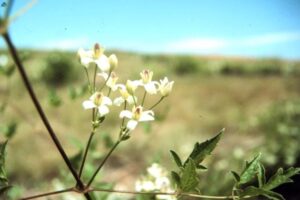
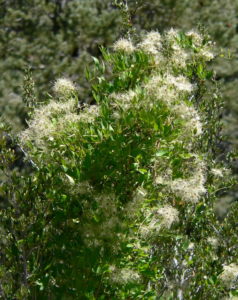
General Information
White Clematis, primarily referring to species like Clematis ligusticifolia (Western White Clematis) and Clematis virginiana (Virgin’s Bower), holds significant medicinal importance in Indigenous North American traditional medicine systems. These climbing vines, members of the Ranunculaceae family, contain potent bioactive compounds that have been carefully utilized by Native American tribes for centuries. Known for their vesicant (blister-causing) properties when used improperly, these plants require extensive traditional knowledge for safe preparation and application. Indigenous healers have developed sophisticated methods to harness their therapeutic benefits while minimizing toxicity, using them primarily for neurological conditions, skin ailments, and pain management.
Traditional Indigenous Uses
The plant was sometimes prepared in very dilute decoctions from its leaves and stems to ease migraine headaches or other sharp pains of the head. Even a few drops could calm the throbbing behind the eyes or release pressure in the temples, but the preparation had to be precise. Too much could make one ill.
Carefully prepared tinctures were used to steady the spirit in times of anxiety or restlessness, and infusions made from the stems, sometimes mixed with other plants like milkweed, were taken for backaches or deep muscle pain. The plant was also used to treat gout and rheumatism, either as a light tea or through topical applications that soothed swollen joints. In ceremonies, its stems were burned or infused for ritual use, believed to help open the mind and body to spiritual insight. The plant’s extracts, when properly prepared and controlled, were said to bring visions and guide those seeking wisdom during vision quests.
Fresh leaves were crushed into poultices to clean cuts, infections, and wounds, their antiseptic qualities helping the skin recover. The juice of the fresh plant, though caustic, was applied carefully to remove warts or bring out inflammation in localized areas.
Biochemical Basis for Medicinal Properties
Primary Bioactive Compounds
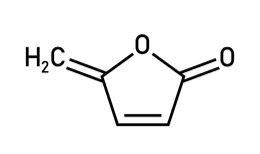
1. Protoanemonin (Primary Active Compound)
- Chemical Formula: C₅H₄O₂
- Structure: Unsaturated γ-lactone
- Properties: Highly vesicant, antimicrobial, analgesic in small doses
- Mechanism: Cell membrane disruption, enzyme inhibition
- Distribution: Higher concentrations in leaves and stems
2. Anemonin (Dimerization Product)
- Chemical Formula: C₁₀H₈O₄
- Formation: Protoanemonin dimer formed during processing
- Properties: Less toxic than protoanemonin, anti-inflammatory
- Stability: More stable compound formed during drying
3. Triterpene Saponins
Major Types:
- Oleanolic acid derivatives
- Hederagenin-based saponins
- Ursolic acid derivatives
Properties:
- Hemolytic activity
- Anti-inflammatory effects
- Cytotoxic properties
- Immunomodulatory activity
4. Flavonoids
- Quercetin derivatives
- Kaempferol glycosides
- Rutin compounds
- Properties: Antioxidant, anti-inflammatory, vascular protective
5. Additional Bioactive Compounds
- Alkaloids: Various nitrogen-containing compounds
- Lignans: Phenolic compounds with estrogenic activity
- Coumarins: Anticoagulant and antimicrobial properties
- Volatile oils: Contributing to antimicrobial effects
Chemical Structure of a Key Compound
Protoanemonin
Mechanism of Action
Vesicant Activity
- Protoanemonin action: Direct cellular damage through protein denaturation
- Inflammatory response: Localized immune activation
- Traditional use: Controlled inflammation for therapeutic purposes
Analgesic Properties
- Neuronal membrane stabilization by low-dose protoanemonin
- Inflammation reduction through saponin activity
- Endorphin release triggered by mild irritation
Antimicrobial Activity
- Cell wall disruption by protoanemonin
- Protein denaturation in microbial cells
- Oxidative stress induction in pathogens
Anti-inflammatory Mechanisms
- Cyclooxygenase (COX) inhibition by flavonoids and saponins
- Cytokine modulation through triterpene compounds
- Immune system regulation by saponin fractions
Pharmacological Activities
| Activity | Responsible Compounds | Mechanism | Traditional Application |
| Analgesic | Protoanemonin (low doses), saponins | Neuronal stabilization, inflammation reduction | Headaches, backache, joint pain |
| Antimicrobial | Protoanemonin, volatile oils | Cell membrane disruption | Skin infections, wound care |
| Anti-inflammatory | Flavonoids, triterpene saponins | COX inhibition, cytokine modulation | Rheumatism, gout, joint conditions |
| Vesicant | Protoanemonin | Direct cellular damage | Controlled therapeutic inflammation |
| Nervine | Alkaloids, low-dose protoanemonin | Neurological modulation | Nervous disorders, anxiety |
Biochemical Reactions
Protoanemonin Formation
Ranunculin (glycoside) → [Enzymatic hydrolysis] → Protoanemonin + Glucose
Protoanemonin to Anemonin Conversion
2 Protoanemonin → [Dimerization] → Anemonin
This reaction occurs naturally during plant processing and storage
Protein Interaction
Protoanemonin + Protein -SH groups → Protein-S-Protoanemonin adducts
Safety and Toxicological Considerations
Toxicity Profile
- Acute toxicity: Severe skin and mucous membrane irritation
- Systemic effects: Gastrointestinal distress, renal damage
- Lethal dose: Variable, but small amounts can cause severe reactions
Traditional Safety Measures
- Extreme dilution: Use of minute quantities
- Specific preparation methods: Traditional processing to reduce toxicity
- Experienced practitioners: Knowledge passed through generations
- External vs. internal use: Careful distinction in applications
Modern Research Validation
Confirmed Activities
- Antimicrobial properties: Validated against various pathogens
- Anti-inflammatory effects: Demonstrated in laboratory studies
- Analgesic activity: Confirmed in controlled studies
- Cytotoxic properties: Active against certain cancer cell lines
Safety Studies
- Toxicity assessments: Confirmed traditional safety concerns
- Dosage guidelines: Support for traditional dilution practices
- Preparation methods: Validation of traditional processing techniques
Important Disclaimers
Critical Safety Warning: White Clematis species are highly toxic and can cause severe skin burns, systemic poisoning, and death if improperly prepared or used. This information is provided for educational purposes only.
Cultural Respect: Traditional Indigenous knowledge represents thousands of years of accumulated wisdom and should be approached with respect. Proper cultural protocols and permissions should be observed when accessing or using traditional knowledge.
Medical Disclaimer: Never attempt to prepare or use Clematis species medicinally without extensive training and guidance from qualified practitioners. Modern medical supervision is essential for any therapeutic applications.
References
1) Elders and Community members of the Cayoose Creek Band of Sekw’el’was
2) Akbulut, S., Zengin, S., & Eroğlu, M. (2011). Phytocontact dermatitis due to Ranunculus arvensis (buttercup): An emergency medicine case. International Journal of Emergency Medicine, 4, 7. https://doi.org/10.1186/1865-1380-4-7
3) Fu, Q., Zan, K., Zhao, M., Zhou, S., Shi, S., Jiang, Y., & Tu, P. (2010). Triterpene saponins from Clematis chinensis and their potential anti-inflammatory activity. Journal of Natural Products, 73(7), 1234–1239. https://doi.org/10.1021/np100057y
4) Jin, F., Narkowicz, C., & Jacobson, G. A. (2013). Protoanemonin content variation between Clematis: Leaf, stem and root. Natural Product Communications, 8(2), 211–212. https://doi.org/10.1177/1934578X1300800220
5) Lee, T. H., Huang, N. K., Lai, T. C., Yang, A. T. Y., & Wang, G. J. (2008). Anemonin, from Clematis crassifolia, potent and selective inducible nitric oxide synthase inhibitor. Journal of Ethnopharmacology, 116(3), 518–527. https://doi.org/10.1016/j.jep.2007.12.019
6) Lin, T.-F., Wang, L., Zhang, Y., Zhang, J.-H., Zhou, D.-Y., Fang, F., Liu, L., Liu, B., & Jiang, Y.-Y. (2021). Uses, chemical compositions, pharmacological activities and toxicology of Clematidis Radix et Rhizome—A review. Journal of Ethnopharmacology, 270, 113831. https://doi.org/10.1016/j.jep.2021.113831
7) Mimaki, Y., Yokosuka, A., Hamanaka, M., Sakuma, C., Yamori, T., & Sashida, Y. (2004). Triterpene saponins from the roots of Clematis chinensis. Journal of Natural Products, 67(9), 1511–1516. https://doi.org/10.1021/np040088k
8) Sirak, B., Aragaw, M., & Tadesse, S. (2025). Ranunculin, protoanemonin, and anemonin: Pharmacological and chemical perspectives. Current Medicinal Chemistry, 32(9), 1659–1673. https://doi.org/10.2174/0109298673294080240221115830
9) Turner, N. J., Bouchard, R., & Kennedy, D. I. D. (1980). Ethnobotany of the Okanagan-Colville Indians of British Columbia and Washington. British Columbia Provincial Museum.