3 Soapberry
Names
Common name – Soapberry
Scientific Name: Shepherdia canadensis
Other Names: Xúsum, Canadian Buffaloberry, Russet Buffaloberry, Rabbitberry, Soopolallie (Soapberry in Chinook), Foamberry
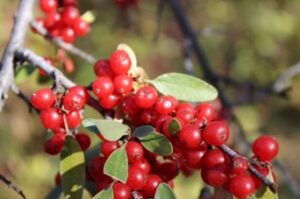
Figure 1. The bright red berries of the soapberry plant
Image Source: https://plants.hwulmuhwqun.ca/plant/sxwesum-fruit-soapberry/
General Information
Soapberry is a deciduous tree growing 25-50 feet tall with pinnately compound leaves (8-18 leaflets per leaf). The tree produces clusters of small white flowers followed by round, translucent golden-yellow berries (drupes) about 1/2-3/4 inch diameter. The berries persist on the tree through winter. Each fruit contains a single hard, black, round seed surrounded by translucent pulp. When the pulp is mixed with water, it creates a soapy lather due to high saponin content, hence the common name.
IMPORTANT: The saponin-rich pulp is toxic if ingested in quantity and should not be taken internally except in very diluted, controlled preparations.
Chemical Content: The fruit pulp contains 10-38% saponins (triterpene glycosides), making it one of the richest natural sources of saponins. The seeds contain oil (40-50%) rich in fatty acids.
Traditional Indigenous Uses
When mixed with water, the berries made a rich foam that the people used to wash their hair and skin, keeping both clean and healthy. This lather soothed rashes, dandruff, and irritations of the scalp, and helped to drive away lice. The same soapy wash was used to cool fevers and ease the heat of aching joints or swollen limbs. A poultice made from the crushed fruit could cleanse wounds and help them heal.
Beyond its physical uses, soapberry was a part of ceremony and community life. The people used its frothy lather in purification baths before gatherings, believing it could wash away bad energy and bring renewal to the spirit. The smooth, hard seeds were polished and strung into necklaces, earrings, and buttons. Though the plant was powerful, it holds compounds that can be harmful if misused. In the right hands, however, it offered cleansing for the body, beauty for the hair, and purification for the soul.
CRITICAL SAFETY WARNINGS
- Fruit pulp is TOXIC if swallowed in significant amounts
- Causes gastroenteritis, vomiting, diarrhea
- Eye irritation if soap gets in eyes
- Seeds are non-toxic but indigestible
- External use only unless under expert guidance with extreme dilution
One of the most well-known uses of soapberries is in a dessert once referred to as “Indian Ice Cream”. This is made by vigorously whisking the berries in water which produces a stiff foam which is then eaten, sometimes with the addition of sugar or sweeteners.
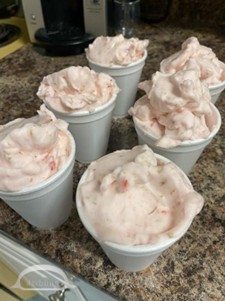
Figure 2 – Indian Ice-Cream
Image Source: https://www.guudisk.ca/2021/06/15/whipped-soap-berries/
Soapberries were also eaten to treat diabetes and heart conditions. They were also though to help ward off insects such as mosquitos. The branches of the soapberry plant were also used to create yellow dyes.
The berry of the soapberry plant contains several chemical components resulting in its unique properties. Saponins the general structure of which is shown in Figure 3 consist of a polycyclic aglycone and a sugar side chain. As a result, saponins are amphipathic which causes them to foam when mixed vigorously with water. Saponins can, however, cause gastrointestinal irritation, particularly when consumed in large quantities.
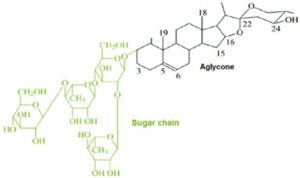 Figure 3. The general structure of a saponin
Another important constituent of soapberries is dietary fiber which includes polysaccharides like pectin and cellulose. Pectin in particular is used in making jams and preserves. Soapberries also contain other bioactive ingredients, such as a large number of polyphenols and carotenoids such as lycopene and apo-6’ lycopenoate.
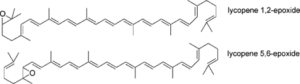
Figure 4. The structure of lycopene, one of the carotenoids found in soapberries.
Chemical Reactions and Biochemical Mechanisms
Surfactant/Detergent Properties
Micelle Formation
The Amphipathic Nature of Saponins:
In water, saponin molecules orient with:
– Hydrophobic triterpene cores facing inward (away from water)
– Hydrophilic sugar chains facing outward (toward water)
Result: Micelle formation (spherical aggregates)
Cleaning Action
Saponin micelles + Oils/dirt (lipophilic) → Oils trapped in micelle core → Micelle-oil complex soluble in water → Dirt/oil washed away
This is how soapberry works as soap!
Antimicrobial Mechanisms
Membrane Disruption
Saponins + Bacterial cell membrane → Insertion of lipophilic triterpene into lipid bilayer → Membrane destabilization → Pore formation → Leakage of cellular contents → Cell lysis and death
Particularly effective against Gram-positive bacteria
Cholesterol Interaction (Mammalian vs Bacterial Cells):
Saponins have high affinity for sterols:
In bacterial membranes (no cholesterol):
– Saponins disrupt membrane directly
– High antimicrobial activity
In mammalian cell membranes (with cholesterol):
– Saponins bind cholesterol
– Can cause toxicity (why internal use is dangerous)
– Selective toxicity basis
Fungal Activity
Saponins + Fungal ergosterol (membrane sterol) → Complex formation → Membrane disruption → Antifungal activity
Antiparasitic Effects
Helminth (Worm) Toxicity
Saponins → Damage to worm tegument (outer covering) → Paralysis of worms → Death or expulsion
Traditional use as fish poison demonstrates toxicity to lower organisms
Spermicidal/Contraceptive Action
Sperm Membrane Disruption
Saponins + Sperm cell membrane → Membrane permeabilization → Loss of motility → Cell death
Anti-Inflammatory Effects
Aglycone Anti-Inflammatory Activity
Hederagenin and oleanolic acid (aglycones) → Inhibit NF-κB pathway → Reduced pro-inflammatory cytokines (TNF-α, IL-1β, IL-6) → Anti-inflammatory effect
Also: COX-2 inhibition → Reduced prostaglandin synthesis
Wound Healing Support
Antimicrobial Protection
Saponin-containing poultice → Prevents wound infection → Cleaner healing environment
Mild Irritant Effect
Low-concentration saponins → Mild irritation → Increased local blood flow → Enhanced healing (rubefacient effect)
Hair and Scalp Benefits
Cleansing and Degreasing
Saponins remove excess sebum (oil) from scalp:
Sebum (lipophilic) + Saponin micelles → Oil solubilized and washed away → Clean scalp, reduced dandruff
Lice Treatment
Saponins + Lice exoskeleton (waxy cuticle) → Disruption of protective layer → Dehydration of lice → Death
Structure-Activity Relationships
- Amphipathic Nature: Lipophilic triterpene + hydrophilic sugars = surfactant properties (soap-like action)
- Rigid Pentacyclic Structure: Enables insertion into biological membranes; provides structural stability
- Multiple Hydroxyl Groups: Enhance water solubility; hydrogen bonding with biological targets
- Carboxyl Group at C-28: Additional site for sugar attachment; increases polarity
- Sterol-Like Structure: Mimics cholesterol/ergosterol; enables membrane sterol binding
Preparation and Safety Considerations
Traditional Preparation for External Use
- Crush 3-5 soapberries (without seeds)
- Add warm water and agitate to create lather
- Use immediately for hair washing or skin cleansing
- Rinse thoroughly
For Wound Poultice
- Use very dilute pulp extract
- Apply to intact or slightly broken skin
- Never on deep wounds or mucous membranes
CRITICAL SAFETY WARNINGS
- Toxic, causes:
- Severe gastroenteritis
- Vomiting and diarrhea
- Hemolysis (blood cell destruction)
- Kidney damage
- Potential death in large amounts
- Eye Protection: Soap lather causes severe eye irritation; flush immediately if contact occurs
- Skin Sensitivity: Some individuals may develop contact dermatitis
- Children and Pets: Keep berries away; attractive appearance but toxic
- Mucous Membranes: Do not use on genital areas, inside mouth, or other sensitive tissues (severe irritation)
- Pregnancy: External use likely safe; internal use absolutely contraindicated
- Quality Control: Wild-harvested berries may contain insect larvae; inspect carefully
References
- Riedl KM, Choski K, Wyzgoski FJ, Scheerens JC, Schwartz SJ, Reese (2013) Variation in Lycopene and Lycopenoates, Antioxidant Capacity and Fruit Quality of Buffaloberry (Shepherdia argentea [Pursh]Nutt.). Journal of Food Science. [Accessed March 15 2025] https://ift-onlinelibrary-wiley-com.ezproxy.tru.ca/doi/epdf/10.1111/1750-3841.12265
- Green RC, Low NH. (2013). Physiochemical composition of buffaloberry (Shepherdia argentea), Chokecherry (Prunus virginiana) and Sea Buckthorn (Hoppophae rhamnoides) Fruit Harvested in Saskatchewan Canada. Canadian Journal of Plant Science. [Accessed April 18]. https://doi.org/10.4141/cjps2013-087
- Hierro JN, Herrera T, Fornari T, Reglero G, Martin 2018. The Gastrointestinal Behavior of Saponins and Its Significance for their Bioavailability and Bioactivites. J. of Functional Foods. https://doi.org/10.1016/j.jff.2017.11.032
- Elders and Community members of the Cayoose Creek Band of Sekw’el’was
- Böttger, S., & Melzig, M. F. (2013). The influence of saponins on cell membrane cholesterol. Bioorganic & Medicinal Chemistry, 21(22), 7118–7124. https://doi.org/10.1016/j.bmc.2013.09.011
- Elbandy, M. (2020). Saponins and their potential role in diabetes mellitus. Advances in Pharmacological and Pharmaceutical Sciences, 2020, Article 8817078. https://doi.org/10.1155/2020/8817078
- Francis, G., Kerem, Z., Makkar, H. P. S., & Becker, K. (2002). The biological action of saponins in animal systems: A review. British Journal of Nutrition, 88(6), 587–605. https://doi.org/10.1079/BJN2002725
- Hostettmann, K., & Marston, A. (1995). Cambridge University Press.
- Huang, H. C., Liao, S. C., Chang, F. R., Kuo, Y. H., & Wu, Y. C. (2003). Molluscicidal saponins from Sapindus mukorossi, inhibitory agents of golden apple snails (Pomacea canaliculata). Journal of Agricultural and Food Chemistry, 51(17), 4916–4919. https://doi.org/10.1021/jf0301506
- Kane, C. W. (2011). Medicinal plants of the American Southwest. Lincoln Town Press.
- Lacaille-Dubois, M. A., & Wagner, H. (1996). A review of the biological and pharmacological activities of saponins. Phytomedicine, 2(4), 363–386. https://doi.org/10.1016/S0944-7113(96)80081-X
- Moerman, D. E. (1998). Native American ethnobotany. Timber Press.
- Oakenfull, D. (1981). Saponins in food—A review. Food Chemistry, 6(1), 19–40. https://doi.org/10.1016/0308-8146(81)90068-5
- Sharma, A., Bachheti, A., Sharma, P., Bachheti, R. K., & Husen, A. (2020). Phytochemistry, pharmacological activities, nanoparticle fabrication, commercial products, and waste utilization of Sapindus species: A comprehensive review. Plants, 9(2), 267. https://doi.org/10.3390/plants9020267
- Sparg, S. G., Light, M. E., & van Staden, J. (2004). Biological activities and distribution of plant saponins. Journal of Ethnopharmacology, 94(2–3), 219–243. https://doi.org/10.1016/j.jep.2004.05.016
- Tava, A., & Odoardi, M. (1996). Saponins from Medicago: Chemical characterization and biological activity against insects. In G. R. Waller & K. Yamasaki (Eds.), Saponins used in traditional and modern medicine (pp. 97–109). Springer. https://doi.org/10.1007/978-1-4899-1382-9_9
- Upadhyay, A., & Singh, D. K. (2011). Pharmacological effects of Sapindus mukorossi. Revista do Instituto de Medicina Tropical de São Paulo, 53(5), 283–288. https://doi.org/10.1590/S0036-46652011000500004
- Vestal, P. A., & Schultes, R. E. (1939). The economic botany of the Kiowa Indians. Botanical Museum, Harvard University.
- Vincken, J. P., Heng, L., de Groot, A., & Gruppen, H. (2007). Saponins, classification and occurrence in the plant kingdom. Phytochemistry, 68(3), 275–297. https://doi.org/10.1016/j.phytochem.2006.10.008