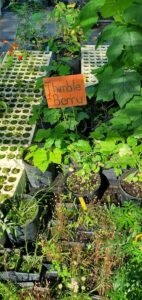
68 Thimbleberry
Names
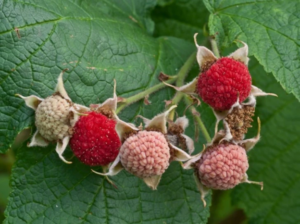
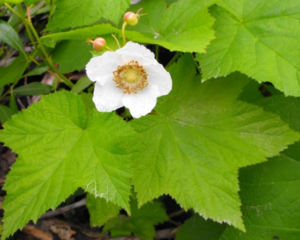
Common name – Thimbleberry
Scientific name – Rubus parviflorus
Other names -Snow Bramble
General Information
Indigenous peoples of North America used various parts of the thimbleberry plant for medicinal purposes, including leaves, roots, and berries for treating wounds, burns, digestive problems, and other ailments. It should be noted that specific biochemical research on thimbleberry (Rubus parviflorus) is limited compared to other Rubus species.
Traditional Indigenous Uses
The leaves were often dried and ground into a fine powder, then mixed with a little water to form a poultice. This was applied to burns, wounds, and sores to cool the skin and speed healing. The leaves helped prevent scarring, leaving the skin smooth after recovery. When the leaves were fresh, they were crushed and used to soothe acne or other skin troubles, drawing out impurities while calming irritation.
Thimbleberry also brought comfort to the stomach. A tea made from its leaves was a trusted remedy for nausea, vomiting, and diarrhea. In times of sickness, the roots were boiled into a decoction that eased digestive problems and could also be used to clear the skin from within, complementing the external treatments for acne. The canes or stems, when steeped into a light tea, acted as a mild diuretic, helping to cleanse the system and remove excess water from the body.
The bright, tangy berries were enjoyed not just for their flavor, but for their nourishment. They were eaten fresh in the summer and were valued for preventing scurvy when food was scarce.
Biochemical Basis for Medicinal Properties
Key Bioactive Compounds
While specific research on Rubus parviflorus phytochemistry is limited, studies on Rubus species have revealed over 160 compounds including diterpenoids, triterpenoid acids, saponins, ellagitannins, phenolic and acylquinic acids, and flavonoids. Based on research from related Rubus species, thimbleberry likely contains:
- Vitamins
- Vitamin C (Ascorbic Acid): High vitamin C content used to treat scurvy
- Vitamin A: Present in significant amounts
- Phenolic Compounds
Based on Rubus genus research, likely compounds include:
Flavonoids
- Quercetin
- Kaempferol
- Catechins
- Anthocyanins (responsible for red fruit color)
Tannins
- Ellagitannins
- Condensed tannins (proanthocyanidins)
Phenolic Acids
- Ellagic acid
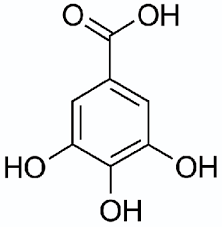
- Gallic acid
- Caffeic acid derivatives
Chemical Structures and Mechanisms
Tannins – Wound Healing Properties
Structure: Tannins are polyphenolic compounds with multiple hydroxyl groups that can form hydrogen bonds and complexes with proteins.
Mechanism:
- Astringent action: Tannins precipitate proteins in damaged tissue, forming protective barriers
- Antimicrobial activity: Disruption of microbial cell membranes
- Anti-inflammatory: Reduction of inflammatory mediators
Chemical Reaction:
Tannin-OH + Protein-NH2 → Tannin-Protein Complex + H2O
(Cross-linking reaction creating protective barrier)
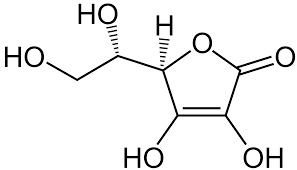
Vitamin C – Antiscorbutic Properties
Structure: L-Ascorbic acid (C6H8O6)
Mechanism:
- Collagen synthesis: Essential cofactor for prolyl and lysyl hydroxylases
- Antioxidant activity: Electron donor, scavenging free radicals
- Iron absorption: Reduces Fe³⁺ to Fe²⁺ for better absorption
Chemical Reaction:
2 Ascorbic Acid + O2 → 2 Dehydroascorbic Acid + 2 H2O
(Antioxidant reaction)
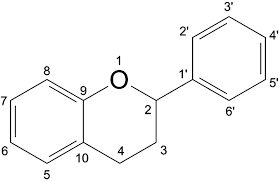
Flavonoids – Anti-inflammatory and Antimicrobial
General Structure: Phenylbenzopyran backbone with various hydroxyl substitutions
 Mechanisms:
- Antioxidant: Free radical scavenging through phenolic hydroxyl groups
- Anti-inflammatory: Inhibition of cyclooxygenase and lipoxygenase enzymes
- Antimicrobial: Disruption of microbial cell walls and membranes
Important Note
Due to the limited specific research on Rubus parviflorus phytochemistry, most biochemical information is inferred from:
- Studies on related Rubus species (R. ellipticus, R. niveus, R. fairholmianus)
- General phenolic compound research in berry fruits
- Traditional ethnobotanical documentation
For more definitive biochemical data, specific analytical studies on Rubus parviflorus extracts would be needed, including HPLC analysis of individual compounds, bioassay studies, and clinical trials to validate traditional uses.
References
1) Elders and Community members of the Cayoose Creek Band of Sekw’el’was
2) Gucker, C. (2012). Rubus parviflorus. In Fire Effects Information System (FEIS). U.S. Department of Agriculture, Forest Service, Rocky Mountain Research Station.
3) Lee, J., Dossett, M., & Finn, C. E. (2012). Rubus fruit phenolic research: The good, the bad, and the confusing. Food Chemistry, 130(4), 785–796. https://doi.org/10.1016/j.foodchem.2011.08.022
4) Mullen, W., McGinn, J., Lean, M. E. J., MacLean, M. R., Gardner, P., Duthie, G. G., Yokota, T., & Crozier, A. (2002). Ellagitannins, flavonoids, and other phenolics in red raspberries and their contribution to antioxidant capacity and vasorelaxation properties. Journal of Agricultural and Food Chemistry, 50(18), 5191–5196. https://doi.org/10.1021/jf020140n
5) Pullar, J. M., Carr, A. C., & Vissers, M. C. M. (2017). The roles of vitamin C in skin health. Nutrients, 9(8), 866. https://doi.org/10.3390/nu9080866