15 Lavender Salve
Lavender Salve
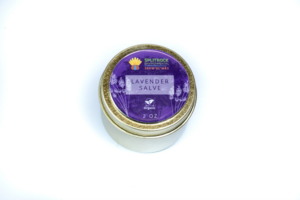
General Information
True lavender (Lavandula spp.) is NOT native to North America. Desert lavender, a flowering shrub with some physical similarities to lavender that actually is completely unrelated to lavender is what is used here.
Two Different Plants:
- TRUE LAVENDER (Lavandula angustifolia, L. latifolia, L. x intermedia)
- DESERT LAVENDER (Hyptis emoryi, syn. Condea emoryi)
DESERT LAVENDER (Hyptis emoryi)
Plant Description
Physical Characteristics: Desert Lavender is an evergreen shrub 3-9 feet tall with aromatic gray-green leaves, silvery appearance from dense hairs, and tubular lavender-blue flowers that bloom January through May. The plant releases a strong fragrance similar to true lavender when leaves are crushed, hence the common name.
Traditional Indigenous Uses – Desert Lavender
Its gentle scent calmed the mind and body, easing worries, sleeplessness, and the restlessness that sometimes takes hold of the heart. The leaves and flowers, steeped into a warm tea or breathed in as steam, were used to quiet anxiety and bring rest to those troubled by dreams or grief. Lavender was also called upon to ease coughs, colds, and congestion, helping the breath to flow freely again. When fever rose in the body, its tea helped to cool and balance the spirit.
For stomach troubles, such as cramps or indigestion, the tea brought comfort, while poultices made from its crushed leaves were laid on wounds, burns, or insect bites to draw out infection and soothe the skin. Lavender’s gentle oil eased sore muscles and headaches, and women drank its tea to find relief from menstrual cramps or to aid recovery after childbirth. In times of purification, lavender branches were placed in bath water, cleansing not only the body but also the spirit. Its fragrance, carried on the wind or tucked into clothing, brought freshness to the home and kept away biting insects.
Preparation and Safety Considerations
Desert Lavender Preparations:
- Infusion methods
- Fresh or dried leaves can be used
- Traditional poultices made from crushed fresh leaves
Safety Notes:
- Generally very safe for topical use
- Rare allergic reactions possible (patch test first)
- Safe during pregnancy (topical use)
- Can cause contact dermatitis in sensitive individuals
- Essential oil should be diluted (not used neat) except for spot treatment of bites/burns
- Internal use of essential oil not recommended (different from tea)
References
1) Elders and Community members of the Cayoose Creek Band of Sekw’el’was
2) Bean, L. J., & Saubel, K. S. (1972). Temalpakh: Cahuilla Indian knowledge and usage of plants. Malki Museum Press.
3) Cavanagh, H. M. A., & Wilkinson, J. M. (2002). Biological activities of lavender essential oil. Phytotherapy Research, 16(4), 301–308. https://doi.org/10.1002/ptr.1103
4) D’Auria, F. D., Tecca, M., Strippoli, V., Salvatore, G., Battinelli, L., & Mazzanti, G. (2005). Antifungal activity of Lavandula angustifolia essential oil against Candida albicans yeast and mycelial form. Medical Mycology, 43(5), 391–396. https://doi.org/10.1080/13693780400029112
5) Elisabetsky, E., Marschner, J., & Souza, D. O. (1995). Effects of linalool on the glutamatergic system in the rat cerebral cortex. Neurochemical Research, 20(4), 461–465. https://doi.org/10.1007/BF00973171
6) Felter, H. W., & Lloyd, J. U. (1898). King’s American dispensatory (18th ed., 3rd rev.). Ohio Valley Company. https://doi.org/10.5962/bhl.title.62043
7) Kane, C. W. (2011). Medicinal plants of the American Southwest. Lincoln Town Press.
8) Koulivand, P. H., Khaleghi Ghadiri, M., & Gorji, A. (2013). Lavender and the nervous system. Evidence-Based Complementary and Alternative Medicine, 2013, https://doi.org/10.1155/2013/681304
9) Linck, V. D. M., da Silva, A. L., Figueiró, M., Caramão, E. B., Moreno, P. R., & Elisabetsky, E. (2010). Effects of inhaled linalool in anxiety, social interaction, and aggressive behavior in mice. Phytomedicine, 17(8–9), 679–683. https://doi.org/10.1016/j.phymed.2010.01.013
10) Lis-Balchin, M., & Hart, S. (1999). Studies on the mode of action of the essential oil of lavender (Lavandula angustifolia Miller). Phytotherapy Research, 13(6), 540–542. https://doi.org/10.1002/(SICI)1099-1573(199909)13:6<540::AID-PTR523>3.0.CO;2-J
11) Moerman, D. E. (1998). Native American ethnobotany. Timber Press.
12) Mori, H. M., Kawanami, H., Kawahata, H., & Aoki, M. (2016). Wound-healing potential of lavender oil by acceleration of granulation and wound contraction through induction of TGF-β in a rat model. BMC Complementary and Alternative Medicine, 16, https://doi.org/10.1186/s12906-016-1131-8
13) Peana, A. T., D’Aquila, P. S., Panin, F., Serra, G., Pippia, P., & Moretti, M. D. L. (2002). Anti-inflammatory activity of linalool and linalyl acetate constituents of essential oils. Phytomedicine, 9(8), 721–726. https://doi.org/10.1078/0944-7113-00258
14) Peana, A. T., De Montis, M. G., Nieddu, E., Spano, M. T., D’Aquila, P. S., & Pippia, P. (2004). Profile of spinal and supra-spinal antinociception of (–)-linalool. European Journal of Pharmacology, 485(1–3), 165–174. https://doi.org/10.1016/j.ejphar.2003.11.010
15) Prashar, A., Locke, I. C., & Evans, C. S. (2004). Cytotoxicity of lavender oil and its major components to human skin cells. Cell Proliferation, 37(3), 221–229. https://doi.org/10.1111/j.1365-2184.2004.00307.x
16) Silva Brum, L. F., Emanuelli, T., Souza, D. O., & Elisabetsky, E. (2001). Effects of linalool on glutamate release and uptake in mouse cortical synaptosomes. Neurochemical Research, 26(3), 191–194. https://doi.org/10.1023/A:1010963507086