67 The Brittle Prickly Pear
Names
Common name – The Brittle Prickly Pear
Scientific name – Opuntia fragilis
Other names – skez’k
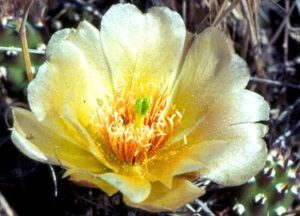
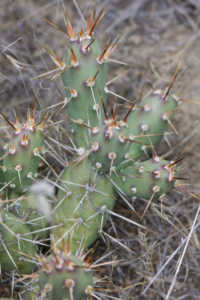
General Information
The Brittle Prickly Pear (Opuntia fragilis) is the most northern-ranging prickly pear cactus.
Traditional Indigenous Uses
Its fleshy pads, known as nopales, were prized for their cooling and soothing properties. When someone was wounded, the pads were split open and laid gently upon the skin, both for humans and for animals, helping to draw out heat and promote healing. In times when rheumatism troubled the joints or stiffness crept into the neck and chin, the pads were roasted and pressed against the sore places, easing pain through their warmth and moisture.
The juice and sap that flowed from the plant were said to be good medicine for burns and other skin injuries. People would crush or mash the pads into a poultice to place over swellings or inflammations, using the plant’s natural mucilage to cool and calm the skin. Even the fruits of the prickly pear had purpose beyond their sweet taste. They were eaten fresh or dried, valued for keeping people strong and warding off ailments such as scurvy when food was scarce.
From the soft inner mucilage, an eye wash could be made by mixing the extract in clean water, offering relief for sore or irritated eyes. When the stomach was unsettled or digestion was poor, tea brewed from the whole plant was used as a gentle remedy to calm the body. The spines themselves, sharp and precise, were used with care as natural acupuncture tools, bringing relief to those in pain.
The roasted pads were sometimes eaten by those struggling with high blood sugar, helping to steady the body’s balance and bring wellness from within. The same pads, when applied to cuts or scrapes, soothed the skin and helped it heal cleanly.
Biochemical Basis of Medicinal Properties
Major Bioactive Compounds in Opuntia Species
While specific chemical analysis of Opuntia fragilis is limited, the genus Opuntia shares common bioactive compounds that provide the scientific basis for traditional medicinal uses.
1. Betalains: Primary Bioactive Pigments
Betalains comprise two main classes:
- Betacyanins: red-violet pigments (primarily betanin)
- Betaxanthins: yellow-orange pigments (primarily indicaxanthin)
Principal compounds:
- Betanin (dominant betacyanin)
- Indicaxanthin (dominant betaxanthin)
- Neobetanin
- Phyllocactin
Betanin Molecular Structure
Molecular formula: C₂₄H₂₆N₂O₁₃

Therapeutic Properties
- Superior antioxidant capacity: exceeds vitamin C activity
- Anti-inflammatory action: reduces inflammatory mediators
- Hepatoprotection: protects liver tissue from damage
- Antimicrobial effects: inhibits pathogenic microorganisms
- Wound healing: accelerates tissue repair
2. Mucilage: Polysaccharide Matrix
Mucilage consists of a complex branched polysaccharide network containing:
- Arabinose
- Galactose
- Rhamnose
- Xylose
- Galacturonic acid
Biological Activities
- Wound healing acceleration: promotes tissue regeneration
- Barrier formation: creates protective moisturizing layer
- Anti-inflammatory effects: reduces tissue inflammation
- Prebiotic function: supports beneficial gut microbiota
- Glycemic control: modulates blood glucose levels
3. Phenolic Compounds
- Quercetin (C₁₅H₁₀O₇)
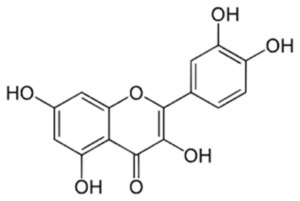
- Kaempferol (C₁₅H₁₀O₆)
- Isorhamnetin (C₁₆H₁₂O₇)
- Rutin
Phenolic Acids Present
- Ferulic acid
- Caffeic acid
- p-Coumaric acid
- Gallic acid
Pharmacological Effects
- Antioxidant activity: neutralizes free radicals
- Anti-inflammatory properties: reduces inflammatory responses
- Antimicrobial action: combats microbial infections
- Cardiovascular protection: supports heart health
- Anti-diabetic effects: improves glucose metabolism
4. Ascorbic Acid (Vitamin C)
Molecular formula: C₆H₈O₆
Concentration: 20-40 mg per 100g fresh fruit (high levels)
Physiological Functions
- Collagen synthesis: essential cofactor for hydroxylation reactions
- Immune enhancement: strengthens immune system function
- Antioxidant protection: scavenges reactive oxygen species
- Wound healing: accelerates tissue repair processes
5. Lipid Components
- Linoleic acid (Omega-6): C₁₈H₃₂O₂
- Oleic acid (Omega-9)
- Palmitic acid
Phytosterols
- β-sitosterol
- Campesterol
Therapeutic Effects
- Anti-inflammatory action: reduces inflammatory signaling
- Skin barrier enhancement: improves epidermal function
- Cholesterol regulation: modulates lipid metabolism
- Membrane stability: maintains cellular integrity
6. Mineral Profile
- Calcium (Ca²⁺)
- Magnesium (Mg²⁺)
- Potassium (K⁺)
- Iron (Fe³⁺)
- Zinc (Zn²⁺)
Physiological Roles
- Bone health: structural components of bone matrix
- Enzyme cofactors: essential for enzymatic reactions
- Electrolyte balance: maintains cellular homeostasis
- Immune support: required for immune cell function
Safety and Toxicological Considerations
Generally Safe Profile
- Low toxicity reported in traditional and modern use
- GRAS (Generally Recognized as Safe) status for food use
- Minimal side effects in therapeutic applications
Potential Concerns
- High fiber content may cause GI upset in sensitive individuals
- Possible interactions with diabetes medications
- Oxalate content considerations for kidney stone-prone individuals
References
1) Elders and Community members of the Cayoose Creek Band of Sekw’el’was
2) American Indian Health Service. (n.d.). Prickly pear cactus traditional uses. American Indian Health and Diet Project, University of Kansas. https://aihd.ku.edu/foods/prickly_pear.html
3) Scully, V. (1970). A treasury of American Indian herbs. Crown Publishers.
4) Ochoa, M. J., & Hernández, L. (2022). Opuntia spp. in human health: A comprehensive summary on its pharmacological, therapeutic and preventive properties. Part 2. Frontiers in Pharmacology, 13, 9505094. https://doi.org/10.3389/fphar.2022.9505094
5) Moerman, D. E. (1998). Native American ethnobotany. Timber Press.
6) Sáenz, C., Sepúlveda, E., & Matsuhiro, B. (2024). Opuntia species: A comprehensive review of chemical composition and bio-pharmacological potential. Journal of Functional Foods, 114, 106233. https://doi.org/10.1016/j.jff.2024.106233
7) Nature Research Intelligence. (2024). Health benefits and nutritional properties of Opuntia species. Springer Nature. https://www.nature.com/articles/d43747-024-00123-7
8) El-Mir, M. Y., Benslama, O., & El-Bachá, R. S. (2021). Bioactive compounds of Opuntia spp. acid fruits. Antioxidants, 10(12), 1983. https://doi.org/10.3390/antiox10121983
9) com. (2025). Prickly pear uses, benefits & dosage. https://www.drugs.com/npp/prickly-pear.html