27 Chokecherry
Names
Common name – Chokecherry
Scientific name – Prunus virginiana
Other names – zelkwú7
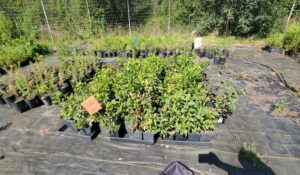
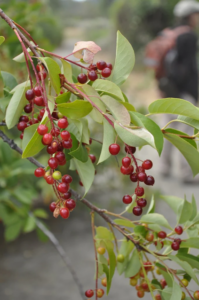
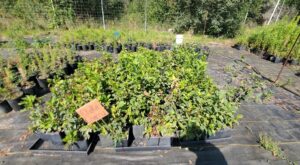
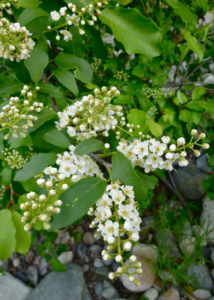
General information
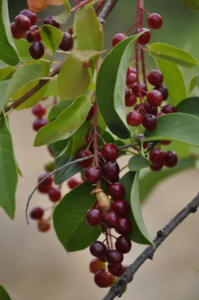
Chokecherry (Prunus virginiana), known by the Indigenous term zelkwú7 represents one of the most extensively utilized medicinal plants by Indigenous peoples across North America. Chokecherry represents a paradigmatic example of sophisticated Indigenous pharmacological knowledge, where traditional preparation methods optimize therapeutic benefits while minimizing potential toxicity.
Traditional Indigenous Uses
The root addresses kidney problems; the bark is used for diarrhea. Strong and flexible, it’s limbs can be used for bows and arrows, or to make bullboats and hoops. This cherry has also been used in treatments of the respiratory system and sore throats. The inner bark was boiled into a tea to use as a sedative, appetite stimulant, or to treat sore throats, respiratory ailments, fevers, and diarrhea. The bark was also used externally for treating wounds and made cough syrups from the berries. Chokecherries are a very important fruit in traditional diets and are part of pemmican, a staple.
Biochemical Basis for Medicinal Properties
Major Bioactive Compound Classes
- Anthocyanins (Primary Active Compounds)
Chokecherry (Prunus virginiana L.) is rich in bioactive molecules as phenolics, which can act as antioxidants, anti-inflammatory, anticancer, among others.
These antioxidants, primarily anthocyanins and flavonoids, help neutralize harmful free radicals in the body, reducing oxidative stress and the risk of chronic diseases.
Key Anthocyanin Compounds:
- Kuromanin (Cyanidin-3-glucoside): Major anthocyanin in chokecherry
- Cyanidin derivatives: Responsible for deep purple color
- Peonidin glycosides: Contributing to antioxidant activity
Chemical Structure and Properties:
Cyanidin-3-glucoside (Kuromanin):
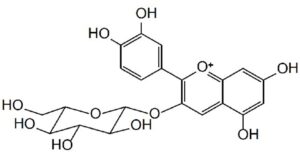
Cyanidin aglycone + Glucose
Antioxidant Mechanism:
Anthocyanin + Free Radical• → Anthocyanin Radical• + Neutralized radical
(Electron/hydrogen donation stabilizes harmful radicals)
Bioactivities:
- Antioxidant: DPPH radical scavenging, TEAC activity
- Anti-inflammatory: COX-2 and IL-1β inhibition
- Anticancer: Uterine sarcoma cell growth inhibition
- Phenolic Acids and Flavonoids
Chokecherry is known for its rich phytochemical content. It contains a variety of compounds, including anthocyanins, flavonoids, and phenolic acids.
Major Phenolic Compounds:
- Chlorogenic acid: Anti-inflammatory, antioxidant
- Caffeic acid: Antimicrobial, wound healing
- Protocatechuic acid: Cardioprotective effects
- Quercetin derivatives: Vascular protection
- Kaempferol glycosides: Anti-inflammatory
Chemical Reactions:
Chlorogenic Acid Structure: C16H18O9
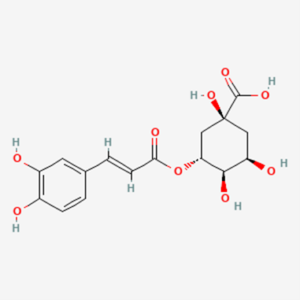
5-Caffeoylquinic acid
Anti-inflammatory Pathway:
Chlorogenic acid → NF-κB inhibition → ↓TNF-α, ↓IL-6 → ↓Inflammation
Antioxidant Activity:
Phenolic-OH + RO• → Phenolic-O• + ROH
(Hydrogen atom transfer mechanism)
- Cyanogenic Glycosides
Chokecherry contains cyanogenic glycosides, compounds that can release toxic cyanide when ingested. The pit of the chokecherry does contain amygdalin, a product the body converts into cyanide, a deadly poison, after consumption.
Key Cyanogenic Compounds:
- Amygdalin: Found primarily in seeds/pits
- Prunasin: Secondary cyanogenic glycoside
Chemical Structure and Mechanism:
Amygdalin (C20H27NO11):
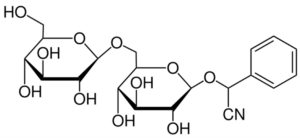
Mandelonitrile + 2 Glucose units
Hydrolysis Pathway:
Amygdalin → β-glucosidase → Prunasin + Glucose
Prunasin → β-glucosidase → Mandelonitrile + Glucose
Mandelonitrile → α-hydroxynitrile lyase → Benzaldehyde + HCN
Therapeutic vs. Toxic Doses:
– Traditional preparation: Controlled amounts in whole fruit
– Isolated seeds: Potentially toxic concentrations
- Proanthocyanidins and Tannins
It has also been used as an astringent, anti-diarrheal, and even as a sedative. The bark and dried fruit have been used to stimulate appetite.
Astringent Mechanisms:
Proanthocyanidin Structure:
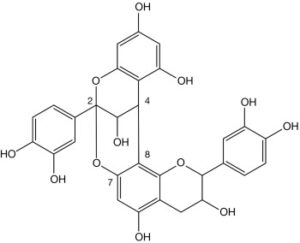
Condensed tannins (flavan-3-ol polymers)
Astringent Action:
Tannins + Proteins → Protein precipitation
Results in: Tissue contraction, reduced secretions, antimicrobial effects
Anti-diarrheal Mechanism:
Tannins → Reduced intestinal secretions + Antimicrobial activity
- Essential Nutrients and Minerals
Chokecherry contains minerals such as potassium and iron. These minerals play crucial roles in maintaining proper bodily functions.
Nutritional Profile:
- Vitamin C: Immune system support, antioxidant activity
- Potassium: Cardiovascular health, blood pressure regulation
- Iron: Oxygen transport, energy metabolism
- Dietary Fiber: Digestive health, blood sugar regulation
Processing Effects on Bioactive Compounds
Total phenol content (TPC), total flavonoids content (TFC), and kuromanin concentration (KC) varied widely according to different drying and freezing conditions applied to chokecherries.
Modern Scientific Validation
Anti-inflammatory Research
Research has shown that Chokecherry possesses anti-inflammatory properties. This can be particularly beneficial in the management of inflammatory conditions such as arthritis and related joint pain.
Molecular Mechanisms:
Chokecherry Anthocyanins → COX-2 inhibition → ↓Prostaglandin E2 → IL-1β suppression → ↓Pro-inflammatory cytokines → NF-κB pathway inhibition → ↓Inflammatory gene expression
Cancer Research Breakthrough
Traditionally-prepared chokecherry pudding specimen had cancer inhibiting properties, while the specimens without the seed, or, with the chokecherry juice, alone, did not succeed at killing the uterine sarcoma cancer cells.
Cancer Research Findings:
- Traditional preparation: Significant uterine sarcoma cell inhibition
- Seed-free preparations: No significant anticancer activity
- Mechanism: Synergistic effect of fruit + seed compounds
Antioxidant Superiority
Chokecherries have higher free-radical scavenging abilities than strawberries, raspberries, blueberries, saskatoon berries, and seabuckthorn.
Antioxidant Metrics:
- DPPH assay: Superior radical scavenging
- TEAC values: High antioxidant capacity
- Comparative analysis: Outperforms common berries
Traditional Preparation Methods and Safety
Traditional Processing Techniques
A common remedy for head colds involved grinding and smoking chokecherry bark like tobacco.
Bark Preparation:
- Collection: Inner bark harvested in spring
- Drying: Air-dried to preserve active compounds
- Preparation: Ground for tea or smoking mixtures
Berry Processing:
- Harvesting: Late summer when fully ripe and dark
- Traditional pudding: Whole berries including seeds, crushed and processed
- Modern adaptations: Seed removal (loss of some medicinal properties)
Safety Considerations and Dosage
Traditional Safety Guidelines
By the time you ate enough to be poisonous, your mouth would be so dry you would not be able to swallow.
Safety Factors:
- Natural regulation: Astringency limits overconsumption
- Traditional preparation: Whole fruit matrix provides controlled release
- Seasonal use: Fresh consumption limited to harvest season
Modern Safety Precautions
Livestock Toxicity: Chokecherry is toxic to horses, moose, cattle, goats, deer, and other animals with segmented stomachs. About 4.5–9 kilograms (10–20 pounds) of foliage can be fatal.
Human Considerations:
- Seed consumption: Avoid consuming large quantities of isolated seeds
- Traditional methods: Safest approach using whole fruit preparations
- Processing: Traditional crushing in pudding form appears to minimize risk
Industrial Applications
Chokecherry can produce 1.5-2.5x the amount of oil produced by a canola/wheat rotation.
References
1) Elders and Community members of the Cayoose Creek Band of Sekw’el’was
2) Moerman, D. E. (1998). Native American ethnobotany. Timber Press.
3) Téllez-Pérez, C., Cardador-Martínez, A., Tejada-Ortigoza, V., Soria-Mejía, M. C., Balderas-León, I., & Alonzo-Macías, M. (2020). Antioxidant content of frozen, convective air-dried, freeze-dried, and swell-dried chokecherries (Prunus virginiana L.). Molecules, 25(5), 1190. https://doi.org/10.3390/molecules25051190
4) Green, R. C., & Low, N. H. (2013). Physicochemical composition of buffaloberry (Shepherdia argentea), chokecherry (Prunus virginiana), and sea buckthorn (Hippophae rhamnoides) fruit harvested in Saskatchewan, Canada. Canadian Journal of Plant Science, 93(6), 1143–1153. https://doi.org/10.4141/cjps2013-087
5) Pete, D. “Sky.” (2017, June 12). Native American student proves traditional chokecherry pudding is medicine. Indian Country Today. https://ictnews.org/archive/bringing-science-culture-together-chokecherry-pudding/
6) Leng, M., & Liu, R. (2013). Antioxidant activity of Padus virginiana anthocyanins. Food Science, 34(11), 67–71. https://doi.org/10.7506/spkx1002-6630-201311016
7) Native Memory Project. (n.d.). Chokecherry. https://nativememoryproject.org/plant/chokecherry/
8) Hamel, P. B., & Chiltoskey, M. U. (1975). Cherokee plants and their uses—A 400-year history. Herald Publishing Company.
9) Indian Country Today. (2017, June 12). Native American student proves traditional chokecherry pudding is medicine. https://ictnews.org/archive/bringing-science-culture-together-chokecherry-pudding/
10) American Indian Health and Diet Project, University of Kansas Medical Center. (n.d.). Foods indigenous to the Western Hemisphere: Chokecherries. https://aihd.ku.edu/foods/chokeberries.html
11) Wang, H., Walla, J. A., Magnusson, V. A., Zhong, S., & Dai, W. (2014). Construction of genetic linkage maps and QTL mapping for X-disease resistance in tetraploid chokecherry (Prunus virginiana L.) using SSR and AFLP markers. Molecular Breeding, 34(1), 143–157. https://doi.org/10.1007/s11032-014-0025-3