22 Bluebunch Wheatgrass
Names
Common name – Bluebunch wheatgrass
Scientific name – Pseudoroegneria spicata
Other names – Agropyron spicatum
General Information
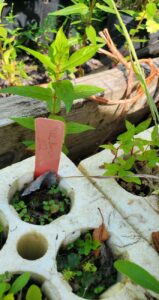
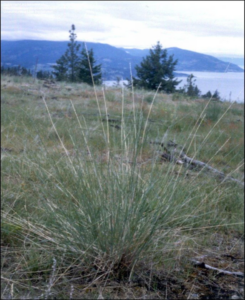
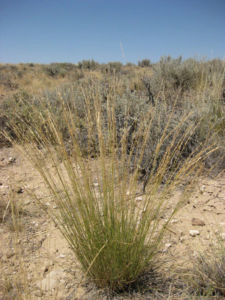
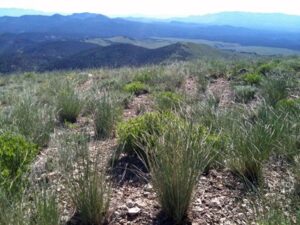
Bluebunch wheatgrass (Pseudoroegneria spicata) is a hardy, long-lived perennial bunchgrass native to western North America, forming the ecological backbone of many dryland ecosystems from British Columbia to California and east to Colorado. This robust grass can grow up to 3 feet tall, forming distinctive dense bunches with narrow, blue-green leaves that give it its common name. The plant is easily identified by its characteristic slender seed heads (spikes) with awns that extend outward at nearly 90-degree angles from the stem. Bluebunch wheatgrass is exceptionally drought-tolerant due to its extensive fibrous root system that can penetrate up to 6 feet deep, along with a waxy coating on roots that prevents water loss. Found at elevations ranging from 1,000 to 9,000 feet, this grass thrives in diverse habitats including sagebrush steppe, mountain slopes, and grasslands. For millennia, Indigenous peoples have recognized bluebunch wheatgrass as both a nutritional and medicinal plant, utilizing its leaves, seeds, and roots for various therapeutic purposes, particularly as a spring tonic and energy booster.
Traditional Indigenous Uses
Bluebunch Wheatgrass was a plant of renewal and cleansing, one that helped awaken the body after the long, cold winters. The young shoots and leaves were gathered in the spring and eaten raw or brewed into tea as a tonic to purify the blood and bring strength back to those weakened by the winter months. This plant was often harvested after the first thunder of spring.
Its roots were used as a gentle medicine for the stomach and urinary system, boiled into tea to clear the body of impurities and ease digestive troubles. The leaves could be applied directly to the skin to soothe inflammation or used to remove warts and small growths. When sickness or tiredness lingered, the whole plant was used as an energy booster, restoring vitality and balance to the body.
The seeds of Bluebunch Wheatgrass were valued for their nourishment. They were ground into flour or parched and eaten during times of hunger, providing strength when food was scarce.
Biochemical Compounds and Their Medicinal Properties
- Phenolic Compounds (Primary Bioactive Compounds)
Three Most Important Compounds:
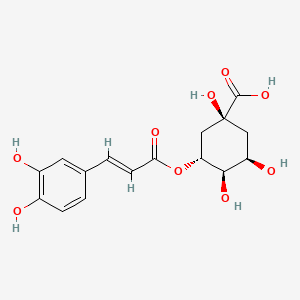
(i) Chlorogenic Acid (C₁₆H₁₈O₉) – Major phenolic compound
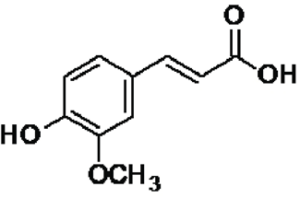
 (ii) Ferulic Acid (C₁₀H₁₀O₄) – Cell wall bound phenolic
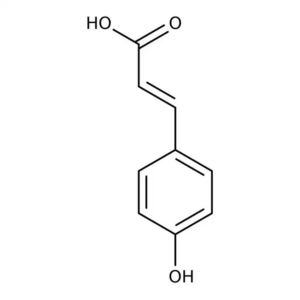
(iii) p-Coumaric Acid (C₉H₈O₃) – Hydroxycinnamic acid
Medicinal Properties:
- Antioxidant: Powerful free radical scavenging activity
- Anti-inflammatory: Inhibits inflammatory mediators
- Hepatoprotective: Protects liver cells from oxidative damage
- Antimicrobial: Broad-spectrum antibacterial effects
2. Flavonoids (Supporting Compounds)
Three Most Important Compounds:
(i) Apigenin (C₁₅H₁₀O₅) – Primary flavone
(ii) Luteolin (C₁₅H₁₀O₆) – Flavone glycoside
(iii) Vitexin (C₂₁H₂₀O₁₀) – C-glycoside flavonoid
- Phytosterols and Triterpenes
Most Important Compound:
β-Sitosterol (C₂₉H₅₀O) – Major plant sterol

Proposed Biochemical Mechanisms for Traditional Uses
Spring Tonic and Energy Boosting (Young Leaves)
- Chlorogenic acid provides:
- Enhanced glucose metabolism and energy production
- Improved cellular energy utilization
- Antioxidant protection during increased metabolic activity
- Flavonoids (apigenin, luteolin) contribute:
- Improved circulation and nutrient delivery
- Enhanced mitochondrial function
- Reduced oxidative stress from increased activity
Wart Removal (Topical Applications)
- Phenolic acids act through:
- Direct cytotoxic effects on abnormal skin cells
- Antiviral activity against human papillomavirus (HPV)
- Promotion of healthy skin cell regeneration
- Flavonoids provide:
- Anti-inflammatory effects reducing wart inflammation
- Immune system modulation
- Enhanced wound healing processes
Digestive Tonic (Roots and Leaves)
- Phenolic compounds support:
- Antimicrobial activity against pathogenic gut bacteria
- Anti-inflammatory effects on digestive tract
- Improved digestive enzyme activity
- Phytosterols contribute:
- Membrane stabilization in digestive cells
- Cholesterol metabolism regulation
- Enhanced nutrient absorption
Chemical Reactions and Molecular Interactions
Antioxidant Mechanism (Chlorogenic Acid)
Chlorogenic acid + ROS → Quinide intermediate + H₂O →→ Stable phenoxyl radical → Chain reaction termination
Chlorogenic acid + O₂•⁻ → Chlorogenic acid radical + H₂O₂ (Superoxide scavenging)
Energy Enhancement Mechanism (Multiple Compounds)
Chlorogenic acid → Glucose-6-phosphatase inhibition → ↑ Glucose uptake →→ Enhanced glycolysis → ↑ ATP production → Increased energy
Flavonoids → Mitochondrial biogenesis → ↑ Energy production capacity
Anti-inflammatory Pathway (Phenolic Compounds)
Phenolic acids → NF-κB inhibition → ↓ Pro-inflammatory cytokines →→ Reduced tissue inflammation → Pain relief
Ferulic acid → COX-2 inhibition → ↓ Prostaglandin synthesis →→ Anti-inflammatory and analgesic effects
Antimicrobial Action (Phenolic Compounds)
Phenolic acids → Bacterial membrane disruption → Cell lysis →→ Inhibition of bacterial enzyme systems → Growth arrest
Chlorogenic acid → Viral protein inactivation → Reduced viral replication
Metabolic Support Mechanism (β-Sitosterol)
β-Sitosterol → Cholesterol absorption inhibition → ↓ Serum cholesterol →→ Improved lipid metabolism → Enhanced energy utilization
β-Sitosterol → Membrane fluidity optimization → ↑ Cellular function
Seasonal Harvesting and Biochemical Optimization
“First Thunder” Harvest Timing
The traditional practice of harvesting after the “first thunder” corresponds to optimal biochemical content:
- Spring Growth Phase: Maximum concentration of phenolic compounds for antioxidant activity
- Energy Storage: Peak levels of stored nutrients and bioactive compounds
- Minimal Fiber: Young tissues have higher bioavailability of active compounds
- Optimal Potency: Environmental stress responses increase secondary metabolite production
Modern Research Validation
Nutritional Analysis
Bluebunch wheatgrass contains significant levels of:
- Protein: 8-15% in young growth
- Minerals: High in potassium, magnesium, and trace elements
- Vitamins: Rich in vitamin C and B-complex vitamins
- Fiber: Beneficial for digestive health
Antioxidant Activity
Laboratory studies confirm high antioxidant capacity, with DPPH radical scavenging activity correlating with phenolic compound content, supporting traditional use as a vitality enhancer.
Anti-inflammatory Properties
Research on related grass species demonstrates significant anti-inflammatory activity of phenolic compounds, validating traditional applications for reducing inflammation and supporting healing.
Safety Considerations and Traditional Wisdom
Traditional harvesting practices emphasize:
- Seasonal timing for optimal potency and safety
- Sustainable collection methods preserving plant populations
- Proper preparation techniques maximizing benefits
- Appropriate dosing based on individual needs and conditions
Indigenous knowledge emphasizes that the plant’s energy-giving properties are most pronounced when harvested at the proper time and prepared according to traditional methods.
References
- Elders and Community members of the Cayoose Creek Band of Sekw’el’was
- Adams, R. P. (2014). Junipers and other conifers of the world: Biology, chemistry, and systematics. Trafford Publishing.
- Great Basin Seeds. (2013, September 9). Bluebunch wheatgrass (Pseudoroegneria spicata). https://greatbasinseeds.com/product/bluebunch-wheatgrass/
- Isah, T. (2019). Natural products from medicinal plants: An overview of analytical techniques for their investigation. Biological Research, 52, 39. https://doi.org/10.1186/s40659-019-0246-3
- Native Memory Project. (2024, January 24). Bluebunch wheatgrass. https://nativememoryproject.org/plant/bluebunch-wheatgrass/ Native Memory Project
- National Library of Medicine. (2025). Healing plants — Medicine Ways: Traditional healers and healing (Native Voices Exhibition). https://www.nlm.nih.gov/nativevoices/exhibition/healing-ways/medicine-ways/healing-plants.html
- Splitrock Environmental. (2025). Bluebunch wheatgrass. https://splitrockenvironmental.ca/products/bluebunch-wheatgrass
- U.S. Department of Agriculture, Forest Service, Rocky Mountain Research Station, Fire Sciences Laboratory. (1999). Pseudoroegneria spicata (bluebunch wheatgrass). In Fire Effects Information System (FEIS). https://www.fs.usda.gov/database/feis/plants/graminoid/psespi/all.html
- Utah Native Plant Society. (n.d.). Bluebunch wheatgrass. https://www.unps.org/plant%20data%20base/plant%20sheets/bluebunch.html
- Utah State University Extension. (n.d.). Bluebunch wheatgrass. https://extension.usu.edu/rangeplants/grasses-and-grasslikes/bluebunch-wheatgrass
- Wikipedia. (2025, July 18). Pseudoroegneria spicata. In Wikipedia. Retrieved September 24, 2025, from https://en.wikipedia.org/wiki/Pseudoroegneria_spicata