58 Rocky Mountain Junpier
Names
Common name – Rocky Mountain Juniper
Scientific name – Juniperus scopulorum
Other names – púnlhep
General Information
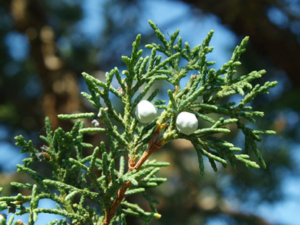
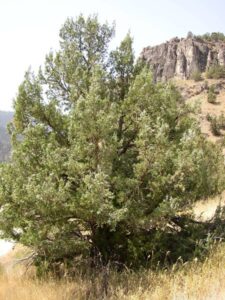
Rocky Mountain Juniper (Juniperus scopulorum) is an evergreen coniferous tree or large shrub in the cypress family (Cupressaceae) native to western North America. This hardy species typically grows 15-40 feet tall (occasionally up to 65 feet), with a narrow columnar to pyramidal form and dense, scale-like foliage that ranges from green to blue-green or silvery-blue. The bark is distinctive – reddish-brown to gray, fibrous, and shredding in long strips. Male and female cones appear on separate trees (dioecious), with the “berries” (actually fleshy seed cones) being bright blue when mature, covered with a waxy bloom, and containing 1-2 seeds.
Traditional Indigenous Uses
Rocky Mountain Juniper has long been a sacred and practical medicine to indigenous peoples, valued for both its healing and spiritual strength. The leaves and branches were often brewed into tea to ease a sore throat, quiet a cough, and soothe pain deep in the chest. When a woman was giving birth, this same tea was used to strengthen her body and help the labor along, offering both comfort and vitality. The roots, when boiled, were used in medicinal baths to cleanse and purify the body or made into a strong wash to clean wounds and prevent infection. In ceremonies, the smoke of burning juniper branches was used to purify spaces and protect the spirit, carrying prayers and good intentions to the Creator.
The wood was prized by the people for crafting tools and instruments e.g. bows, lance shafts, and flutes, each shaped with respect for the tree’s strength and balance. The berries, too, held their place in daily life. They were mashed into nourishing cakes to be kept through the winter, roasted as a substitute for coffee, or used to season meats and stews, giving warmth and flavor to the food. When illness struck the chest, the whole plant was sometimes boiled so that the steam could be inhaled, helping to clear congestion and ease breathing. The juniper’s leaves could also be used as an antimicrobial wash for infections of the skin, while a simple tea made from the branches was taken as a tonic to keep the body strong and in harmony.
Biochemical Compounds and Their Medicinal Properties
- Monoterpenes (Primary Essential Oil Components)
Three Most Important Compounds:
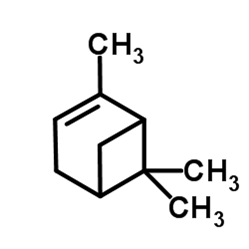
(i) α-Pinene (C₁₀H₁₆) – 35-62% of essential oil
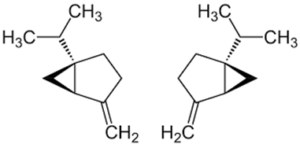
(ii) Sabinene (C₁₀H₁₆) – 5-15% of essential oil
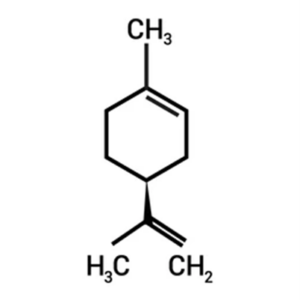
(iii) Limonene (C₁₀H₁₆) – 3-8% of essential oil
Medicinal Properties
- Antimicrobial: Potent antibacterial, antiviral, and antifungal activity
- Respiratory support: Expectorant and bronchodilator effects
- Anti-inflammatory: Reduces inflammatory mediators
- Analgesic: Pain-relieving properties
- Sesquiterpenes (Supporting Compounds)
Three Most Important Compounds:
(i) Cedrol (C₁₅H₂₆O) – Major sesquiterpene alcohol (15-19% of cedarwood oil)
(ii) α-Cedrene (C₁₅H₂₄) – Sesquiterpene hydrocarbon
(iii) β-Caryophyllene (C₁₅H₂₄) – Bicyclic sesquiterpene
- Diterpenes and Other Compounds
Most Important Compound:
Totarol (C₂₀H₃₀O) – Diterpene phenol with antimicrobial properties
Proposed Biochemical Mechanisms for Traditional Uses
Respiratory Support and Sore Throat Treatment (Tea/Inhalation)
- α-Pinene and monoterpenes act as:
- Expectorants promoting mucus secretion and clearance
- Bronchodilators relaxing airway smooth muscle
- Antimicrobials combating respiratory pathogens
- Cedrol provides:
- Anti-inflammatory effects reducing throat inflammation
- Local anesthetic properties soothing irritation
- Antioxidant protection of respiratory tissues
Antimicrobial and Disinfectant Action (Root Decoctions/Washes)
- Essential oil compounds provide:
- Bacterial membrane disruption and cell death
- Antiviral activity through envelope disruption
- Antifungal effects via ergosterol binding
- Totarol and diterpenes contribute:
- Potent antimicrobial synergy with monoterpenes
- Biofilm disruption properties
- Enhanced wound healing through infection control
Childbirth Support (Leaf Tea)
- Monoterpenes facilitate:
- Smooth muscle relaxation reducing pain
- Anti-inflammatory effects in reproductive tissues
- Antimicrobial protection during labor
- Sesquiterpenes provide:
- Calming effects reducing anxiety
- Circulatory support improving blood flow
- Antioxidant protection during delivery stress
Chemical Reactions and Molecular Interactions
Antimicrobial Mechanism (Monoterpenes + Sesquiterpenes)
α-Pinene → Bacterial membrane disruption → Cell lysis → Increased membrane permeability → ATP leakage → Cell death
Cedrol → Fungal ergosterol binding → Membrane dysfunction → Growth inhibition → Antifungal effect
Totarol → Bacterial cell wall synthesis inhibition → Weakened structure → Enhanced susceptibility to immune clearance
Respiratory Relief Mechanism (Monoterpenes)
α-Pinene → β₂-adrenergic receptor activation → ↑ cAMP → Bronchial smooth muscle relaxation → Improved airflow
Sabinene → Mucin gene expression ↑ → Enhanced mucus clearance → Improved expectoration → Better breathing
Limonene → Anti-inflammatory in airways → ↓ Swelling → Reduced airway resistance → Easier breathing
Anti-inflammatory Mechanism (Multiple Compounds)
α-Pinene → NF-κB pathway inhibition → ↓ Pro-inflammatory cytokines → Reduced tissue inflammation → Symptom relief
β-Caryophyllene → CB2 receptor activation → Anti-inflammatory signaling → Pain and inflammation reduction
Cedrol → COX enzyme inhibition → ↓ Prostaglandin synthesis → Anti-inflammatory and analgesic effects
Antioxidant Protection (Sesquiterpenes + Diterpenes)
Cedrol + α-Pinene → ROS scavenging → ↓ Oxidative stress → Cellular protection → Tissue health maintenance
Totarol → Lipid peroxidation inhibition → Membrane protection → Enhanced cellular integrity → Improved healing
Wound Healing Enhancement (Multiple Compounds)
α-Pinene → Fibroblast proliferation ↑ → Enhanced collagen synthesis → Improved tissue tensile strength → Faster healing
Antimicrobial compounds → Infection prevention → Clean wound environment → Optimal healing conditions → Accelerated closure
Traditional Preparation Methods
Leaf/Branch Tea (Primary Traditional Method)
- Hot water infusion: Extracts water-soluble compounds and some volatile oils
- Covered steeping: Prevents loss of volatile monoterpenes
- Fresh vs. dried: Both effective with slightly different terpene profiles
- Dosage timing: Multiple small doses throughout the day
Root Decoction (Disinfectant Bath)
- Extended boiling: Maximizes extraction of antimicrobial compounds
- Strong concentration: Higher terpene content for disinfection
- External application: Direct antimicrobial action on skin
- Bathing ritual: Combined physical and medicinal benefits
Steam Inhalation
- Hot water with branches: Maximizes volatile compound release
- Direct inhalation: Delivers monoterpenes to respiratory tract
- Aromatherapeutic benefits: Combined respiratory and psychological effects
Cultural and Ecological Significance
Sacred and Ceremonial Uses
Rocky Mountain juniper holds deep spiritual significance:
- Purification ceremonies: Smoke used for spiritual cleansing
- Protection rituals: Branches placed in homes for blessing
- Healing ceremonies: Combined with other sacred plants
- Life transitions: Used in births, deaths, and coming-of-age ceremonies
Practical Applications
Beyond medicine, juniper served multiple roles:
- Wood crafting: Prized for bows, arrows, and flutes
- Food preservation: Berries used to flavor and preserve meat
- Construction: Durable wood for posts and building materials
- Fuel: Wood burns hot and aromatic
Safety Considerations and Traditional Wisdom
Indigenous preparation methods emphasize:
- Appropriate dosing: Moderate use due to potent compounds
- Pregnancy considerations: Careful use during pregnancy (labor use specific)
- Quality assessment: Fresh, properly harvested plant material
- Individual sensitivity: Recognition of personal tolerance
References
1) Elders and Community members of the Cayoose Creek Band of Sekw’el’was
2) Miracle Botanicals. (2025, January 21). Mountain juniper essential oil: Benefits & uses. https://miraclebotanicals.com/a/blog/rocky-mountain-juniper-essential-oil
3) Native Plants PNW. (2025). Rocky Mountain juniper (Juniperus scopulorum). https://nativeplantspnw.com/rocky-mountain-juniper-juniperus-scopulorum/
4) Natural Medicinal Herbs. (2025). Rocky Mountain juniper (Juniperus scopulorum). http://www.naturalmedicinalherbs.net/herbs/j/juniperus-scopulorum=rocky-mountain-juniper.php
5) Höferl, M., Buchbauer, G., Jirovetz, L., Schmidt, E., Stoyanova, A., Denkova, Z., Slavchev, A., & Geissler, M. (2015). Chemical composition and antioxidant properties of juniper berry (Juniperus communis) essential oil. Antioxidants, 3(4), 736–749. https://doi.org/10.3390/antiox3040736
6) Orav, A., Kailas, T., & Müürisepp, M. (2010). Chemical investigation of essential oil from berries and needles of common juniper growing wild in Estonia. Proceedings of the Estonian Academy of Sciences, 59(4), 216–223. https://doi.org/10.3176/proc.2010.4.06
7) S. National Park Service. (2025). Rocky Mountain juniper. https://www.nps.gov/articles/000/rocky-mtn-juniper.htm
8) S. Department of Agriculture, Natural Resources Conservation Service. (2025). Rocky Mountain juniper plant guide. https://plants.usda.gov/DocumentLibrary/plantguide/pdf/pg_jusc2.pdf
9) West Coast Wild Foods. (2025). Rocky Mountain juniper essential oil. https://wcwf.com/products/rocky-mountain-juniper
10) What Tree Where. (2018, February 1). Junipers – Edible, medicinal, drinkable, literary, and magical! https://whattreewhere.com/2018/02/01/junipers-edible-medicinal-drinkable-literary-and-magical/
11) (2025). Juniperus scopulorum. https://en.wikipedia.org/wiki/Juniperus_scopulorum
12) Salehi, B., Upadhyay, S., Erdogan Orhan, I., Kumar Jugran, A., Jayaweera, S. L. D., Dias, D. A., … & Sharifi-Rad, J. (2019). Therapeutic potential of Juniperus species: A review of phytochemistry, biological activities, and mechanisms of action. Phytotherapy Research, 33(7), 1608–1628. https://doi.org/10.1002/ptr.6343