45 Mountain Alder
Names
Common name – Mountain Alder
Scientific name – Alnus incana
Other names – Thinleaf alder or Western alder
General information
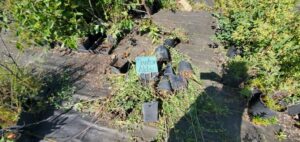
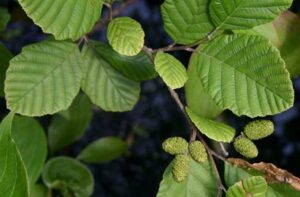
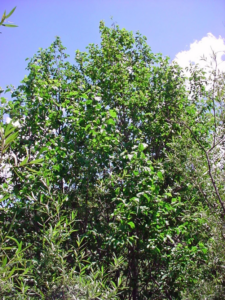
Mountain Alder (Alnus incana) is a deciduous shrub or small tree in the birch family (Betulaceae) native to western North America. This nitrogen-fixing plant typically grows 20-40 feet tall (6-12 meters) with a multi-stemmed growth habit, open rounded form, and spreading branches that often form dense thickets through root suckers and rhizomes. The dull dark green leaves are thin, oval-shaped with doubly serrated margins, measuring 2-4 inches long. The bark is distinctive—grayish-brown, thin, and smooth when young, becoming reddish-gray and scaly with age. Purple male catkins appear in early spring before the leaves emerge, followed by small woody cones that persist through winter. Like all alders, this species forms symbiotic relationships with nitrogen-fixing bacteria (Frankia) in root nodules, enriching poor soils.
Traditional Indigenous Uses
The Elders speak of the Mountain Alder as a tree of great healing and protection, one that has long stood by the waters and carried medicine in its bark and leaves. From its bark, they prepared strong teas and decoctions that were used to ease the burden of tuberculosis and other sicknesses of the lungs, offering relief to those struggling to breathe. The same bark was also used to cleanse and soothe the skin, washed over poison oak rashes, insect bites, and other irritations until the pain subsided.
The bark held powerful astringent qualities, and when boiled into a decoction, it was used to stop bleeding and heal wounds, and even as a rinse for mouth sores. For general pain and inflammation, tea or poultice from the bark would be made, bringing comfort to those in pain. It was also known as a fever reducer, helping to lower high temperatures and ease the discomfort of illness.
Beyond medicine, the people also turned to the Alder’s bark for practical and ceremonial purposes. When boiled, it released a natural dye used to treat fishing nets and color textiles, a reminder that healing and sustenance were intertwined. The inner bark, when steeped as a tea, was taken to treat diarrhea and digestive troubles, offering balance to the stomach.
The leaves, too, were used for healing. Crushed into poultices, they were applied to swollen joints and bruises to draw out pain and inflammation. When the bark and leaves were brewed together, the resulting liquid served as a gargle or mouthwash to treat toothaches, sore throats, and gum infections, keeping the mouth strong and healthy. Even the eyes were cared for with gentle Alder washes, used to soothe infections and conjunctivitis.
In times of ceremony, the wood and bark were burned, their smoke carrying prayers for cleansing and protection.
Biochemical Compounds and Their Medicinal Properties
- Pentacyclic Lupane Triterpenes (Primary Bioactive Compounds)
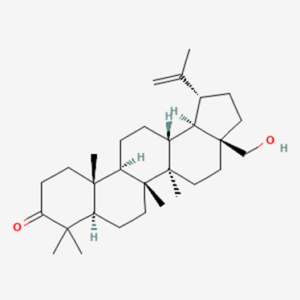
Three Most Important Compounds
(i) Betulin (C₃₀H₅₀O₂) – Major bark triterpene (up to 25% dry weight)
(ii) Betulinic Acid (C₃₀H₄₈O₃) – Anti-mycobacterial compound

(iii) Betulone (C₃₀H₄₈O₂) – Oxidized triterpene
Medicinal Properties
- Anti-mycobacterial: Potent activity against Mycobacterium tuberculosis
- Anti-inflammatory: Strong inhibition of inflammatory pathways
- Antimicrobial: Broad-spectrum antibacterial and antifungal activity
- Wound healing: Enhances tissue repair and collagen synthesis
- Diarylheptanoids (Supporting Compounds)
Three Most Important Compounds
(i) Oregonin (C₂₁H₂₆O₅) – Major diarylheptanoid
(ii) Hirsutenone (C₂₁H₂₄O₅) – Bioactive diarylheptanoid
(iii) Platyphylloside (Glycosylated diarylheptanoid – Similar structure + glucose moiety)
- Hydrolyzable Tannins (Astringent Compounds)
Most Important Compound
Gallotannins (Polymeric galloyl esters – multiple galloyl units esterified to glucose core)
Proposed Biochemical Mechanisms for Traditional Uses
Anti-Tuberculosis Activity (Bark Decoctions)
- Triterpenes (betulin, betulinic acid, betulone) act through:
- Inhibition of M. tuberculosis cell wall synthesis
- Disruption of mycobacterial membrane integrity
- Interference with mycobacterial enzyme systems
- Diarylheptanoids contribute:
- Antimicrobial synergy with triterpenes
- Anti-inflammatory effects in infected lungs
- Immune system modulation
Skin Condition Treatment (Bark Washes)
- Betulin and derivatives provide:
- Anti-inflammatory effects reducing skin irritation
- Antimicrobial protection preventing secondary infection
- Enhanced wound healing and tissue regeneration
- Tannins facilitate:
- Astringent action tightening and protecting skin
- Protein precipitation forming protective barrier
- Antimicrobial effects inhibiting pathogens
Astringent and Hemostatic Action (Bark Applications)
- Hydrolyzable tannins act as:
- Protein precipitating agents causing tissue contraction
- Hemostatic compounds promoting blood clotting
- Antimicrobial barriers protecting wounds
- Triterpenes support:
- Anti-inflammatory effects reducing bleeding
- Enhanced tissue repair mechanisms
- Vasoconstriction reducing blood flow
Chemical Reactions and Molecular Interactions
Anti-Mycobacterial Mechanism (Triterpenes)
Betulinic acid → Mycobacterial membrane disruption → Cell lysis → Increased membrane permeability → ATP leakage → Cell death
Betulin → Cell wall synthesis inhibition → Weakened mycobacteria → Impaired structural integrity → Growth arrest
Betulone → Mycobacterial enzyme inactivation → Metabolic disruption → Inhibited replication → Reduced bacterial load
Anti-inflammatory Mechanism (Multiple Compounds)
Betulinic acid → NF-κB pathway inhibition → ↓ Pro-inflammatory cytokines → Reduced inflammation and tissue damage
Diarylheptanoids → COX-2 enzyme inhibition → ↓ Prostaglandin synthesis → Anti-inflammatory and analgesic effects
Wound Healing Acceleration (Triterpenes + Tannins)
Betulin → Fibroblast proliferation ↑ → Enhanced collagen synthesis → Improved tissue tensile strength → Faster healing
Tannins → Protein cross-linking → Protective barrier formation → Reduced fluid loss + Microbial protection → Optimal healing
Astringent Action (Tannins)
Gallotannins → Protein precipitation → Tissue contraction → Reduced capillary permeability → Decreased inflammation
Tannins + Blood proteins → Coagulation → Hemostasis → Clot formation → Bleeding cessation
Antimicrobial Activity (Triterpenes + Diarylheptanoids)
Betulin → Bacterial membrane disruption → Cell permeability ↑ → Ion leakage + ATP depletion → Cell death
Oregonin → Bacterial protein binding → Enzyme inactivation → Metabolic disruption → Growth inhibition
Traditional Preparation Methods and Biochemical Optimization
Bark Decoction (Primary Traditional Method)
- Hot water extraction: Optimizes triterpene and tannin extraction
- Extended boiling: Increases concentration of bioactive compounds
- Fresh vs. dried bark: Traditional knowledge distinguishes potency differences
- Dosage timing: Multiple daily doses for serious conditions like tuberculosis
Topical Applications
- Fresh bark poultices: Maximum triterpene content for wound healing
- Strong decoctions: Concentrated tannins for astringent effects
- Combination preparations: Bark + leaves for enhanced antimicrobial activity
Cultural and Ecological Significance
Nitrogen-Fixing Properties
Mountain alder’s ecological role enhances its medicinal significance:
- Soil enrichment: Nitrogen fixation creates nutrient-rich habitats
- Riparian restoration: Stabilizes stream banks and wetlands
- Pioneer species: Colonizes disturbed areas, providing early resources
- Wildlife support: Provides food and habitat for numerous species
Traditional Ecological Knowledge
Indigenous practices emphasize:
- Sustainable harvesting: Careful bark collection without killing trees
- Seasonal timing: Spring or fall harvest for optimal potency
- Habitat respect: Understanding alder’s role in ecosystem health
- Multi-generational wisdom: Time-tested preparation methods
Safety Considerations and Traditional Wisdom
Traditional Guidelines
Indigenous preparation methods include important safeguards:
- Appropriate dosing: Traditional measurements for different conditions
- Duration of treatment: Typical courses for acute vs. chronic conditions
- Combination therapies: Often used with other medicinal plants
- Individual assessment: Recognition of personal tolerance and response
Modern Safety Notes
- Tannin content: High levels may cause digestive upset if taken internally in excess
- Triterpene bioavailability: Low oral bioavailability may require topical applications
- Quality control: Proper species identification and bark preparation
- Professional consultation: Serious conditions like tuberculosis require medical oversight
References
1) Elders and Community members of the Cayoose Creek Band of Sekw’el’was
2) (2025). Mountain alder (Alnus incana ssp. tenuifolia). https://calscape.org/Alnus-incana-ssp.-tenuifolia-(Mountain-Alder)
3) Medicinal Forest Garden Trust. (2024, February 24). Alder: Research notes. https://medicinalforestgardentrust.org/alder-research-notes/
4) Natural Medicinal Herbs. (2025). Mountain alder (Alnus tenuifolia). https://www.naturalmedicinalherbs.net/herbs/a/alnus-tenuifolia=mountain-alder.php
5) Nisbet, L. J., Hansen, J., & Marles, R. J. (2015). Anti-mycobacterial triterpenes from the Canadian medicinal plant Alnus incana. Journal of Ethnopharmacology, 165, 148–151. https://doi.org/10.1016/j.jep.2015.02.044
6) Sati, S. C., Sati, N., & Sati, O. P. (2011). Bioactive constituents and medicinal importance of genus Pharmacognosy Reviews, 5(10), 174–183. https://doi.org/10.4103/0973-7847.91118
7) Sevenoaks Native Nursery. (2023, December 27). Alnus incana ssp. tenuifolia. https://sevenoaksnativenursery.com/product/alnus-incana-ssp-tenuifolia/
8) Song of the Woods. (2025, February 7). Alder – Alnus spp.: Edible and medicinal uses. https://www.songofthewoods.com/alder-alnus-spp/
9) Ren, D., Zuo, R., Guan, Y., Li, S., & Guo, H. (2017). The genus Alnus: A comprehensive outline of its chemical constituents and biological activities. Molecules, 22(8), 1383. https://doi.org/10.3390/molecules22081383
10) Tung, N. H., Ding, Y., Kim, S. K., & Kim, Y. H. (2010). Total phenolic and flavonoid contents, antioxidant and antimicrobial activities of Alnus African Journal of Pharmacy and Pharmacology, 4(8), 515–520. https://academicjournals.org/journal/AJPP/article-full-text-pdf/6B9BE9D21626
11) (2025, June 5). Alnus incana. https://en.wikipedia.org/wiki/Alnus_incana