12 Stinging Nettle Tea
Names
Common Name – Stinging Nettle
Scientific Name – Urtica dioica
Other Names – Common Stinging Nettle, Burn Nettle, Nettle Leaf, Grande Ortie.
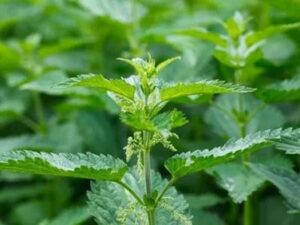
Figure 1. The leaves of the stinging nettle plant.
Image Source: https://www.britannica.com/plant/stinging-nettle
The young leaves can be eaten as greens and contain iron which can help treat anemia. The name stinging nettle comes from the tiny hairs on the plant that act like needle when touched. The resulting pain is caused by neurotransmitters such as histamine, acetylcholine and serotonin, and by acidic components such as formic acid, tartaric acid and oxalic acid.
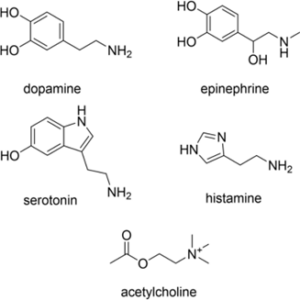
Figure 2. Several neurotransmitters including those playing a role in the pain response to touching a stinging nettle plant.
Image Source: https://www.researchgate.net/figure/Some-important-amino-based- neurotransmitters_fig1_353203150
Despite the pain caused by touching the plant, several parts of the stinging nettle can be used for medicinal purposes. Stinging nettle is rich in vitamins A, B, C, D and K and can be applied topically as an anti-inflammatory or to help treat arthritis. When consumed as a tea, it provides absorbable iron and polyphenols, again, demonstrating anti-inflammatory properties. Research has found that stinging nettles also contain terpenes, fatty acids, carotenes and carotenoids, polyphenolic compounds and amino acids amongst other compounds. Many of these were also shown to be present in higher concentrations in mature leaves as opposed to young leaves.
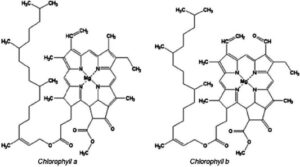
Figure 3. Chlorophyll a and chlorophyll b were amongst the bioactive components identified in stinging nettle stems and leaves.
Image Source: https://www.researchgate.net/figure/Molecular-structure-of-chlorophyll-a-and- chlorophyll-b_fig1_283281046
Traditional Indigenous Uses
It was one of the first greens to appear in the spring, pushing up through the soil when the snow had barely melted. The young leaves, gathered before the plant flowered, were cooked and eaten like spinach or made into soup to bring strength after the long winter. When brewed into a tea, nettle became a cleansing tonic, purifying the blood, strengthening the liver, and restoring energy to the body. It was known to the people as a “spring cleanser,” helping to awaken the body and spirit.
For women, it was used to ease labor pains, regulate menstruation, and prevent excessive bleeding after childbirth. Mothers would drink nettle tea to strengthen the uterus and to help bring in milk after their babies were born. Nettle supported the blood. Its tonic was used for anemia, to increase vitality, and to balance the body’s inner strength. The plant’s power extended to the kidneys and bladder, where it worked as a gentle diuretic to relieve urinary troubles and even help men with prostate issues.
Those who suffered from arthritis, sore muscles, or back pain used nettle both inside and out. The fresh stinging leaves, when brushed lightly on the skin, were believed to draw pain away from the joints and restore circulation. Steamed leaves were made into poultices to soothe the body, and teas were taken to ease the inflammation within. Nettle was also valued for respiratory troubles e.g. coughs, asthma, hay fever, and bronchial congestion were all treated with its warm infusion. On the outside, nettle was applied as a wash or poultice to heal wounds, burns, eczema, and other skin irritations. Some used the rinse for their hair to strengthen it and prevent loss. The plant’s fibers, drawn from the long stems, were used for weaving rope, nets, and cloth.
Preparation and Safety Considerations
Tea Preparation
- Use dried leaves (stinging compounds neutralized) or carefully blanched fresh leaves
- Steep 1-2 teaspoons dried herb per cup in hot water (80-90°C)
- Infuse 10-15 minutes for optimal extraction
- Can be consumed 2-3 times daily
Safety Notes
- Fresh plant causes dermal irritation; always cook, dry, or blanch before internal use
- High vitamin K content may interfere with anticoagulant medications (warfarin)
- May lower blood pressure and blood sugar (monitor if on medications)
- Generally safe during pregnancy based on traditional use, but consult healthcare provider
- Root extracts should be reserved for specific prostate indications
References
[1] Elders and Community members of the Cayoose Creek Band of Sekw’el’was
[2] Jones (2024). Medicinal Herbs of Western Canada. First Edition. Nova Scotia. Nimbus Publishing. p138-139.
[3] Brunning (2015). The Chemistry of Stinging Nettles. Compound Interest. [Accessed November 7 2024]. https://www.compoundchem.com/2015/06/04/nettles/
[4] Splitrock Environmental [Internet]. Stinging Nettle Salve. Lillooet (BC). [Accessed February 7th 2025]. https://splitrockenvironmental.ca/products/stinging-nettle- salve?variant=33785190744123
[5] Durovic S, Kojic I, Radic D, Smyatskaya YA, Bazarnova JG, Filip S, Tosti T. (2024). Chemical Constituent of Stinging Nettle (Urtica dioica L.): A Comprehensive Review on Phenolic and Polyphenolic Compounds and Their Int. J. of Molecular Sciences. 25(6). 10.3390/ijms25063430
[6] Chrubasik, J. E., Roufogalis, B. D., Wagner, H., & Chrubasik, S. (2007). A comprehensive review on the stinging nettle effect and efficacy profiles. Part II: Urticae radix. Phytomedicine, 14(7–8), 568–579. https://doi.org/10.1016/j.phymed.2007.03.014
[7] Gülçin, İ., Küfrevioğlu, Ö. İ., Oktay, M., & Büyükokuroğlu, M. E. (2004). Antioxidant, antimicrobial, antiulcer and analgesic activities of nettle (Urtica dioica). Journal of Ethnopharmacology, 90(2–3), 205–215. https://doi.org/10.1016/j.jep.2003.09.028
[8] Hamel, P. B., & Chiltoskey, M. U. (1975). Cherokee plants and their uses: A 400 year history. Herald Publishing Co.
[9] Konrad, L., Müller, H. H., Lenz, C., Laubinger, H., Aumüller, G., & Lichius, J. J. (2000). Antiproliferative effect on human prostate cancer cells by a stinging nettle root (Urtica dioica) extract. Planta Medica, 66(1), 44–47. https://doi.org/10.1055/s-2000-11120
[10] Kregiel, D., Pawlikowska, E., & Antolak, H. (2018). Urtica: Ordinary plants with extraordinary properties. Molecules, 23(7), 1664. https://doi.org/10.3390/molecules23071664
[11] Mittman, P. (1990). Randomized, double-blind study of freeze-dried Urtica dioica in the treatment of allergic rhinitis. Planta Medica, 56(1), 44–47. https://doi.org/10.1055/s-2006-960881