53 Pasture Sage
Names
Common name – Pasture Sage
Scientific name – Artemisia frigida
Other names – Prairie Sage or Fringed Sagebrush or mountain sage
General Information
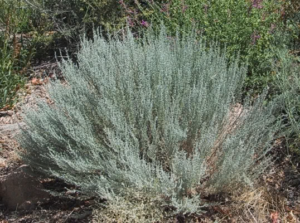
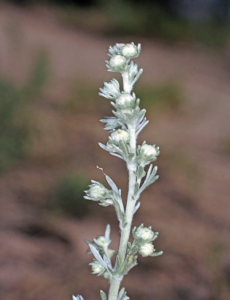
Pasture Sage is a low-growing perennial subshrub in the sunflower family (Asteraceae) native to North America and northern Asia. This aromatic plant forms compact silvery mounds 4-16 inches tall (10-40 cm), spreading through rhizomes and creating attractive groundcover. The plant is covered with an abundance of fine, silky, silvery-white hairs giving it a distinctive grey-green appearance and soft, velvety texture. The leaves are deeply dissected and finely divided 3-5 times, appearing feather-like and clustered toward the base with scattered leaves along the stems. Small nodding yellow flower heads bloom from July to September in loose, leafy panicles. The plant emits a strong aromatic scent, particularly when bruised, due to its high concentration of essential oils.
Traditional Indigenous Uses
The Elders speak of Pasture Sage as a sacred and healing plant, one that carried both physical and spiritual medicine. Its leaves were gathered with care, brewed into tea to clear the chest and lungs, easing coughs, colds, and heavy breathing. The same tea helped settle the stomach, soothing heartburn and indigestion, while its strength brought down fevers and cooled the body during illness. When the leaves were made into a wash or applied as a poultice, they drew out infection from wounds, reduced swelling, and kept the skin clean. The whole plant, braided or crushed, could be placed across the forehead to ease headaches and stop nosebleeds, calming the flow of blood and pain alike.
Pasture Sage was also a companion in women’s medicine. Its tea was used to bring comfort during menstruation and support balance in the body. When burned as a smudge, its smoke cleans spaces and spirits, chasing away heaviness and bringing peace. The people also burned it to drive away insects e.g. mosquitoes, fleas, and lice, all of which disliked the strong scent of its smoke. Drunk regularly, its tea served as a general tonic, keeping the body well and the mind clear.
Biochemical Compounds and Their Medicinal Properties
- Monoterpenes (Primary Essential Oil Components)
Three Most Important Compounds:
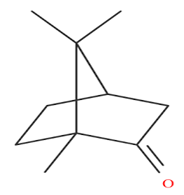
(i) Camphor (C₁₀H₁₆O) – 6-20% of essential oil
(ii) 1,8-Cineole/Eucalyptol (C₁₀H₁₈O) – 12-30% of essential oil
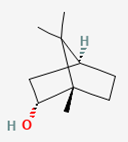
(iii) Borneol (C₁₀H₁₈O) – 5-15% of essential oil
Medicinal Properties
- Respiratory support: Expectorant and bronchodilator effects
- Anti-inflammatory: Reduces tissue inflammation
- Antimicrobial: Broad-spectrum antibacterial and antifungal activity
- Analgesic: Pain-relieving properties
- Sesquiterpene Lactones (Supporting Compounds)
Three Most Important Compounds:
(i) Artemisinin-related compounds (C₁₅H₂₂O₅)
(ii) Absinthin (C₃₀H₄₀O₆) – Bitter principle
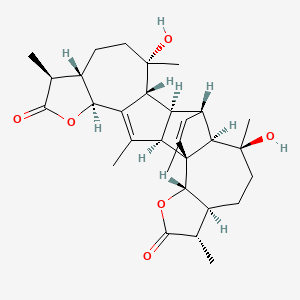
(iii) Artemisitene (C₁₅H₂₀O₃)
- Flavonoids and Phenolic Compounds
Most Important Compound:
Quercetin (C₁₅H₁₀O₇) – Major flavonol
Proposed Biochemical Mechanisms for Traditional Uses
Respiratory Support (Tea and Inhalation)
- Camphor and 1,8-cineole act as:
- Expectorants increasing mucus secretion and clearance
- Bronchodilators relaxing airway smooth muscle
- Decongestants reducing nasal and bronchial inflammation
- Borneol provides:
- Antitussive (cough suppressant) effects
- Local anesthetic properties for throat irritation
- Antimicrobial action against respiratory pathogens
Wound Healing and Antimicrobial Action (Topical Applications)
- Essential oil monoterpenes provide:
- Bacterial membrane disruption and cell death
- Anti-inflammatory effects reducing wound inflammation
- Enhanced tissue regeneration
- Sesquiterpene lactones contribute:
- Antimicrobial synergy with monoterpenes
- Anti-inflammatory effects via NF-κB inhibition
- Immune system modulation
Digestive Support (Teas and Decoctions)
- Bitter compounds (absinthin) stimulate:
- Gastric secretions and digestive enzyme production
- Bile flow enhancing fat digestion
- Gastric motility improving overall digestion
- Camphor and cineole provide:
- Smooth muscle relaxation reducing cramping
- Anti-inflammatory effects on digestive tract
- Antimicrobial activity against gut pathogens
Chemical Reactions and Molecular Interactions
Respiratory Relief Mechanism (Monoterpenes)
1,8-Cineole → β₂-adrenergic receptor activation → ↑ cAMP → Bronchial smooth muscle relaxation → Improved airflow
Camphor → TRPM8 cold receptor activation → Gate control mechanism → Pain signal inhibition → Reduced throat irritation
Monoterpenes → Mucin gene expression ↑ → Enhanced mucus clearance
Anti-inflammatory Mechanism (Multiple Compounds)
Sesquiterpene lactones → NF-κB pathway inhibition → ↓ Pro-inflammatory cytokines → Reduced tissue inflammation → Symptom relief
Quercetin → COX-2 enzyme inhibition → ↓ Prostaglandin synthesis → Anti-inflammatory and analgesic effects
Antimicrobial Action (Essential Oils)
Camphor + Cineole → Bacterial membrane disruption → Cell lysis → Increased membrane permeability → ATP leakage → Cell death
Borneol → Bacterial protein sulfhydryl group binding → Enzyme inactivation → Metabolic disruption → Growth inhibition
Digestive Stimulation (Bitter Compounds)
Absinthin → Bitter taste receptor activation → ↑ Gastric secretions → Enhanced digestive enzyme release → Improved digestion
Monoterpenes → Smooth muscle calcium modulation → Reduced cramping → Relief of digestive discomfort
Analgesic Pathway (Camphor)
Camphor → TRPM8 cold receptor activation → Counter-irritant effect → Pain gate control at spinal cord → Reduced pain sensation
Camphor → Voltage-gated Na+ channel blockade → ↓ Action potential → Local anesthetic effect → Pain relief
Traditional Preparation Methods and Biochemical Optimization
Tea Preparation (Primary Traditional Method)
- Hot water infusion: Extracts water-soluble compounds and some volatile oils
- Covered steeping: Prevents loss of volatile essential oils
- Fresh vs. dried: Traditional knowledge distinguishes potency differences
- Dosage timing: Multiple small doses throughout the day
Inhalation/Steam Therapy
- Hot water with fresh leaves: Maximizes volatile compound release
- Direct inhalation: Delivers monoterpenes to respiratory tract
- Smudging: Releases antimicrobial compounds into air
Topical Applications
- Fresh leaf poultice: Maximum essential oil content for wound healing
- Decoction wash: Concentrated antimicrobial solution
- Direct application: Simple and effective wound treatment
Cultural and Ecological Significance
Ceremonial and Practical Uses
Pasture sage holds multiple cultural roles:
- Smudging ceremonies: Spiritual purification and blessing
- Insect repellent: Burned to drive away mosquitoes and biting insects
- Bedding material: Used in bedding to repel bedbugs, fleas, and lice
- Aromatic purposes: Stuffed into pillows by pioneer women
Ecological Role
- Drought tolerance: Thrives in dry, harsh conditions
- Soil stabilization: Spreading rhizomes prevent erosion
- Wildlife value: Provides food and cover for small mammals and birds
- Grazing resistance: Aromatic oils deter excessive browsing
Safety Considerations and Traditional Wisdom
Traditional Guidelines
Indigenous preparation methods emphasize:
- Appropriate dosing: Moderate use due to potent compounds
- Duration limitations: Typically short-term applications
- Proper preparation: Traditional methods optimize safety and efficacy
- Individual sensitivity: Recognition of personal tolerance
References
1) Elders and Community members of the Cayoose Creek Band of Sekw’el’was
2) Everwilde Farms. (2025). Artemisia frigida (fringed sage) wildflower seed. https://www.everwilde.com/store/Artemisia-frigida-WildFlower-Seed.html
3) Frontiers in Chemistry. (2024, November 19). Chemical composition, antimicrobial, and antioxidant properties of essential oils from Artemisia species. Frontiers in Chemistry, 12, https://doi.org/10.3389/fchem.2024.1456684
4) Grigore, A., Istudor, V., & Colceru-Mihul, S. (2023). Essential oils of Artemisia frigida plants (Asteraceae): Conservatism and lability of the composition. Plants, 12(19), 3422. https://doi.org/10.3390/plants12193422
5) Lopes-Lutz, D., Alviano, D. S., Alviano, C. S., & Kolodziejczyk, P. P. (2018). The Artemisia L. genus: A review of bioactive essential oils. Molecules, 23(11), 2956. https://doi.org/10.3390/molecules23112956
6) Bora, K. S., & Sharma, A. (2021, April). Phytochemistry and pharmacological activity of the genus Artemisia. Pharmacognosy Reviews, 15(30), 49–63. https://doi.org/10.4103/phrev.phrev_23_21
7) (2025, August 19). Phytochemical treasure troves—Insights into bioactivities, phytochemistry, and uses of Artemisia species. Phytochemistry Reviews. https://doi.org/10.1007/s11101-025-10163-0
8) S. Department of Agriculture, Natural Resources Conservation Service. (2025). Plant fact sheet: Prairie sagewort (Artemisia frigida). https://plants.usda.gov/DocumentLibrary/factsheet/pdf/fs_arfr4.pdf
9) Wild Bloom Nursery. (2025). Artemisia frigida / mountain sage / pasture sagebrush. https://wildbloomnursery.com/products/artemesia-frigida-praririe-sagewort
10) Wild Ones Front Range Chapter. (2024, January 26). Colorado native plant focus: Artemisia frigida. https://frontrange.wildones.org/colorado-native-plant-focus-artemisia-frigida/
11) (2025, June 29). Artemisia frigida. https://en.wikipedia.org/wiki/Artemisia_frigida