25 Canada Wild Rye
Names
Common name – Canada Wild Rye
Scientific name – Elymus canadensis
General information
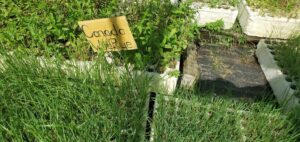
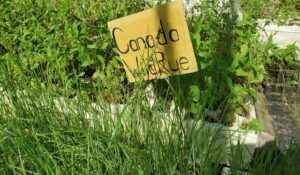
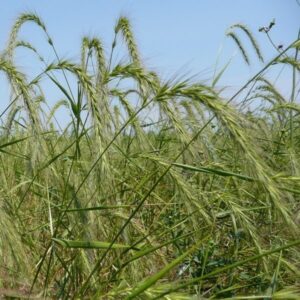
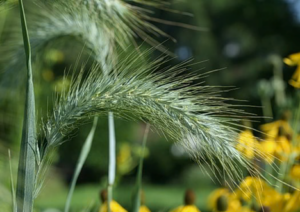
Canada Wild Rye (Elymus canadensis) has been used primarily as a food source rather than for medicinal purposes by Indigenous peoples.
Traditional Indigenous Uses
Canada Wild Rye was a strong and useful grass, one that fed both people and the land. Its seeds were gathered and ground into flour or meal, used much like other grains to make nourishing food that sustained families during the colder seasons. The plant was known not only as a source of strength for the body but also as a dependable food for the animals.
Beyond its value as food, Canada Wild Rye was a plant of practicality. Its tall stems and tough leaves were dried and used in basketry, thatching, and other forms of traditional construction.
Biochemical Composition and Nutritional Properties
Grass Seed Nutritional Profile
Based on general grass seed composition and related research on cereal grains, Canada Wild Rye seeds likely contain:
- Carbohydrates (60-75% of seed weight)
Major Components:
- Starch: Primary energy storage compound
- Amylose (20-30%): Linear glucose polymer
- Amylopectin (70-80%): Branched glucose polymer
- Dietary Fiber: Including cellulose, hemicellulose, and β-glucans
- Simple Sugars: Glucose, fructose, sucrose (1-3%)
Chemical Structure of Starch:

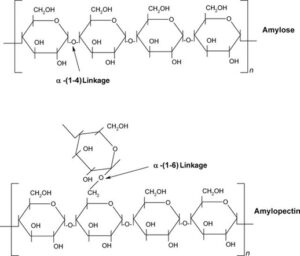
Amylose: α(1→4) linked glucose units (linear chain)
Amylopectin: α(1→4) linked glucose with α(1→6) branch points every 20-25 units
Glucose polymerization reaction:
n C₆H₁₂O₆ → (C₆H₁₀O₅)ₙ + n H₂O
- Proteins (8-15% of seed weight)
Protein Fractions:
- Albumins: Water-soluble proteins (~20%)
- Globulins: Salt-soluble proteins (~20%)
- Prolamins: Alcohol-soluble proteins (~40%)
- Glutelins: Alkali-soluble proteins (~20%)
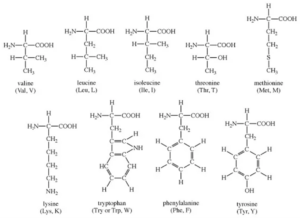
Essential Amino Acids Present:
- Lysine, methionine, tryptophan (often limiting in grass seeds)
- Leucine, isoleucine, valine (branched-chain amino acids)
- Threonine, phenylalanine
- Lipids (2-5% of seed weight)
Fatty Acid Composition:
- Palmitic acid (C16:0): Saturated fatty acid
- Oleic acid (C18:1): Monounsaturated fatty acid
- Linoleic acid (C18:2): Essential polyunsaturated fatty acid
- α-Linolenic acid (C18:3): Omega-3 fatty acid
- Micronutrients
Minerals:
- Phosphorus (300-400 mg/100g)
- Magnesium (100-150 mg/100g)
- Iron (3-5 mg/100g)
- Zinc (2-4 mg/100g)
- Calcium (20-50 mg/100g)
Vitamins:
- B-complex vitamins (thiamine, riboflavin, niacin)
- Vitamin E (tocopherols)
- Folate
Biochemical Mechanisms
Energy Metabolism
Starch Digestion Pathway:
Starch → α-amylase → Maltodextrins → maltase → Glucose
C₆H₁₂O₆ + 6O₂ → 6CO₂ + 6H₂O + ATP (cellular respiration)
Protein Synthesis
Amino Acid Utilization:
Essential amino acids → Protein synthesis → Tissue maintenance/growth
Non-essential amino acids → Gluconeogenesis (if needed)
Fiber Benefits
β-Glucan Structure: β(1→3), β(1→4) linked glucose
Mechanisms:
– Cholesterol reduction through bile acid binding
– Blood glucose regulation via delayed gastric emptying
– Prebiotic effects promoting beneficial gut bacteria
General Grass Seed Nutritional Benefits
- Digestive Health: High fiber content supports gastrointestinal function
- Energy Provision: Complex carbohydrates provide sustained energy
- Protein Quality: Contains essential amino acids for growth and repair
- Micronutrient Source: Provides vitamins and minerals for overall health
Modern Research Context
Genetic and Agricultural Studies
Elymus canadensis has been shown to contain a novel high molecular weight (HMW) glutenin subunit (GS) allele. HMW-GS has been shown in wheat and other crops to determine its overall quality.
The cultivar ‘Homestead’ produces larger amounts of forage and has higher digestibility than “another adapted experimental strain” that it was compared against.
Ecological Benefits
Canada wild rye is sometimes used for stabilizing eroded areas and for vegetating metal-rich soils in reclaimed mines.
Safety Considerations
General Safety
Warning: The awns (seed husks) of this species and some other grass species with similarly barbed awns pose a serious threat of injury to dogs.
Traditional Processing
Indigenous peoples processed the seeds by:
- Harvesting: Collecting seeds when fully mature
- Cleaning: Removing awns and chaff
- Grinding: Creating meal or flour for consumption
- Cooking: Preparing as porridge, bread, or other food items
References
- 1) Elders and Community members of the Cayoose Creek Band of Sekw’el’was
- 2) Moerman, D. E. (1998). Native American ethnobotany. Timber Press.
- 3) Simonin, K. A. (2000). Elymus canadensis. In Fire Effects Information System (FEIS). U.S. Department of Agriculture, Forest Service, Rocky Mountain Research Station, Fire Sciences Laboratory. Retrieved September 24, 2025, from https://www.fs.usda.gov/database/feis/plants/graminoid/elycan/all.html
- 4) Kindscher, K. (1988). The ethnobotanical use of native prairie plants as food. In A. Davis & G. Stanford (Eds.), The prairie: Roots of our culture; foundation of our economy: Proceedings of the 10th North American Prairie Conference (Section 2.04, pp. 1–3). Native Prairie Association of Texas, Texas Woman’s University.
- 5) Lady Bird Johnson Wildflower Center. (n.d.). Elymus canadensis (Canada wild rye). Native Plant Information Network, University of Texas at Austin. Retrieved September 24, 2025, from https://www.wildflower.org/plants/result.php?id_plant=elca4
- 6) S. Department of Agriculture, Natural Resources Conservation Service. (n.d.). Elymus canadensis L. PLANTS Database. Retrieved September 24, 2025, from https://plants.usda.gov/plant-profile/ELCA4
- 7) Sanders, T. B., & Hamrick, J. L. (1980). Variation in the breeding system of Elymus canadensis. Evolution, 34(1), 117–122. https://doi.org/10.1111/j.1558-5646.1980.tb04794.x