34 Giant Wildrye
Names
Common Name: Giant Wildrye
Scientific Name: Leymus condensatus
Other names: Giant Wild Rye, Giant Rye Grass
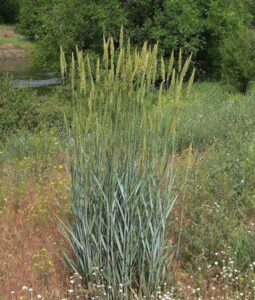
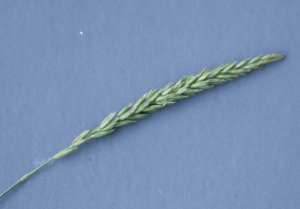 General information
Giant Wildrye is a robust perennial grass native to western North America. While primarily known for its nutritional and material uses, this plant has been utilized by Indigenous peoples for various purposes including limited medicinal applications.
Physical Characteristics:
- Height: 2-3 meters (6-10 feet) tall
- Growth Form: Robust, clump-forming perennial grass
- Culms: Erect, strong stems
- Habitat: Native to California and western North America
- Flowering: May to July, seeds ripen September to October
- Adaptability: Tolerates poor soils, drought, and saline conditions
Traditional Indigenous Uses
During times of scarcity, its seeds became food. They were ground into flour and cooked into a simple porridge that sustained families when little else grew. Its tall, sturdy stems and flexible leaves were soaked in water until soft, then shaped into baskets, mats, and temporary shelters. The plant’s stems, when fire-hardened, were used for arrows and small tools. It was planted to steady the soil and protect against erosion, its roots gripping tightly to the riverbanks, keeping the water clear and the earth strong.
Specific Traditional Knowledge
Nutritional Reserve: There were many foods not used in time of plenty, which were held in reserve for bad years, L. condensatus was one of these. This indicates the plant’s role as a survival food and nutritional medicine during times of scarcity.
Material Processing: Leaves of this species were used in construction and for fibers. The fibers need to be soaked in water to soften before use. Fire hardened stems were used for various implements and tools.
Ecological Applications: Native giant wild rye is recommended for erosion control on slopes and hillsides. Easy to grow, it spreads by underground roots.
Phytochemical Composition
Primary Bioactive Compounds in Grasses
While specific phytochemical data for Leymus condensatus is limited, grass species in the Poaceae family typically contain:
- Silica Compounds
- Function: Structural support, antimicrobial properties
- Location: Cell walls, especially in leaves and stems
- Chemical Form: SiO₂ (silicon dioxide)
Silica Structure:
Si-O-Si networks forming rigid structures
Provides mechanical strength and pest resistance
Concentration: 1-15% dry weight in grass tissues
- Phenolic Compounds
- Types: Ferulic acid, coumaric acid, caffeic acid
- Function: Antioxidant, antimicrobial, UV protection
Ferulic Acid Structure:

Molecular Formula: C₁₀H₁₀O₄
Structure: HO-C₆H₃(OCH₃)-CH=CH-COOH
MW: 194.18 g/mol
- Alkaloids (Gramine-type)
- Function: Natural pesticide, bitter compounds
- Structure: Indole-based alkaloids
Gramine Structure:
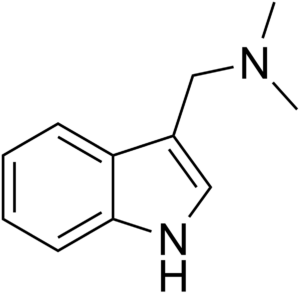
Molecular Formula: C₁₁H₁₄N₂
Structure: Indole ring + dimethylaminomethyl group
MW: 174.24 g/mol
- Polysaccharides
- Types: Cellulose, hemicellulose, lignin
- Function: Structural components, prebiotic effects
Limited Medicinal Properties
- Nutritional Support
- High fiber content for digestive health
- Mineral content (silica) for structural support
- Complex carbohydrates for sustained energy
- Silica-Based Benefits
- Potential support for connective tissue health
- Possible benefits for hair, skin, and nail health
- Structural support for bones and joints
Biochemical Mechanisms
Silica Metabolism:
Dietary Silica (Si(OH)₄) → Absorption in small intestine → Transport to tissues → Collagen cross-linking → Enhanced structural integrity
Fiber Benefits:
Complex Polysaccharides → Fermentation by gut bacteria → Short-chain fatty acids → Anti-inflammatory effects → Improved gut health
Nutritional Composition
Seed Nutritional Profile
Macronutrients:
- Carbohydrates: 60-70% (primarily starch and fiber)
- Protein: 8-12% (essential amino acids)
- Fat: 2-4% (unsaturated fatty acids)
- Fiber: 15-25% (insoluble and soluble)
Micronutrients:
- Silica: High content (1-5% dry weight)
- Minerals: Potassium, magnesium, phosphorus
- Trace Elements: Iron, zinc, manganese
Processing and Preparation Methods
Traditional Seed Processing:
- Harvesting:
- Collect seeds when fully mature (September-October)
- Beat seed heads to separate grains
- Winnow to remove chaff
- Processing:
- Grind seeds into coarse flour
- Soak overnight to improve digestibility
- Cook as porridge or mix with other foods
- Fiber Preparation:
- Harvest leaves during active growth
- Soak in water for several days
- Strip and separate fibers for use
Modern Applications and Research
Contemporary Uses:
- Ecological Restoration:
- Erosion control on slopes
- Habitat restoration projects
- Drought-tolerant landscaping
- Sustainable Agriculture:
- Forage grass for livestock
- Soil stabilization crop
- Low-maintenance ground cover
Safety Profile
- GRAS Status: Generally recognized as safe for consumption
- Allergenic Potential: Low, but possible grass pollen sensitivity
- Toxicity: No known toxic compounds in seeds or leaves
Contraindications
- Individuals with grass allergies should exercise caution
- High fiber content may cause digestive upset if consumed in large quantities
- Silica content generally beneficial but should be consumed in moderation
Conservation and Sustainable Harvesting
Habitat Requirements:
- Soil: Tolerates poor, sandy, and saline soils
- Water: Drought-tolerant once established
- Climate: Mediterranean and semi-arid regions
- Elevation: Sea level to 2,000 meters
Sustainable Practices:
- Harvest seeds without damaging root systems
- Leave adequate plant material for regeneration
- Rotate harvesting areas to prevent overuse
- Collect only mature seeds to ensure plant reproduction
References
1) Elders and Community members of the Cayoose Creek Band of Sekw’el’was
2) Natural History of Orange County, California. (n.d.). Giant wild rye (Elymus condensatus). https://nathistoc.bio.uci.edu/plants/Poaceae/Elymus%20condensatus/Elymus%20condensatus.htm bio.uci.edu
3) Practical Plants. (2013, May 4). Leymus condensatus (giant wild rye). https://practicalplants.org/wiki/leymus_condensatus/ org
4) Fern, K. (n.d.). Leymus condensatus. Useful Temperate Plants. https://temperate.theferns.info/plant/Leymus+condensatus theferns.info
5) (n.d.). Leymus condensatus: Taxon report. https://www.calflora.org/app/taxon?crn=4788 calflora.org
6) Theodore Payne Foundation. (2010, May 9). Leymus condensatus – Giant wild rye. Native Plant Database. https://theodorepayne.org/nativeplantdatabase/index.php?title=Leymus_condensatus org
7) Plants For A Future. (n.d.). Leymus condensatus – Giant wild rye. PFAF Plant Database. https://pfaf.org/user/Plant.aspx?LatinName=Leymus+condensatus Pfaf
8) Oregon State University, College of Agricultural Sciences, Malheur Experiment Station. (n.d.). Ethnobotany in Native American cultures. https://agsci.oregonstate.edu/mes/sustainable/wildflowers/medicinal-uses/ethnobotany-native-american-cultures oregonstate.edu
9) Lady Bird Johnson Wildflower Center. (n.d.). Leymus condensatus (giant wildrye). The University of Texas at Austin. https://www.wildflower.org/plants/result.php?id_plant=LECO12