61 Shrubby Penstemon
Names
Common name – Shrubby Penstemon
Scientific name – Penstemon fruticosus
Other names – sagsásegt, bush penstemon or shrubby beardtongue
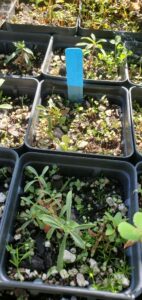
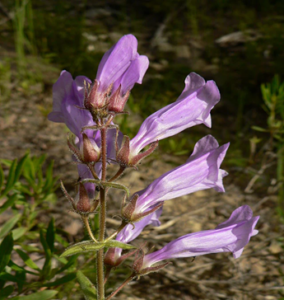
General Information
Shrubby Penstemon is a semi-evergreen subshrub in the plantain family (Plantaginaceae, formerly Scrophulariaceae) native to the Pacific Northwest of North America. This low-growing woody perennial forms spreading mats or tufts typically 5-16 inches tall (13-40 cm) but can sprawl up to 36 inches across. The plant features lance-shaped, saw-toothed leaves with pointed tips, and produces spectacular tubular flowers 1.5-2 inches long in shades of lavender, blue-purple, or occasionally pink. The flowers have a distinctive lower lip with two deep folds and golden hairs on the inner parts near the mouth.
Traditional Indigenous Uses
Shrubby Penstemon is a gentle but reliable medicine, one that the people often turned to when the body or spirit was burdened by pain or illness. The tops of the plant were gathered to make a tea that soothed headaches and migraines, calming the mind and easing the weight behind the eyes. The same infusion was taken for colds and flu, helping the body fight fever and clear the chest. Sometimes, the tea was used as a wash for the scalp when it became sore or itchy, or as a bath for the skin when rashes and acne appeared. The roots are known for their strength – when chewed or pressed against the tooth, they eased toothache and relieved pain quickly.
The whole plant could be used as an anti-inflammatory, applied to swollen areas to bring down heat and discomfort. When breathing was difficult, the infusion served as both tea and steam, loosening congestion and helping the lungs to open. The flowers were also made into tea and taken as a general tonic to maintain strength and balance. The leaves, when crushed, were laid directly on cuts or skin irritations to promote healing, while the decoction of the plant was used as an antiseptic wash to clean wounds and prevent infection.
Biochemical Compounds and Their Medicinal Properties
- Iridoid Glycosides (Primary Bioactive Compounds)
Three Most Important Compounds:
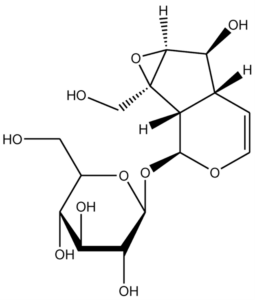
(i) Catalpol (C₁₅H₂₂O₁₀) – Major iridoid in Penstemon species
(ii) Penstemoside (Iridoid glucoside)
(Characteristic Penstemon iridoid)
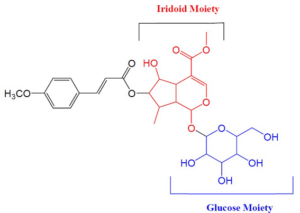
(iii) Plantarenaloside (Iridoid glycoside)
(Ester-type iridoid)
Medicinal Properties
- Anti-inflammatory: Potent inhibition of inflammatory pathways
- Analgesic: Pain-relieving properties
- Antimicrobial: Broad-spectrum antibacterial activity
- Neuroprotective: Protects nervous system tissues
- Phenylethanoid Glycosides (Supporting Compounds)
Three Most Important Compounds:
(i) Verbascoside (C₂₉H₃₆O₁₅) – Major phenylpropanoid
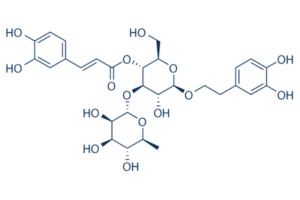
(ii) Acetylated Verbascoside Derivatives
(Modified verbascoside structures)
With acetyl groups at various positions
(iii) Caffeic Acid Derivatives (C₉H₈O₄)
- Flavonoids
Most Important Compound:
Quercetin (C₁₅H₁₀O₇) – Common flavonol
Proposed Biochemical Mechanisms for Traditional Uses
Headache and Pain Relief (Plant Top Infusions)
- Iridoid glycosides act through:
- COX enzyme inhibition reducing prostaglandin synthesis
- Modulation of pain neurotransmitter pathways
- Anti-inflammatory effects reducing pain signals
- Verbascoside contributes:
- Direct analgesic properties
- Neuroprotective effects on pain receptors
- Antioxidant protection of nerve tissues
Cold and Respiratory Treatment (Infusions)
- Catalpol and iridoids provide:
- Anti-inflammatory effects in respiratory tract
- Immune system modulation
- Antimicrobial activity against respiratory pathogens
- Phenylethanoid glycosides facilitate:
- Antioxidant protection of respiratory tissues
- Enhanced immune response
- Reduced inflammation in airways
Toothache Relief (Raw Root Application)
- Iridoid glycosides act as:
- Local anesthetics through nerve signal blockade
- Anti-inflammatory agents reducing dental inflammation
- Antimicrobials preventing oral infections
- Verbascoside provides:
- Direct analgesic effects on dental nerves
- Anti-inflammatory action in gum tissues
- Antimicrobial protection
Skin Condition Treatment (Topical Baths/Washes)
- Iridoids provide:
- Anti-inflammatory effects reducing skin irritation
- Antimicrobial protection against skin pathogens
- Enhanced wound healing
- Phenylethanoid glycosides contribute:
- Antioxidant protection of skin cells
- Anti-inflammatory effects
- Improved skin barrier function
Chemical Reactions and Molecular Interactions
Anti-inflammatory Mechanism (Iridoid Glycosides)
Catalpol → NF-κB pathway inhibition → ↓ Pro-inflammatory cytokines → Reduced tissue inflammation → Pain relief
Iridoids → COX-2 enzyme inhibition → ↓ Prostaglandin synthesis → Anti-inflammatory and analgesic effects
Analgesic Action (Multiple Compounds)
Catalpol → Opioid receptor modulation → Enhanced pain threshold → Reduced pain perception
Verbascoside → Substance P inhibition → ↓ Pain neurotransmission → Localized pain relief
Antimicrobial Activity (Iridoids + Phenylpropanoids)
Iridoid glycosides → Bacterial membrane disruption → Cell lysis → Increased permeability → ATP leakage → Cell death
Verbascoside → Bacterial enzyme inhibition → Metabolic disruption → Growth inhibition → Reduced infection
Neuroprotective Mechanism (Catalpol)
Catalpol → BDNF expression ↑ → Enhanced neuronal survival → Neuroprotection → Improved nerve function
Catalpol → Oxidative stress reduction → ↓ Neuronal damage → Protected nerve tissues → Reduced pain signals
Antioxidant Protection (Multiple Compounds)
Verbascoside + ROS → Stable radical species + H₂O
(Direct radical scavenging)
Catalpol → Nrf2 activation → ↑ Antioxidant enzyme expression → Enhanced cellular defense mechanisms
Traditional Preparation Methods and Biochemical Optimization
Plant Top Infusion (Primary Traditional Method)
- Hot water extraction: Optimizes iridoid and phenylpropanoid extraction
- Fresh plant material: Maximum bioactive compound content
- Covered steeping: Prevents loss of volatile components
- Multiple applications: Daily use for chronic conditions
Raw Root Application (Toothache Treatment)
- Direct placement: Immediate release of analgesic compounds
- Fresh root optimal: Maximum iridoid glycoside content
- Sustained contact: Prolonged analgesic effect
- Local delivery: Concentrated therapeutic action
Cultural and Ecological Significance
Traditional Ecological Knowledge
- Sustainable harvesting: Careful collection preserving woody base
- Habitat recognition: Rocky slopes and well-drained areas
- Seasonal timing: Optimal collection during flowering
- Multiple uses: Both medicinal and understanding of pollinator relationships
Ornamental Value
Beyond medicine, shrubby penstemon serves:
- Garden cultivation: Attractive native plant for xeriscaping
- Pollinator support: Important for bees, butterflies, and night moths
- Erosion control: Mat-forming habit stabilizes slopes
- Native landscaping: Hardy, drought-tolerant ornamental
Safety Considerations and Traditional Wisdom
Traditional Guidelines
- External applications primary: Topical use for skin and scalp
- Raw root for dental: Direct application without processing
- Proper dosing: Moderate use of infusions
- Fresh material optimal: Best therapeutic effects
Modern Safety Notes
- Generally recognized as safe: Long history of traditional use
- Iridoid content: Non-toxic at traditional doses
- Skin sensitivity: Test before extensive topical application
- Quality control: Proper species identification important
References
1) Elders and Community members of the Cayoose Creek Band of Sekw’el’was
2) edu. (1987). Iridoid glycosides from Penstemon confertus. https://www.academia.edu/63241217/Iridoid_glycosides_from_Penstemon_confertus
3) Viljoen, A. M., Mncwangi, N., & Vermaak, I. (2014). Anti-inflammatory iridoids of botanical origin. Phytochemistry Letters, 10, xxi–xxix. https://doi.org/10.1016/j.phytol.2014.06.004
4) Jensen, S. R., & Nielsen, B. J. (1992). Iridoid glycosides from Penstemon Phytochemistry, 31(11), 3921–3924. https://doi.org/10.1016/0031-9422(92)80441-G
5) Jensen, S. R., & Olsen, C. E. (1995). Verbascoside derivatives and iridoid glycosides from Penstemon crandallii. Phytochemistry, 40(5), 1459–1463. https://doi.org/10.1016/0031-9422(95)00077-J
6) Jensen, S. R., & Olsen, C. E. (1999). Trans-fused iridoid glycosides from Penstemon mucronatus. Phytochemistry, 51(3), 387–390. https://doi.org/10.1016/S0031-9422(99)00003-6
7) Hernández, T., Canales, M., & Avila, J. G. (2012). Chemical analysis and antimicrobial activity of Penstemon campanulatus. Natural Product Research, 26(15), 1424–1431. https://doi.org/10.1080/14786419.2011.567434
8) Jensen, S. R., & Nielsen, B. J. (1981). Iridoid and other glycosides from Penstemon Phytochemistry, 20(12), 2753–2756. https://doi.org/10.1016/0031-9422(81)80031-U
9) Jensen, S. R., & Nielsen, B. J. (1992). Iridoid glycosides from Penstemon species: A C-5, C-9 trans iridoid. Phytochemistry, 31(11), 3921–3924. https://doi.org/10.1016/0031-9422(92)80441-G
10) Washington Native Plant Society. (2025). Penstemon fruticosus. https://www.wnps.org/native-plant-directory/331:penstemon-fruticosus
11) (2024, December 7). Penstemon fruticosus. https://en.wikipedia.org/wiki/Penstemon_fruticosus