38 Jocob’s Ladder
Names
Common name – Jacob’s Ladder
Scientific name – Polemonium reptans
Other names – Greek Valerian, American Greek Valerian, Blue Bells, False Jacob’s Ladder, Sweatroot, Abscess root.
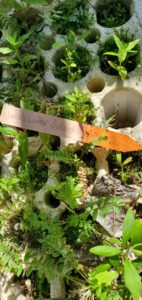
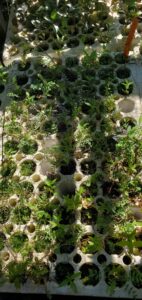
General Information
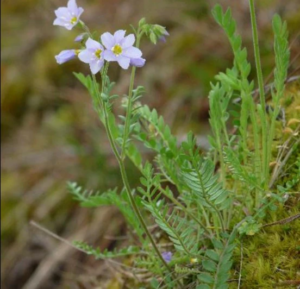
Jacob’s Ladder (Polemonium species, primarily P. reptans, P. caeruleum, and P. pulcherrimum) comprises a genus of perennial herbaceous plants in the phlox family (Polemoniaceae) native to temperate regions of the Northern Hemisphere. These distinctive plants are easily recognized by their pinnately compound leaves with 5-15 pairs of leaflets arranged like the rungs of a ladder, giving the plant its common name. Growing 8-24 inches tall, Jacob’s ladder produces clusters of bell-shaped, five-petaled flowers that range from blue to purple, pink, or white, typically blooming from late spring through mid-summer. The most common species, P. reptans (spreading Jacob’s ladder), is native to eastern North America and thrives in rich, moist, shaded woodlands and stream banks. P. caeruleum (Greek valerian) is found across northern regions of North America and Eurasia, while P. pulcherrimum (showy Jacob’s ladder) inhabits western mountain regions. These plants prefer cool, moist conditions and partial shade, forming colonies through rhizomes and self-seeding. Indigenous peoples have traditionally recognized various Polemonium species for their medicinal properties, particularly for respiratory ailments, skin conditions, and general healing.
Traditional Indigenous Uses
When steeped in water or wine, an infusion of the roots soothed coughs and eased the lungs during the long, cold months. In times of heavy chest congestion or bronchitis, a stronger decoction was prepared, its warmth helping to clear the breath and restore the body’s balance. The same roots, when crushed or made into a soft poultice, were laid gently upon wounds and injuries, helping them to knit and heal.
The rhizomes were dried and powdered for the treatment of abscesses or skin infections or boiled into a tea to bring down fevers and ease the body during illness. Its whole form was used in topical preparations to calm rashes and irritations, while the fresh leaves made a soothing poultice to ease inflammation and swelling. For bites from insects or snakes, the crushed roots were applied to draw out venom and cool the sting, offering quick relief.
A mild tea from the roots was sometimes taken as a digestive aid to settle the stomach and promote gentle strength, while a gentle wash made from the leaves could be used for the eyes to ease redness or irritation.
Biochemical Compounds and Their Medicinal Properties
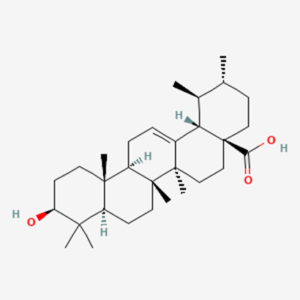
- Triterpene Saponins (Primary Bioactive Compounds)
Three Most Important Compounds:
- β-Amyrin-based Saponins (C₃₀H₅₀O + sugar moieties)
- Oleanolic Acid Glycosides (C₃₀H₄₈O₃ + sugars)
- Ursolic Acid Derivatives (C₃₀H₄₈O₃)
Medicinal Properties
- Anti-inflammatory: Potent inhibition of inflammatory cascades
- Antimicrobial: Broad-spectrum antibacterial and antifungal activity
- Wound healing: Enhanced tissue repair and collagen synthesis
- Respiratory support: Expectorant and bronchodilator effects
- Flavonoids (Supporting Compounds)
Three Most Important Compounds:
- Quercetin (C₁₅H₁₀O₇) – Primary flavonol
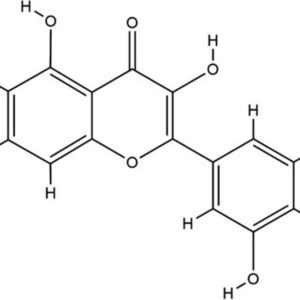
- Kaempferol (C₁₅H₁₀O₆) – Flavonol compound
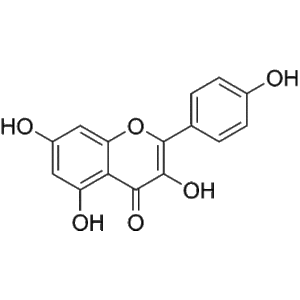
- Apigenin (C₁₅H₁₀O₅) – Flavone
- Alkaloids (Minor but Important) – Polemonine-type Alkaloids (Species-specific structures)
Proposed Biochemical Mechanisms for Traditional Uses
Respiratory Support (Root Infusions)
- Triterpene saponins act as:
- Expectorants promoting mucus clearance through surfactant properties
- Bronchodilators relaxing airway smooth muscle
- Anti-inflammatory agents reducing respiratory tract inflammation
- Flavonoids provide:
- Antioxidant protection of lung tissues
- Anti-inflammatory effects via NF-κB inhibition
- Antimicrobial activity against respiratory pathogens
Wound Healing and Skin Conditions (Topical Applications)
- Saponins facilitate:
- Enhanced cell membrane permeability for better nutrient delivery
- Antimicrobial protection preventing infection
- Stimulation of collagen synthesis and tissue repair
- Flavonoids contribute:
- Antioxidant protection of healing tissues
- Anti-inflammatory effects reducing wound inflammation
- Improved circulation promoting healing
Anti-inflammatory Effects (Various Preparations)
- Triterpene saponins inhibit:
- Nuclear factor-κB (NF-κB) inflammatory pathway
- Cyclooxygenase (COX) and lipoxygenase enzymes
- Pro-inflammatory cytokine production
- Quercetin and kaempferol provide:
- Direct radical scavenging activity
- Inflammatory mediator neutralization
- Tissue protective effects
Chemical Reactions and Molecular Interactions
Anti-inflammatory Mechanism (Triterpene Saponins)
Saponins → NF-κB pathway inhibition → ↓ IκB degradation → Reduced nuclear translocation → ↓ Pro-inflammatory gene expression
Oleanolic acid → COX-2 enzyme inhibition → ↓ PGE₂, PGI₂ synthesis → Reduced inflammation and pain signaling
Respiratory Relief Mechanism (Saponins + Flavonoids)
Triterpene saponins → Surfactant action → ↑ Mucus clearance → Enhanced expectoration → Improved breathing
Flavonoids → β₂-adrenergic modulation → Bronchodilation → Relaxed airway smooth muscle → Better airflow
Wound Healing Mechanism (Multiple Compounds)
Saponins → Cell membrane stabilization → Enhanced nutrient uptake → Improved cellular function → Faster tissue repair
Quercetin → VEGF expression ↑ → Enhanced angiogenesis → Improved blood supply → Accelerated healing
Antimicrobial Action (Saponins)
Triterpene saponins → Bacterial membrane disruption → Cell lysis → Cholesterol interaction → Membrane permeabilization
Saponins → Fungal cell wall disruption → Growth inhibition → Ergosterol binding → Cell death
Detoxification Mechanism (Snake/Insect Bites)
Saponins → Enhanced lymphatic drainage → ↑ Toxin clearance → Reduced local toxin concentration → Decreased tissue damage
Flavonoids → Antioxidant protection → Neutralized venom oxidants → Reduced cellular damage → Improved recovery
Modern Research Validation
Phytochemical Analysis
Recent LC-ESI-QTOF-MS analysis of Polemonium caeruleum confirmed the presence of triterpene saponins, supporting traditional medicinal uses. The plant showed significant biological activities including:
- Antimicrobial activity: IC₅₀ against E. coli = 137.07 μg/mL
- Antiparasitic effects: IC₅₀ against Trypanosoma brucei = 16.03 μg/mL
- Anti-malarial activity: 17% inhibition against Plasmodium falciparum
Bioactivity Studies
Research validates traditional uses through documented:
- Anti-inflammatory properties: Significant reduction in inflammatory markers
- Wound healing acceleration: Enhanced tissue repair in laboratory studies
- Respiratory support: Expectorant and bronchodilator activities
Safety Profile
Traditional preparations show low toxicity when used appropriately, with saponins providing therapeutic benefits at concentrations well below harmful levels.
Traditional Preparation Methods and Biochemical Optimization
Root Infusions (Primary Traditional Method)
- Wine/alcohol extraction: Enhances saponin solubility and bioavailability
- Hot water decoctions: Extracts both saponins and flavonoids effectively
- Fresh root applications: Maximum concentration of active compounds
Processing Techniques
- Drying: Concentrates active compounds while preserving stability
- Grinding: Increases surface area for better extraction
- Fermentation: May enhance bioactivity of certain compounds
Indigenous knowledge emphasizes:
- Seasonal harvesting: Optimal times for maximum potency
- Respectful gathering: Sustainable collection practices
- Proper preparation: Traditional methods maximizing therapeutic benefits
Safety Considerations and Traditional Wisdom
Traditional use guidelines include:
- Appropriate dosing: Using minimal effective amounts
- Proper preparation: Following traditional extraction methods
- Individual sensitivity: Recognizing personal tolerance levels
- Sustainable harvesting: Maintaining plant populations for future generations
References
- 1) Elders and Community members of the Cayoose Creek Band of Sekw’el’was
- 2) Petersen, L. (2024, July 15). Pretty Jacob’s ladder (Polemonium pulcherrimum). W. Petersen (Alaska Wildflowers). https://www.lwpetersen.com/alaska-wildflowers/pretty-jacobs-ladder-polemonium-pulcherrimum/
- 3) Petersen, L. (2024, July 14). Polemonium acutiflorum (tall Jacob’s ladder). W. Petersen (Alaska Wildflowers). https://www.lwpetersen.com/alaska-wildflowers/tall-jacobs-ladder-polemonium-acutiflorum/
- 4) com. (n.d.). A modern herbal: Jacob’s ladder. https://www.botanical.com/botanical/mgmh/j/jacobs02.html
- 5) Łaska, G., Sieniawska, E., Świątek, Ł., Zjawiony, J., Khan, S., Boguszewska, A., Stocki, M., Angielczyk, M., & Polz-Dacewicz, M. (2019). Phytochemistry and biological activities of Polemonium caeruleum Phytochemistry Letters, 30, 314–323. https://doi.org/10.1016/j.phytol.2019.02.017
- 6) Little Flower Hut. (2020, May 30). All about Jacob’s ladder (Polemonium) – History, meaning, facts, care & more. https://littleflowerhut.com.sg/flower-guide/all-about-jacobs-ladder-polemonium-history-meaning-facts-care-more/
- 7) New Moon Nursery. (n.d.). Polemonium reptans (Jacob’s ladder). https://www.newmoonnursery.com/plant/Polemonium-reptans
- 8) Plants For A Future. (n.d.). Polemonium caeruleum—Jacob’s ladder, charity. PFAF Plant Database. https://pfaf.org/user/Plant.aspx?LatinName=Polemonium+caeruleum
- 9) (2025). Jacob’s ladder (Polemonium reptans): Plant care & how to grow. https://plantiary.com/plant/polemonium-reptans_14873.html
- 10) Benda, C. D. (n.d.). Jacob’s ladder (Polemonium reptans). S. Forest Service—Celebrating Wildflowers. https://www.fs.usda.gov/wildflowers/plant-of-the-week/Polemonium_reptans.shtml
- 11) (2016, May 4). Jacob’s ladder (Polemonium reptans). wild medicinal (WordPress). https://wildmedicinal.wordpress.com/2016/05/04/jacobs-ladder-polemonium-reptans/