8 Juniper rub/spray
Names
Common name – Juniper
Scientific Name: Juniperus communis
Other Names: tsíktsektaz’, Common Juniper, Zimbro
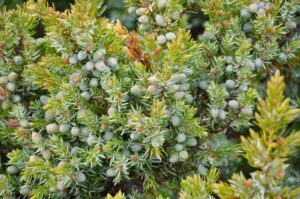
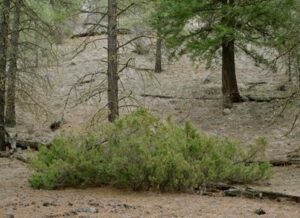
General information
Common Juniper (Juniperus communis L., family Cupressaceae) is known by the Shuswap name “tsíktsektaz'” and has been extensively used by Indigenous peoples across North America for thousands of years. This evergreen shrub/tree has the largest geographical range of any woody plant, with circumpolar distribution throughout the Northern Hemisphere, making it accessible to numerous Indigenous cultures. Juniper needles have most commonly been used to remove or prevent odors and as a cleanser. The berries were not typically eaten except rarely as a travelling food. A tea made from the needles was known to have diuretic properties as well. A poultice of the needles could also be applied topically to burns or sores to ease pain. The needles were also though to help prevent cold and flu, and to help cure sinus infections. It is though that the bioactive compounds found in Juniper may also have anti-cancer properties, although more research is required in that area. Both Juniper leaves and Juniper berries also contain phenolic compounds and exhibit antioxidant activity. In particular, they contain monoterpene hydrocarbons such as α-pinene and limonene (structures shown below):
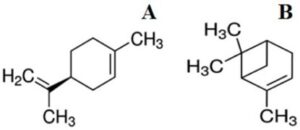 The structure of limonene (left) and α-pinene (right)
Traditional Indigenous Uses
Juniper was a sacred plant, one that carried both the power to heal and to purify. Its sharp needles, fragrant branches, and dark berries were used in many ways to bring strength to the body and clarity to the spirit. When coughs, colds, or chest sickness settled deep in the lungs, the people would brew a tea or breathe in the steam from the needles and branches. The smoke, too, was part of healing, cleansing the air and easing the breath of those suffering from pneumonia, tuberculosis, or asthma.
For troubles of the kidneys or bladder, the berries and branches were steeped into a strong tea or boiled into a decoction. This medicine helped to clear infections, reduce pain, and restore balance to the body’s water pathways. Women, too, turned to Juniper for its gentle but powerful help during childbirth, in easing menstrual pain, and in restoring strength after giving birth. Some used it with care for birth control, knowing the plant’s deep wisdom in matters of the womb.
When the stomach was unwell, whether from worms, diarrhea, or indigestion, the bark or berries were chewed or steeped to calm the pain and cleanse the gut. For sore muscles and aching joints, Juniper branches were boiled for steam baths or used as washes, easing the stiffness of arthritis, rheumatism, and gout.
Juniper was also known to bring down fever and act as a general tonic during times of illness, especially in the changing of the seasons. The berries and needles strengthened the heart and helped regulate blood pressure, keeping the body’s energy in harmony. For the skin, when burns, sores, or infections appeared, a wash or poultice from the branches and berries brought healing and relief.
Finally, Juniper was used in purification – its smoke carrying prayers and cleansing both people and spaces, driving away sickness and restoring balance to all living things.
Biochemical Basis for Medicinal Properties
Primary Bioactive Compounds
- Monoterpene Hydrocarbons (80.4% of essential oil)
- α-Pinene (29-62%): Primary antimicrobial compound
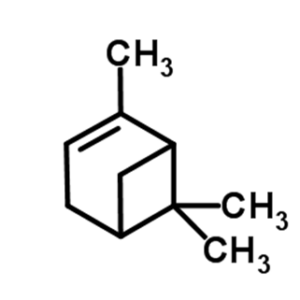
- β-Pinene (5-28%): Anti-inflammatory, bronchodilator
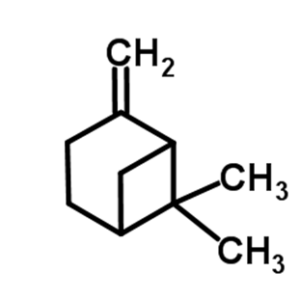
- Sabinene (5-20%): Antimicrobial, antispasmodic
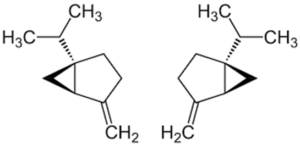
- Myrcene (6-16%): Analgesic, muscle relaxant
- Limonene (2-6%): Antioxidant, anti-inflammatory
- Sesquiterpene Hydrocarbons (9.6% of essential oil)
- Germacrene D (3-7%): Superoxide radical scavenging
- β-Caryophyllene (1-10%): Anti-inflammatory, analgesic
- α-Humulene (1-6%): Anti-inflammatory
- Oxygenated Compounds
- Terpinen-4-ol (0.5-10%): Diuretic effects, antimicrobial
- Bornyl acetate: Anti-inflammatory
- Camphor: Analgesic, antimicrobial
- Other Bioactive Compounds
- Flavonoids (Apigenin, Cupressuflavone): Antioxidant, anti-inflammatory
- Juniperin: Flavonoid with antioxidant properties
- β-sitosterol: Anti-inflammatory steroid
- Organic acids (malic, acetic, formic): Antimicrobial
Molecular Structures of Key Compounds
α-Pinene (C₁₀H₁₆)
Structure: Bicyclic monoterpene with strained 4-membered ring
Molecular Formula: C₁₀H₁₆
Molecular Weight: 136.23 g/mol
Key Features: Two enantiomers – (+) and (-) forms
β-Pinene (C₁₀H₁₆)
Structure: Bicyclic monoterpene isomer of α-pinene
Molecular Formula: C₁₀H₁₆
Molecular Weight: 136.23 g/mol
Key Features: Different ring arrangement than α-pinene
Sabinene (C₁₀H₁₆)
Structure: Bicyclic monoterpene with different stereochemistry
Molecular Formula: C₁₀H₁₆
Molecular Weight: 136.23 g/mol
Key Features: Thujane skeleton structure
Biochemical Mechanisms of Action
- Antimicrobial Activity
- Mechanism: Monoterpenes disrupt bacterial cell membranes, increasing permeability
- Active compounds: α-pinene, β-pinene, sabinene work synergistically
- Targets: Gram-positive and gram-negative bacteria, fungi, yeasts
- MIC values: 8-70% (v/v) against bacterial species, <10% against fungi
- Anti-inflammatory Effects
- Mechanism: Suppression of MAPK and NF-κB pathways
- Active compounds: α-pinene, β-caryophyllene
- Effects: Reduced TNF-α, IL-1β, and IL-6 production
- Clinical relevance: Effective in inflammatory conditions like arthritis
- Diuretic Activity
- Mechanism: Terpinen-4-ol increases renal filtration
- Traditional use validation: Confirmed in modern pharmacological studies
- Safety: Should not be used with existing kidney disease
- Antioxidant Properties
- Mechanism: Electron donation and free radical scavenging
- Active compounds: Flavonoids, monoterpenes
- Assays: Strong DPPH, ABTS radical scavenging activity
- Cellular protection: Reduces oxidative stress markers
- Respiratory Effects
- Mechanism: α-pinene acts as acetylcholinesterase inhibitor
- Effects: Bronchodilation, improved respiratory function
- Traditional use: Explains use for asthma and respiratory infections
Chemical Reactions and Metabolic Pathways
Biosynthesis Pathway
- Geranyl pyrophosphate (GPP) → α-Pinene synthase → α-Pinene
- GPP → β-Pinene synthase → β-Pinene
- GPP → Sabinene synthase → Sabinene
Antimicrobial Mechanism
Monoterpenes → Cell membrane penetration → Lipid bilayer disruption → Increased permeability → Cellular content leakage → Bacterial death
Anti-inflammatory Cascade
α-Pinene → NF-κB inhibition → Reduced cytokine production (TNF-α, IL-1β, IL-6) → Decreased inflammation
Safety Considerations and Traditional Dosing
Traditional Preparation Methods
- Tea: 1 teaspoon berries or needles per cup hot water
- Decoction: Boiled for 10-15 minutes for stronger preparation
- Topical: Essential oil diluted in carrier oil (never used undiluted)
Traditional Safety Protocols
- Pregnancy: Avoided due to uterine stimulant properties
- Duration: Limited use periods to prevent kidney irritation
- Dosage: Small amounts used regularly rather than large doses
References
1) Elders and Community members of the Cayoose Creek Band of Sekw’el’was
2) Bocek, B. R. (1984). Ethnobotany of Costanoan Indians, California, based on collections by John P. Harrington. Economic Botany, 38(2), 240–255. https://doi.org/10.1007/BF02858839
3) Filipowicz, N., Kamiński, M., Kurlenda, J., Asztemborska, M., & Ochocka, J. R. (2003). Antibacterial and antifungal activity of juniper berry oil and its selected components. Phytotherapy Research, 17(3), 227–231. https://doi.org/10.1002/ptr.1110
4) Glišić, S. B., Milojević, S. Ž., Dimitrijević, S. I., Orlović, A. M., & Skala, D. U. (2007). Antimicrobial activity of the essential oil and different fractions of Juniperus communis L. and a comparison with some commercial antibiotics. Journal of the Serbian Chemical Society, 72(4), 311–320. https://doi.org/10.2298/JSC0704311G
5) Gonçalves, A. C., Flores-Félix, J. D., Coutinho, P., Alves, G., & Silva, L. R. (2022). Zimbro (Juniperus communis L.) as a promising source of bioactive compounds and biomedical activities: A review on recent trends. International Journal of Molecular Sciences, 23(6), 3197. https://doi.org/10.3390/ijms23063197
6) Höferl, M., Stoilova, I., Schmidt, E., Wanner, J., Jirovetz, L., Trifonova, D., Krastev, L., & Krastanov, A. (2014). Chemical composition and antioxidant properties of juniper berry (Juniperus communis L.) essential oil: Action of the essential oil on the antioxidant protection of Saccharomyces cerevisiae model organism. Antioxidants, 3(1), 81–98. https://doi.org/10.3390/antiox3010081
7) Mascolo, N., Autore, G., Capasso, F., Menghini, A., & Fasulo, M. P. (1987). Biological screening of Italian medicinal plants for anti-inflammatory activity. Phytotherapy Research, 1(1), 28–31. https://doi.org/10.1002/ptr.2650010107
8) Moerman, D. E. (1998). Native American ethnobotany. Timber Press.
9) Pepeljnjak, S., Kosalec, I., Kalodera, Z., & Blažević, N. (2005). Antimicrobial activity of juniper berry essential oil (Juniperus communis L., Cupressaceae). Acta Pharmaceutica, 55(4), 417–422.
10) Raina, R., Verma, P. K., Peshin, R., & Kour, H. (2019). Potential of Juniperus communis L as a nutraceutical in human and veterinary medicine. Heliyon, 5(8), e02376. https://doi.org/10.1016/j.heliyon.2019.e02376
11) Sánchez de Medina, F., Gámez, M. J., Jiménez, I., Jiménez, J., Osuna, J. I., & Zarzuelo, A. (1994). Hypoglycemic activity of juniper “berries.” Planta Medica, 60(3), 197–200. https://doi.org/10.1055/s-2006-959457
12) Swanston-Flatt, S. K., Day, C., Bailey, C. J., & Flatt, P. R. (1990). Traditional plant treatments for diabetes: Studies in normal and streptozotocin diabetic mice. Diabetologia, 33(8), 462–464. https://doi.org/10.1007/BF00405106
13) Tilford, G. L. (1997). Edible and medicinal plants of the West. Mountain Press Publishing Company.
14) Splitrock Environmental [Internet]. 2025. Common Juniper (tsíktsektaz’). Lillooet (BC). [Accessed November 7th 2024]. https://splitrockenvironmental.ca/products/common-juniper- tsiktsektaz?variant=40347042218150
15) Jones (2024). Medicinal Herbs of Western Canada. First Edition. Nova Scotia. Nimbus Publishing. p86-87.
16) Goncalves AC, Flores-Felix JD, Coutinho P, Alves G, Silva 2022. Zimbro (Juniperus communis L.) as a Promising Source of Bioactive Compounds and Biomedical Activities: A Review on Recent Trends. Int J Mol Sci. 23(6). doi: 10.3390/ijms23063197
17) Hoferl M, Stoilova I, Schmidt E, Wanner J, Jirovetz L, Trifonova D, Krastev L, Krastonov 2014. Chemical Composition and Antioxidant Properties of Juniper Berry (Juniperus communis L.) Essential Oil. Action of the Essential Oil on the Antioxidant Protection of Saccharomyces cerevisiae Model Organism. Antioxidants 3(1). doi: 10.3390/antiox3010081