48 Ocean Spray
Names
Common name – Ocean Spray
Scientific name – Holodiscus discolor
Other names – creambush, ironwood, or arrowwood
General Information
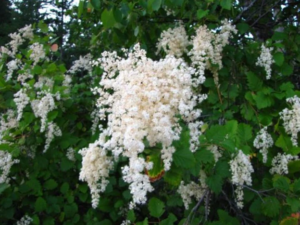
Ocean Spray (Holodiscus discolor), also known as creambush, ironwood, or arrowwood, is a deciduous shrub native to western North America.
Traditional Indigenous Medicinal Uses
The Elders speak of Ocean Spray as a healing plant with strong medicine in both its leaves and its bark. When sickness swept through the people (illnesses like smallpox, measles, or chickenpox) the leaves and flowers were gathered and steeped into a tea or decoction that helped to cool the body and draw out the fever. The same preparation was used to cleanse the blood, purifying it when it felt heavy or tainted and restoring strength to those weakened by long illnesses. The bark and leaves, with their astringent nature, were boiled to make a medicine that soothed the stomach and eased diarrhea, helping the body find balance again. The bark could also be made into a poultice or wash for treating wounds, its tightening and drying qualities helping to stop bleeding and speeding the healing of cuts and sores. For coughs and troubles of the chest, the people would drink the tea or breathe in the steam from freshly boiled leaves, letting the warm vapors clear the lungs and ease breathing.
Biochemical Basis for Medicinal Properties
Primary Bioactive Compounds
- Tannins
Structure and Properties
- Chemical Class: Polyphenolic compounds
- Primary Types: Hydrolyzable and condensed tannins
- Molecular Features: Multiple phenolic hydroxyl groups (-OH) that bind to proteins
Chemical Reaction Mechanism: Tannin-OH + Protein-NH₂ → Tannin-O-Protein + H₂O (Hydrogen bonding and covalent interactions)
Medicinal Actions
- Astringent Properties: Tannins precipitate proteins in mucous membranes, creating a protective barrier
- Anti-diarrheal: Reduce intestinal permeability and inflammation
- Antimicrobial: Disrupt bacterial cell walls and inhibit enzyme systems
- Flavonoids
Kaempferol-3-O-rhamnoside (Afzelin)
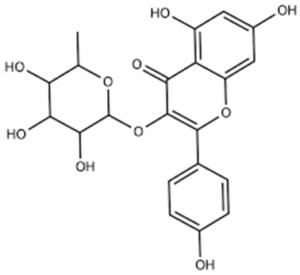
- Molecular Formula: C₂₁H₂₀O₁₀
- Structure: Kaempferol glycoside with rhamnose sugar
Kaempferol backbone: 3,5,7,4′-tetrahydroxyflavone + Rhamnose at position 3
Quercetin-3-O-glucoside (Isoquercitrin)
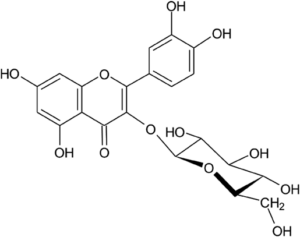
- Molecular Formula: C₂₁H₂₀O₁₂
- Structure: Quercetin glycoside with glucose sugar
Quercetin backbone: 3,5,7,3′,4′-pentahydroxyflavone + Glucose at position 3
Biochemical Mechanisms
1) Antioxidant Activity
Flavonoid-OH + ROS (Reactive Oxygen Species) → Flavonoid-O• + ROH (Radical scavenging through electron donation)
2) Anti-inflammatory Pathways
- Inhibition of cyclooxygenase (COX) enzymes
- Suppression of nuclear factor-κB (NF-κB) activation
- Modulation of cytokine production (IL-1β, TNF-α, IL-6)
3) Anti-Viral Mechanisms
- Viral Entry Inhibition: Flavonoids can interfere with viral attachment to host cells
- Replication Interference: Inhibition of viral polymerases and proteases
- Immune System Modulation: Enhancement of interferon production
Pharmacological Mechanisms Supporting Traditional Uses
- Antiviral Activity (Smallpox, Measles, Chickenpox)
- Flavonoid Action: Quercetin and kaempferol derivatives inhibit viral replication
- Tannin Action: Create barriers on mucous membranes, reducing viral penetration
- Immune Enhancement: Flavonoids stimulate interferon production and NK cell activity
- Blood Purification
- Antioxidant Activity: Flavonoids neutralize free radicals and reduce oxidative stress
- Hepatoprotective Effects: Enhanced liver function for toxin elimination
- Circulation Improvement: Flavonoids strengthen capillary walls and improve circulation
- Gastrointestinal Treatment
- Astringent Action: Tannins reduce intestinal inflammation and excessive secretion
- Antimicrobial Effects: Inhibit pathogenic bacteria in the digestive tract
- Mucosal Protection: Form protective layers over irritated tissue
Safety and Considerations
Traditional Safety Profile
- Generally considered safe when used traditionally
- High tannin content may cause stomach upset if consumed in large quantities
- Should be used with caution during pregnancy and breastfeeding
Modern Precautions
- Limited clinical safety data available
- Potential interactions with medications due to tannin content
- Quality and concentration of active compounds may vary significantly
References
1) Elders and Community members of the Cayoose Creek Band of Sekw’el’was
2) Moerman, D. E. (1998). Native American ethnobotany. Timber Press.
3) Turner, N. J. (1998). Plant technology of First Peoples in British Columbia. UBC Press.
4) Pojar, J., & MacKinnon, A. (2014). Plants of the Pacific Northwest Coast: Washington, Oregon, British Columbia & Alaska (Revised ed.). Lone Pine Publishing.
5) Harborne, J. B., & Williams, C. A. (2006). Phytochemical analysis of flavonoid glycosides in Holodiscus discolor Phytochemistry, 67(24), 2679–2685. https://doi.org/10.1016/j.phytochem.2006.09.033
6) Indigenous plant knowledge databases from Pacific Northwest tribal sources, including First Nations Ethnobotany Database (University of British Columbia) and the Native American Ethnobotany Database (University of Michigan).
https://bcmnh.ca/ethnobotany/ | https://naeb.brit.org/