66 Tarragon
Names
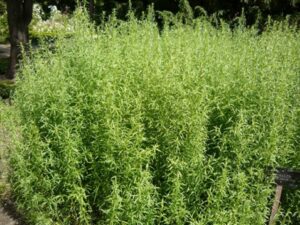
Common name – Tarragon
Scientific name – Artemisia dracunculus
General information
Tarragon is a top herb that is used to relieve digestive issues, heart health conditions, poor appetite, water retention, toothaches, as well as sleep and menstruation problems.
Traditional Indigenous Uses
Its fragrant leaves were steeped into a warm tea to awaken the stomach and ease discomfort after eating. The infusion was often shared after meals, especially for those troubled by bloating or sluggish digestion. Its aromatic strength was believed to “wake up the fire within,” helping the body move food more easily and restoring comfort.
Decoctions from the plant’s aerial parts were used as a tonic to strengthen the heart, improve circulation, and cleanse the blood. The herb’s light diuretic qualities were appreciated for helping with water retention and cleansing the system, especially when swelling in the legs or hands was noticed. Women turned to Tarragon tea as an ally during difficult menstrual cycles, as it helped relieve cramps and regulate the flow, acting as a uterine tonic that supported balance and renewal.
When someone suffered from a toothache, leaves were softened and placed against the sore tooth or infused in oil to numb pain and fight infection. For wounds, the leaves were crushed and applied directly, the antiseptic nature of the herb keeping the skin clean and aiding in healing.
Biochemical Basis for Medicinal Properties
The therapeutic effects of tarragon are primarily attributed to its essential oil composition, which varies significantly based on geographic origin and variety.
The primary chemical constituents are essential oils (Major Bioactive Compounds). The North American wild varieties include sabinene (42.38%), isoelemicin (12.91%), methyl eugenol (9.09%), elemicin (7.95%) and beta-ocimene (6.46%)
Key Bioactive Compounds and Their Structures
- Estragole (Major Component in Many Varieties)
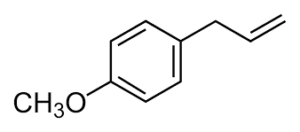 Molecular Formula: C₁₀H₁₂O
Properties: Antimicrobial, anesthetic, digestive stimulant
- Sabinene (Major in North American Varieties)
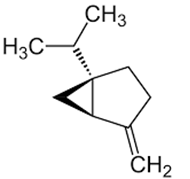 Molecular Formula: C₁₀H₁₆
Properties: Anti-inflammatory, antimicrobial, antioxidant
- Methyl Eugenol
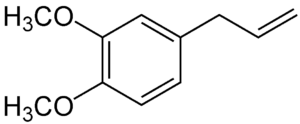 Molecular Formula: C₁₁H₁₄O₂
Properties: Antimicrobial, anesthetic, anti-inflammatory
- Limonene
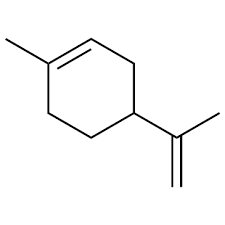 Molecular Formula: C₁₀H₁₆
Properties: Antioxidant, anti-inflammatory, antimicrobial
Biochemical Mechanisms of Action
- Digestive Stimulation:
Carminative Action:
Essential oil components → Smooth muscle relaxation in GI tract → Reduced gas formation and expulsion → Relief of digestive discomfort
Appetite Stimulation:
Aromatic compounds → Olfactory stimulation → Vagal nerve activation → ↑ Gastric juice secretion → Enhanced appetite
- Antimicrobial Activity (Toothaches, Wounds):
Cell Membrane Disruption:
Estragole/Sabinene → Bacterial cell membrane interaction → Membrane permeability changes → Cell death
Enzyme Inhibition:
Terpenes + Bacterial enzymes → Enzyme inactivation → Metabolic disruption → Growth inhibition
- Anti-inflammatory Effects:
COX-2 Inhibition:
Arachidonic Acid → COX-2 (inhibited by terpenes) → ↓ PGE₂ production → Reduced inflammation
NF-κB Pathway Modulation:
Pro-inflammatory stimuli → NF-κB activation (modulated by essential oils → ↓ TNF-α, IL-1β, IL-6 production
- Antioxidant Properties:
Free Radical Scavenging:
The free radical scavenging activity of the essential oil of Artemisia dracunculus L. was evaluated in vitro by the DPPH assay (IC50 = 0.730 ± 0.213 mg/mL)
Antioxidant Mechanism:
DPPH• + Terpene-H → DPPH-H + Terpene•
ABTS•⁺ + Phenolic compound → ABTS + Phenolic• + H⁺
Cellular Antioxidant Enhancement:
Artemisia dracunculus L. essential oil phytochemical components trigger the activity of cellular antioxidant enzymes
- Sedative/Calming Effects (Sleep Problems):
GABA System Modulation:
Essential oil components → GABA receptor enhancement → ↑ Chloride influx → Neuronal hyperpolarization → Calming effect
Safety Considerations
Estragole Content
- High estragole content in some varieties raises safety concerns with prolonged use
- Traditional use patterns typically involved moderate, intermittent consumption
- Geographic variation in chemical composition affects safety profile
References
1) Elders and Community members of the Cayoose Creek Band of Sekw’el’was
2) Ekiert, H., Świątkowska, J., Knut, E., Klin, P., Rzepiela, A., Tomczyk, M., & Szopa, A. (2021). Artemisia dracunculus (tarragon): A review of its traditional uses, phytochemistry and pharmacology. Frontiers in Pharmacology, 12, 653993. https://doi.org/10.3389/fphar.2021.653993
3) Eisenman, S. W., Juliani, H. R., Struwe, L., & Simon, J. E. (2013). Essential oil diversity in North American wild tarragon (Artemisia dracunculus) with comparisons to French and Kyrgyz tarragon. Industrial Crops and Products, 49, 220–232. https://doi.org/10.1016/j.indcrop.2013.04.037
4) Kordali, S., Kotan, R., Mavi, A., Cakir, A., Ala, A., & Yildirim, A. (2005). Determination of the chemical composition and antioxidant activity of the essential oil of Artemisia dracunculus and of the antifungal and antibacterial activities of Turkish Artemisia absinthium, dracunculus, Artemisia santonicum, and Artemisia spicigera essential oils. Journal of Agricultural and Food Chemistry, 53(24), 9452–9458. https://doi.org/10.1021/jf0516538
5) Raeisi, M., Tajik, H., Razavi, R. S., Maham, M., Moradi, M., Hajimohammadi, B., Naghili, H., Hashemi, M., & Mehdizadeh, T. (2012). Essential oil of tarragon (Artemisia dracunculus) antibacterial activity on Staphylococcus aureus and Escherichia coli in culture media and Iranian white cheese. Iranian Journal of Microbiology, 4(1), 30–34. https://www.ncbi.nlm.nih.gov/pmc/articles/PMC3391558/
6) European Medicines Agency, Committee on Herbal Medicinal Products. (2023, May 12). Public statement on the use of herbal medicinal products containing estragole (Rev. 1, Corr. 1). https://www.ema.europa.eu/en/documents/other/public-statement-use-herbal-medicinal-products-containing-estragole-revision-1_en.pdf