81 Yellow Mountain-Avens
Names
Common name – Yellow Mountain-Avens
Scientific name – Dryas drummondii
 General Information:
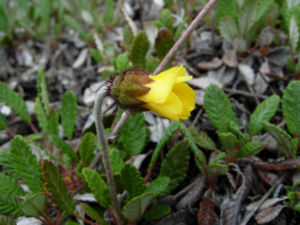
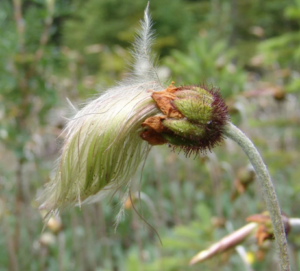
Yellow Mountain-Avens represents a group of alpine plants that include both Geum montanum (Alpine Avens) and Dryas drummondii (Yellow Mountain Avens), both belonging to the Rosaceae family. These hardy perennial herbs thrive in mountainous and arctic regions across North America and Europe, adapting to harsh alpine conditions with their low-growing, mat-forming habit. Indigenous peoples of mountainous regions have traditionally utilized these plants for various medicinal purposes, particularly for cardiovascular, urinary, and inflammatory conditions. The plants’ distinctive yellow flowers and their ability to survive in extreme alpine environments have made them culturally significant as symbols of resilience and healing. The medicinal properties of these species are attributed to their rich content of tannins, phenolic compounds, and essential oils, which contribute to their astringent, anti-inflammatory, and antimicrobial therapeutic effects. Its root smells like clove.
Traditional Indigenous Uses
Its roots and leaves could be made into a tea or decoction to help those suffering from heart weakness or poor circulation. It was also used as a medicine for the kidneys and bladder, its cleansing properties helping to clear infections.
A mild infusion from the leaves or whole plant brought calm to the belly and restored appetite. For coughs, chest congestion, and inflammation in the lungs, the leaves and flowers were boiled into teas or used as steam inhalations to clear the airways. Its roots, when prepared as a stronger decoction, were taken to ease the aches of rheumatism and arthritis or applied to sore joints and muscles to reduce swelling. Fresh plant material could be made into poultices or washes to help wounds heal more quickly and to treat skin irritations, rashes, or infections.
Yellow Mountain-Avens was respected as a general tonic. It was said to “wake up the body” after long sickness and to bring a cooling peace to those burning with fever.
Biochemical Basis for Medicinal Properties
Primary Bioactive Compounds (Based on Geum Genus Research)
1. Phenolic Compounds
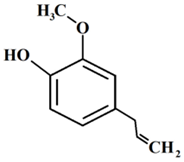
Eugenol (Primary Active Compound)
- Chemical Formula: C₁₀H₁₂O₂
- Source: Roots (clove-like aroma)
- Concentration: Variable, responsible for characteristic scent
- Properties: Antimicrobial, anti-inflammatory, analgesic, antiseptic
- Traditional correlation: Wound healing, respiratory conditions
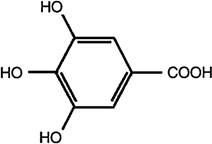
Gallic Acid
- Chemical Formula: C₇H₆O₅
- Properties: Strong antioxidant, antimicrobial, anti-inflammatory
- Mechanism: Free radical scavenging, enzyme inhibition
- Traditional use: General healing, inflammatory conditions
Caffeic Acid
- Chemical Formula: C₉H₈O₄
- Properties: Antioxidant, anti-inflammatory, antimicrobial
- Traditional correlation: Skin conditions, wound healing
Chlorogenic Acid
- Chemical Formula: C₁₆H₁₈O₉
- Properties: Antioxidant, anti-inflammatory, hepatoprotective
- Traditional use: General wellness, digestive support
2. Tannins (High Concentration)
Condensed Tannins (Proanthocyanidins)
- Concentration: 10.5% in related Geum species
- Properties: Astringent, antimicrobial, anti-inflammatory
- Mechanism: Protein binding, antimicrobial activity
- Traditional use: Diarrhea, wound healing, skin conditions
Hydrolysable Tannins
- Properties: Astringent, antimicrobial, antioxidant
- Traditional correlation: Digestive disorders, external healing
3. Flavonoids
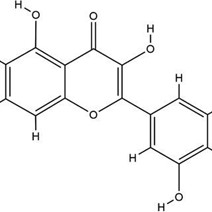
Quercetin and Derivatives
- Chemical Formula: C₁₅H₁₀O₇
- Properties: Anti-inflammatory, antioxidant, vascular protective
- Mechanism: COX inhibition, free radical scavenging
- Traditional use: Cardiovascular support, inflammatory conditions
Kaempferol Glycosides
- Properties: Antioxidant, anti-inflammatory, cardioprotective
- Traditional correlation: Heart conditions, circulatory support
Rutin
- Properties: Vascular strengthening, anti-inflammatory, antioxidant
- Traditional use: Cardiovascular health, capillary fragility
4. Essential Oil Components
Monoterpenes
- α-Pinene: Antimicrobial, anti-inflammatory, respiratory supportive
- Limonene: Antioxidant, antimicrobial, digestive supportive
- Linalool: Mild sedative, antimicrobial, anti-inflammatory
Sesquiterpenes
- β-Caryophyllene: Anti-inflammatory, analgesic, antimicrobial
- Germacrene-D: Antimicrobial, anti-inflammatory
5. Additional Bioactive Compounds
Vicianose Sugar
- Properties: Prebiotic effects, digestive support
- Traditional use: Digestive health, general wellness
Carotenoids
- Properties: Antioxidant, anti-inflammatory, immune support
- Traditional correlation: General health, recovery support
Sesquiterpene Lactones
- Example: Cnicin (in related species)
- Properties: Anti-inflammatory, bitter principles, antimicrobial
- Traditional use: Digestive stimulation, inflammatory conditions
Chemical Structures of some Key Compounds
Eugenol Structure
Gallic Acid Structure
Quercetin Structure
Mechanism of Action
Cardiovascular Support
- Vasodilation by flavonoids and phenolic compounds
- Antioxidant protection prevents cardiovascular damage
- Anti-inflammatory effects in vascular tissues
- Cardiotonic effects by specific glycosides
Anti-inflammatory Properties
- Cyclooxygenase (COX) inhibition by flavonoids and eugenol
- Lipoxygenase inhibition by phenolic compounds
- Nuclear factor-κB (NF-κB) pathway modulation
- Cytokine production reduction(TNF-α, IL-1β, IL-6)
Antimicrobial Activity
- Cell membrane disruption by eugenol and essential oils
- Protein binding by tannins
- DNA/RNA synthesis inhibition by phenolic compounds
- Biofilm formation inhibition
Astringent and Wound Healing
- Protein precipitation by tannins
- Tissue contraction and bleeding control
- Antimicrobial barrier formation
- Collagen synthesis stimulation
Urinary Tract Support
- Diuretic effects by flavonoids
- Anti-inflammatory action in urinary tissues
- Antimicrobial activity against urinary pathogens
- Tissue healing support
Relevant Biochemical Pathways
Anti-inflammatory Pathway
Eugenol/Flavonoids → COX-1/COX-2 inhibition → ↓ Prostaglandin synthesis → ↓ Inflammation
Antimicrobial Action
Eugenol → Bacterial cell membrane → Membrane disruption → Cell lysis → Death
Tannin Astringent Effect
Tannins + Proteins → Tannin-protein complexes → Tissue contraction → Hemostasis
Antioxidant Mechanism
Flavonoids + ROS → Flavonoid radicals + H₂O (neutralized radicals)
Traditional Preparation Methods
Cardiovascular Support Tea
- Ingredients: Dried roots and leaves of Yellow Mountain-Avens
- Method: Gentle decoction, simmered for 15-20 minutes
- Dosage: Small amounts, 1-2 cups daily
- Traditional use: Heart conditions, circulatory support
Kidney and Bladder Treatment
- Preparation: Root tea preparation
- Method: Hot water infusion of dried roots
- Application: Internal consumption, 2-3 times daily
- Benefits: Diuretic, anti-inflammatory, antimicrobial effects
Wound Healing Poultice
- Method: Fresh plant material crushed and applied directly
- Application: External application to wounds, cuts, abrasions
- Active compounds: Tannins, eugenol, antimicrobial compounds
- Benefits: Hemostatic, antimicrobial, healing acceleration
Anti-inflammatory Preparation
- Ingredients: Whole plant material
- Method: Traditional extraction methods
- Application: Both internal and external use
- Traditional correlation: Joint pain, muscle soreness, inflammatory conditions
Safety and Dosage Considerations
Safety Profile
- Generally safe when used traditionally in appropriate amounts
- Mild gastrointestinal effects possible with high tannin content
- No significant toxicity reported in traditional literature
- Pregnancy considerations: Traditional caution advised
Traditional Dosage Guidelines
- Internal use: 1-2 teaspoons of dried plant material per cup of water
- External use: Applied as needed to affected areas
- Frequency: 2-3 times daily for acute conditions
- Duration: Short-term use for acute conditions, longer for chronic issues
Contraindications
- High tannin sensitivity: May cause stomach irritation in sensitive individuals
- Iron absorption: High tannin content may interfere with iron absorption
- Pregnancy: Traditional caution during pregnancy and nursing
- Medication interactions: Potential interactions with cardiovascular medications
Important Disclaimers
Cultural Respect: Traditional Indigenous knowledge of Yellow Mountain-Avens represents centuries of accumulated wisdom and practical experience. This knowledge belongs to Indigenous communities and should be approached with appropriate respect, acknowledgment, and cultural protocols.
Limited Specific Research: While extensive research exists on related Geum species, specific studies on Dryas drummondii (Yellow Mountain-Avens) are limited. The medicinal properties described are based on traditional knowledge and research on closely related species.
Medical Disclaimer: This information is provided for educational purposes only. Traditional preparations should not be attempted without proper guidance from qualified practitioners familiar with both traditional methods and modern safety considerations.
Conservation Awareness: Yellow Mountain-Avens grows in sensitive alpine and arctic environments that may be vulnerable to climate change. Sustainable harvesting practices and conservation awareness are essential.
Proper Identification: Accurate botanical identification is crucial, especially in alpine environments where multiple similar species may occur. Consult with qualified botanists or traditional knowledge holders for proper plant identification.
References
- Elders and Community members of the Cayoose Creek Band of Sekw’el’was
- Springer, J. C., & Parfitt, B. D. (2020). Dryas drummondii. Flora of North America. https://floranorthamerica.org/Dryas_drummondii
- Turner, N. J., Deur, D., & Mellott, C. R. (2011). “Up on the Mountain”: Ethnobotanical importance of montane sites in Pacific Coastal North America. Journal of Ethnobiology, 31(1), 4–43. https://doi.org/10.2993/0278-0771-31.1.4
- Mo, X., Zhou, Y., Zhan, M., Zhang, Y., Liu, J., Qiang, H., & Dong, L. (2025). A review of the traditional uses, phytochemistry, pharmacology and toxicity for the genus Geum (Rosaceae). Fitoterapia, 180, 106333. https://doi.org/10.1016/j.fitote.2024.106333
- Owczarek, A., Gudej, J., & Kicel, A. (2013). Composition of essential oil from aerial and underground parts of Geum rivale and G. urbanum growing in Poland. Natural Product Communications, 8(4), 425–428. https://doi.org/10.1177/1934578X1300800425
- Vogl, S., Picker, P., Mihaly-Bison, J., Fakhrudin, N., Atanasov, A. G., Heiss, E. H., … Kopp, B. (2013). Ethnopharmacological in vitro studies on Austria’s folk medicine—An unexplored lore: In vitro anti-inflammatory activities of 71 Austrian traditional herbal drugs. Journal of Ethnopharmacology, 149(3), 750–771. https://doi.org/10.1016/j.jep.2013.06.007