31 Cut-Leaved Daisy
Names
Common name – Cut-Leaved Daisy
Scientific name – Boltonia diffusa
Other names – Dwarf mountain fleabane; Trifid mountain fleabane
General information
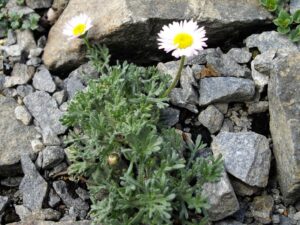
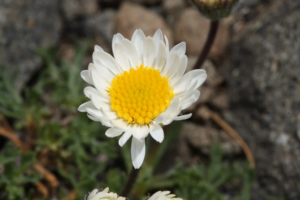
Cut-Leaved Daisy (Erigeron compositus) is a low-growing, perennial wildflower in the sunflower family (Asteraceae) that thrives in harsh, alpine and Arctic environments across North America. This hardy plant typically grows 2-8 inches tall, forming compact cushions with distinctive deeply divided, fern-like leaves that give it its common name. The plant produces small daisy-like flowers (½ to ¾ inch across) with white, pink, or pale lavender petals surrounding bright yellow centers, blooming from late spring through summer. Also known as dwarf mountain fleabane and trifid mountain fleabane, this species is exceptionally cold-hardy and drought-tolerant, thriving in rocky, sandy soils from sea level to high alpine zones up to 14,000 feet elevation. Native to the Russian Far East, Alaska, Greenland, much of Canada, and the western United States, cut-leaved daisy was first scientifically collected by Lewis and Clark in 1805 along the Clearwater River near modern-day Lewiston, Idaho. Indigenous peoples across its range have traditionally recognized this resilient plant for its medicinal properties, particularly for treating wounds, inflammatory conditions, and respiratory ailments.
Traditional Indigenous Uses
The people would gather the whole plant to make poultices for cuts, scrapes, and wounds. When laid gently upon the skin, it drew out heat and helped the body to close its injuries. The flowers, when steeped as tea, were used to calm swelling and pain in the joints. The tea carried a quiet strength, helping the body release inflammation and restore movement.
Its leaves were brewed or steamed to open the chest and clear the lungs when coughs or congestion took hold. The same leaves could be used in gentle teas to ease digestion, settling the stomach after times of illness or scarcity. In the warmer months, the flowers were crushed and rubbed on the skin to keep insects away, their scent serving as both medicine and protection.
When dried and burned, it was used in ceremony to cleanse spaces and renew the spirit. Its smoke was light and purifying, carrying away heaviness and restoring calm. Women found comfort in its tea during times of monthly pain, for it eased the discomfort and quieted the body.
Biochemical Compounds and Their Medicinal Properties
- Flavonoids (Primary Bioactive Compounds)
Three Most Important Compounds:
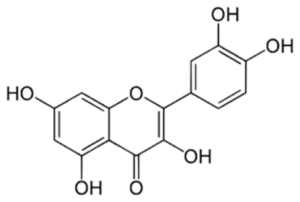
- Quercetin (C₁₅H₁₀O₇) – Major flavonol
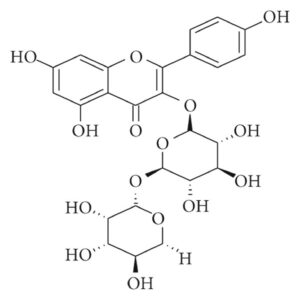
- Rutin (Quercetin-3-O-rutinoside) (C₂₇H₃₀O₁₆) – Flavonoid glycoside
- Apigenin (C₁₅H₁₀O₅) – Flavone compound
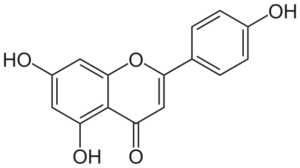
Medicinal Properties:
- Anti-inflammatory: Potent inhibition of inflammatory mediators
- Antioxidant: Exceptional free radical scavenging activity
- Wound healing: Promotes collagen synthesis and tissue repair
- Antimicrobial: Broad-spectrum antibacterial and antifungal effects
- Phenolic Acids (Supporting Compounds)
Three Most Important Compounds:
(i) Caffeic Acid (C₉H₈O₄) – Hydroxycinnamic acid
(ii) Chlorogenic Acid (C₁₆H₁₈O₉) – Caffeoylquinic acid
(iii) Ferulic Acid (C₁₀H₁₀O₄) – Methoxycinnamic acid
3. Essential Oil Components
Most Important Compound:
α-Pinene (C₁₀H₁₆) – Major monoterpene
Proposed Biochemical Mechanisms for Traditional Uses
Wound Healing (Fresh Poultices)
- Quercetin and Rutin provide:
- Enhanced collagen synthesis and cross-linking
- Improved angiogenesis for tissue repair
- Antioxidant protection of healing tissues
- Caffeic acid contributes:
- Antimicrobial protection against infection
- Anti-inflammatory effects reducing wound inflammation
- Astringent properties for bleeding control
Anti-inflammatory Effects (Teas/Topical Applications)
- Flavonoids (quercetin, apigenin) act through:
- Nuclear factor-κB (NF-κB) pathway inhibition
- Cyclooxygenase (COX) enzyme inhibition
- Lipoxygenase pathway modulation
- Phenolic acids provide:
- Direct radical scavenging activity
- Inflammatory mediator neutralization
- Tissue protective effects
Respiratory Support (Steam Inhalations)
- Essential oil components act as:
- Expectorants promoting mucus clearance
- Bronchodilators relaxing airway smooth muscle
- Antimicrobials combating respiratory pathogens
- Flavonoids contribute:
- Anti-inflammatory effects in respiratory tract
- Antioxidant protection of lung tissues
- Immune system modulation
Chemical Reactions and Molecular Interactions
Anti-inflammatory Mechanism (Quercetin)
Quercetin → NF-κB inhibition → ↓ IκB degradation ↓ Reduced nuclear translocation → ↓ Pro-inflammatory gene expression
Quercetin → COX-2 enzyme inhibition → ↓ PGE₂, PGI₂ synthesis → Reduced inflammation and pain signaling
Wound Healing Mechanism (Multiple Flavonoids)
Quercetin + Rutin → Collagen gene upregulation → ↑ Collagen synthesis → Enhanced wound tensile strength → Improved healing
Flavonoids → VEGF expression ↑ → Enhanced angiogenesis → Improved blood supply to healing tissues
Antioxidant Mechanism (Phenolic Compounds)
Quercetin + ROS → Quercetin radical + H₂O
(Direct radical scavenging)
Caffeic acid + O₂•⁻ → Caffeic acid radical + H₂O₂
(Superoxide dismutase-like activity)
Chlorogenic acid + Fe³⁺ → Chlorogenic acid-Fe complex
(Metal chelation preventing Fenton reactions)
Antimicrobial Action (Phenolic Acids)
Caffeic acid → Bacterial membrane disruption → Cell permeability ↑ → ATP leakage → Metabolic disruption → Bacterial death
Phenolic compounds → Viral protein binding → Viral replication ↓
Respiratory Relief Mechanism (Essential Oils)
α-Pinene → β₂-adrenergic receptor activation → ↑ cAMP → Bronchial smooth muscle relaxation → Improved airflow
Monoterpenes → Mucin gene expression ↑ → Enhanced expectoration
Bioactivity and Alpine Adaptation
Stress-Induced Secondary Metabolites
The harsh alpine environment where cut-leaved daisy thrives leads to elevated production of protective compounds:
- UV Protection: High flavonoid content provides natural sunscreen
- Oxidative Stress Defense: Enhanced phenolic acid production
- Cold Tolerance: Specialized metabolites maintaining membrane fluidity
- Drought Adaptation: Concentrated bioactive compounds in reduced plant tissues
Seasonal Variation in Potency
Traditional harvesting practices often correlate with optimal biochemical content:
- Spring: Highest antioxidant capacity
- Summer flowering: Peak anti-inflammatory compounds
- Late season: Maximum essential oil concentration
Safety Considerations and Traditional Preparation
Traditional Indigenous preparation methods emphasize:
- Gentle preparations suitable for topical and internal use
- Appropriate plant part selection based on intended use
- Seasonal harvesting for optimal potency
- Sustainable collection maintaining plant populations
The plant’s natural habitat in harsh environments concentrates bioactive compounds, making traditional low-dose preparations both effective and safe.
References
1) Elders and Community members of the Cayoose Creek Band of Sekw’el’was
2) Blackfoot Native Plants. (2018, June 12). Cutleaf daisy (Erigeron compositus). http://blackfootnativeplants.com/BlackfootNativePlants/blackfoot-native-plants/cutleaf-daisy-erigeron-compositus/ (Retrieved September 24, 2025)
3) (2025). Cut Leaved Daisy — Erigeron compositus. https://calscape.org/Erigeron-compositus-(Cut-Leaved-Daisy) (Retrieved September 24, 2025)
4) Kikowska, M., Chanaj-Kaczmarek, J., Derda, M., Budzianowska, A., Thiem, B., Ekiert, H., & Szopa, A. (2022). The evaluation of phenolic acids and flavonoids content and antiprotozoal activity of Eryngium species biomass produced by biotechnological methods. Molecules, 27(2), 363. https://doi.org/10.3390/molecules27020363
5) Gucker, C., & Shaw, N. (2024, February). Cutleaf daisy (Erigeron compositus). Western Forbs. https://westernforbs.org/species/cutleaf-daisy-erigeron-compositus/ (Retrieved September 24, 2025) org
6) Mahanur, V. B., Rajge, R. R., Pal, R. S., Chaitanya, M. V. N. L., & colleagues. (2023). Harnessing unexplored medicinal values of the red-listed South African weed Erigeron bonariensis: From ethnobotany to biomedicine. South African Journal of Botany, 160, 535–546. https://doi.org/10.1016/j.sajb.2023.07.031
7) Rana, R., Pundir, S., Lal, U. R., Chauhan, R., Upadhyay, S. K., & Kumar, D. (2023). Phytochemistry and biological activity of Erigeron annuus (L.) Pers. Naunyn-Schmiedeberg’s Archives of Pharmacology, 396, 2331–2346. https://doi.org/10.1007/s00210-023-02518-1
8) Botanical Research Institute of Texas (BRIT). (2025). Native American Ethnobotany Database — Search results for “Erigeron”. https://naeb.brit.org/uses/search/?string=Erigeron (Retrieved September 24, 2025) Naeb
9) Nazaruk, J., & Kalemba, D. (2009). Chemical composition of the essential oils from the roots of Erigeron acris and Erigeron annuus (L.) Pers. Molecules, 14(7), 2458–2465. https://doi.org/10.3390/molecules14072458
10) Judžentienė, A. (2025). Compositional variability of essential oils and their bioactivity in native and invasive Erigeron Molecules, 30(14), 2989. https://doi.org/10.3390/molecules30142989
11) USDA, Natural Resources Conservation Service. (2025). Plant profile: Erigeron compositus Pursh (cutleaf daisy). https://plants.usda.gov/plant-profile/ERCO4 (Retrieved September 24, 2025)