36 Hemp-Dogbane
Names
Common name – Hemp Dogbane
Scientific name – Apocynum cannabinum
Other names – Indian Hemp, sṕ’áts’enúl
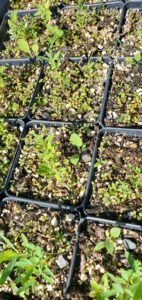
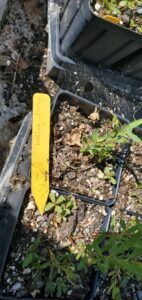
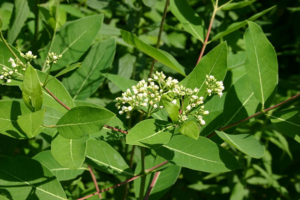
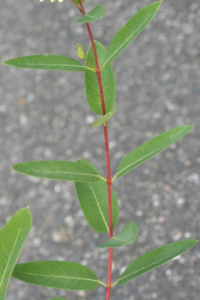
General information
Hemp Dogbane (Apocynum cannabinum), also known as Indian Hemp, has been extensively used by Indigenous peoples for both medicinal and practical purposes – as a medicine to treat a wide variety of conditions, and as a fiber to produce thread, cord, garments, nets, snares and mats. Hemp Dogbane contains the glycoside, cymarin, which was used as a cardiac stimulant, a diuretic, a diaphoretic, a febrifuge, a rheumatism remedy, and a treatment for gall stones, demonstrating the sophisticated understanding Indigenous peoples had of this plant’s multiple therapeutic applications. This represents one of the most pharmacologically significant plants in Indigenous medicine, with modern research confirming the presence of potent cardiac glycosides that explain its traditional therapeutic applications.
Traditional Indigenous Uses
Hemp-Dogbane was not a medicine to be used lightly, for its strength could both heal and harm. Those who worked with it knew that even the smallest amount carried great potency. The roots, when prepared as a tea or tincture, were used to strengthen the heart and steady its rhythm. The same medicine also helped the body release excess water and cleanse the kidneys, easing swelling and heaviness.
When fevers or illness struck, Hemp-Dogbane was brewed into a hot tea to draw sweat and help the body purify itself. The people would say it “opened the skin,” letting sickness leave through the pores. For joint pain or arthritis, the roots were made into poultices or decoctions, easing inflammation and stiffness. In smaller doses, it supported digestion, settling sluggish bowels and easing discomfort after heavy meals. Yet, in stronger preparations, the same plant could act as a purgative or even induce vomiting, used carefully by healers to cleanse the body of poisons or for spiritual purification.
The plant was called upon to treat liver ailments and venereal diseases, its fresh root chewed only for the juice, never swallowed whole. A wash prepared from its extract was used to stimulate the scalp and prevent hair loss, while mild infusions were drunk to ease headaches that arose from digestive imbalance..
Important Safety Note
All parts of the plant contain toxic cardiac glycosides that can cause potentially fatal cardiac arrhythmias if ingested. Traditional use required extensive knowledge and careful dosing.
Biochemical Basis for Medicinal Properties
Key Bioactive Compounds
Hemp Dogbane contains several classes of bioactive compounds responsible for its medicinal properties:
- Cardiac Glycosides (Primary Active Compounds)
Major Cardiac Glycosides:
- Cymarin – Primary cardiac glycoside
- Apocynamarin
- Strophanthidin derivatives
- Cymarol
Chemical Structure of Cymarin:
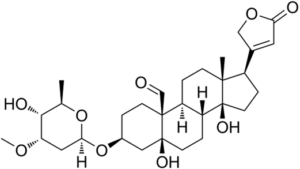
- Molecular Formula: C₃₀H₄₄O₉
- Structure: Steroid backbone with sugar moiety (cymarose)
- Functional Groups: Hydroxyl groups, lactone ring, digitoxose sugar
Mechanism of Action:
Na⁺/K⁺-ATPase Pump Inhibition → Increased Intracellular Ca²⁺ → Enhanced Cardiac Contractility
Chemical Reaction:
Cymarin + Na⁺/K⁺-ATPase → Cymarin-ATPase Complex (Inhibited)
Result: ↑[Ca²⁺]ᵢ → ↑Cardiac Contractile Force
- Flavonoids and Phenolic Compounds
Key Compounds:
- Quercetin and its glycosides
- Kaempferol derivatives
- Rutin
- Chlorogenic acid
Antioxidant Mechanism:
Flavonoid-OH + ROS → Flavonoid-O• + H₂O
(Radical scavenging reaction)
- Triterpenes and Sterols
Compounds:
- β-Sitosterol
- Ursolic acid
- Oleanolic acid
Function: Anti-inflammatory and hepatoprotective effects
- Alkaloids (Minor Components)
Compounds:
- Apocynin
- Various indole alkaloids
Detailed Biochemical Mechanisms
- Cardiac Activity
Primary Mechanism: Inhibition of Na⁺/K⁺-ATPase
Normal State: Na⁺/K⁺-ATPase → 3Na⁺ out, 2K⁺ in
Cymarin Inhibition → Reduced Na⁺ efflux → Increased intracellular Na⁺ → Na⁺/Ca²⁺ exchanger reversal → Increased intracellular Ca²⁺
→ Enhanced cardiac contractility
Structure-Activity Relationship
- Steroid backbone: Essential for ATPase binding
- Sugar moiety: Determines potency and duration
- Lactone ring: Critical for biological activity
- Diuretic Action
Mechanism:
- Direct Renal Effect: Inhibition of Na⁺/K⁺-ATPase in kidney tubules
- Cardiac Output Enhancement: Improved circulation increases glomerular filtration
- Hormonal Effects: Modulation of ADH and aldosterone activity
- Anti-inflammatory Properties
Pathway:
Inflammatory Stimulus → NF-κB Activation
↓ (Inhibited by triterpenes)
COX-2/LOX Expression → Prostaglandin/Leukotriene Production
↓ (Reduced)
Inflammatory Response
- Hepatoprotective Mechanism
Antioxidant Defense:
Hepatotoxin → ROS Generation → Lipid Peroxidation
↓ (Neutralized by flavonoids)
Cellular Protection → Liver Function Maintenance
Chemical Structures of Key Biomolecules
Cymarin Structure
Steroid Backbone:
– 4-ring steroid nucleus (cholestane derivative)
– 14β-OH and 3β-OH hydroxyl groups
– α,β-unsaturated lactone at C-17
Sugar Component:
– Cymarose (2,6-dideoxy-3-O-methyl-D-ribo-hexose)
– Attached at 3β position via glycosidic bond
Quercetin (Major Flavonoid)
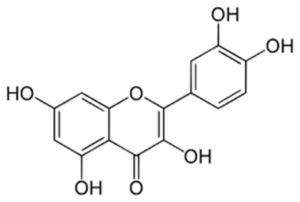
- Molecular Formula: C₁₅H₁₀O₇
- Structure: 3,3′,4′,5,7-pentahydroxyflavone
- Key Features: Multiple hydroxyl groups for antioxidant activity
β-Sitosterol
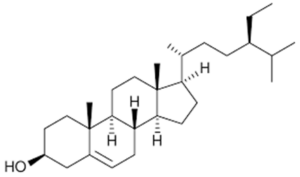
- Molecular Formula: C₂₉H₅₀O
- Structure: Cholesterol analog with ethyl side chain
- Function: Membrane stabilization and anti-inflammatory effects
Traditional Preparation Methods and Dosage
Root Preparation (Most Common)
- For Cardiac Conditions:
- Dried root: 0.5-2 grams in decoction
- Fresh root: Smaller amounts due to higher potency
- For Diuretic Effect:
- Root tea: 1-3 grams dried root per cup
- Taken 2-3 times daily
- For Rheumatism:
- Poultice: Fresh root mashed and applied topically
- Internal: Very small doses of root decoction
Safety Considerations in Traditional Use
Dosage-Dependent Effects:
- Low Doses: Diuretic, mild cardiac stimulation
- Moderate Doses: Strong cardiac effects, diaphoretic
- High Doses: Toxic – nausea, vomiting, cardiac arrhythmias
Traditional Safety Measures:
- Experienced healers only
- Careful plant identification
- Seasonal collection timing
- Precise dosage calculation
- Patient monitoring
References
- 1) Elders and Community members of the Cayoose Creek Band of Sekw’el’was
- 2) Moerman, D. E. (1998). Native American ethnobotany. Timber Press.
- 3) Foster, S., & Duke, J. A. (2000). A field guide to medicinal plants and herbs of Eastern and Central North America (2nd ed.). Houghton Mifflin.
- 4) Kindscher, K. (1992). Medicinal wild plants of the prairie: An ethnobotanical guide. University Press of Kansas.
- 5) Chevallier, A. (2016). Encyclopedia of herbal medicine: 550 herbs and remedies for common ailments (Updated ed.). DK.
- 6) Densmore, F. (1974). How Indians use wild plants for food, medicine, and crafts. Dover Publications.
- 7) Weiner, M. A. (1990). Earth medicine—Earth food: Plant remedies, drugs, and natural foods of the North American Indians. Ballantine Books.
- 8) Turner, N. C., & Bell, M. A. M. (1971). The ethnobotany of the Coast Salish Indians of Vancouver Island. Economic Botany, 25(1), 63–99. https://doi.org/10.1007/BF02894564
- 9) Harrington, H. D. (1967). Edible native plants of the Rocky Mountains. University of New Mexico Press.