46 Needle and Thread Grass
Names
Common name – Needle and Thread Grass
Scientific name – Hesperostipa comata
General Information
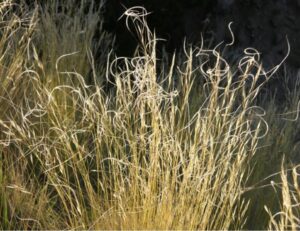
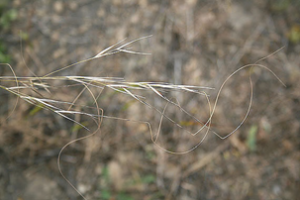
Needle and Thread Grass (Hesperostipa comata, formerly Stipa comata) is a perennial cool-season bunchgrass in the family Poaceae native to North America, especially the western third of the continent. This distinctive grass grows 25-40 inches (60-100 cm) tall in small, dense tufts typically 1-3 inches in diameter, with erect, unbranched stems. The plant is instantly recognizable by its characteristic long, twisted, thread-like awns (stiff bristles) that can reach 3-8 inches (7.5-20 cm) in length, resembling a threaded sewing needle—hence the common name. These hygroscopic awns twist and bend with changes in humidity, enabling the seeds to drill themselves into the soil. The narrow leaves are typically rolled or folded, and the loosely spreading panicle inflorescence is 4-8 inches long. This hardy grass starts growth in early spring when moisture is available, with seeds maturing in early summer.
Traditional Indigenous Uses
The Elders spoke of Needle and Thread Grass as a humble yet powerful plant, one that sustained the people through times of plenty and times of hardship. Its seeds were valued as a nourishing food, often ground into a fine meal or flour to strengthen the body during times of weakness or malnutrition. When cooked as porridge, the seeds soothed the stomach and helped those suffering from digestive troubles. The young shoots that emerged in spring were eaten fresh as a tonic, helping the body awaken from winter’s sluggishness and restoring lost vitality. The roots, when chewed or boiled into a decoction, served as astringent medicine to stop bleeding and ease mouth sores or diarrhea. In times of travel or scarcity, the parched seeds were eaten as emergency food, providing vital energy for long journeys and endurance during hunting. The grass itself had healing uses as well – its dried bundles were used to pad wounds and absorb blood, while fresh blades could be applied to small cuts or abrasions to encourage healing. The people also made use of the plant’s cleansing power; its fresh juice or tea was taken in spring as a purifier to cleanse the blood and renew the spirit. Women, especially after childbirth, relied on the seeds for strength and to support milk flow. Beyond its physical benefits, Needle and Thread Grass held ceremonial importance, woven into sacred objects and used in spiritual offerings that honored the connection between the people and the land. Through these many gifts, the plant was seen not merely as sustenance, but as a living medicine – one that cared for body, mind, and spirit alike.
Biochemical Compounds and Their Medicinal Properties
- Phenolic Acids (Primary Bioactive Compounds)
Three Most Important Compounds
(i) Ferulic Acid (C₁₀H₁₀O₄) – Major cell wall phenolic

(ii) p-Coumaric Acid (C₉H₈O₃) – Hydroxycinnamic acid
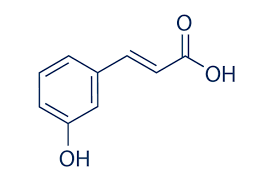
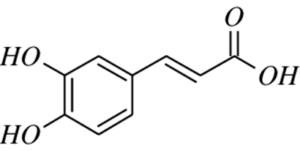
(iii) Caffeic Acid (C₉H₈O₄) – Dihydroxycinnamic acid
Medicinal Properties
- Antioxidant: Powerful free radical scavenging activity
- Anti-inflammatory: Inhibits inflammatory mediators
- Antimicrobial: Broad-spectrum antibacterial effects
- Cardioprotective: Supports cardiovascular health
- Flavonoids (Supporting Compounds)
Three Most Important Compounds
- (i) Apigenin (C₁₅H₁₀O₅) – Primary flavone
- (ii) Luteolin (C₁₅H₁₀O₆) – Flavone compound
- (iii) Tricin (C₁₇H₁₄O₇) – Grass-specific flavone
- Complex Carbohydrates and Proteins
Most Important Compound:
Beta-glucan (C₆H₁₀O₅)ₙ – Immune-modulating fiber
(β-1,3 and β-1,4 linked glucose)
Proposed Biochemical Mechanisms for Traditional Uses
Nutritional Medicine (Seed Meal)
- Complete nutritional profile provides:
- Protein (8-12%) with essential amino acids for tissue repair
- Complex carbohydrates for sustained energy release
- Essential minerals (iron, magnesium, phosphorus) for metabolic function
- Phenolic acids contribute:
- Antioxidant protection during nutritional recovery
- Anti-inflammatory support for digestive health
- Enhanced mineral bioavailability through chelation
Digestive Support (Seeds and Roots)
- Beta-glucan fiber acts through:
- Forming protective gel layer in digestive tract
- Binding toxins and facilitating elimination
- Promoting beneficial gut microbiome
- Phenolic compounds provide:
- Astringent properties for diarrhea control
- Antimicrobial activity against pathogens
- Anti-inflammatory effects on intestinal mucosa
Spring Tonic and Blood Purification (Young Shoots)
- Flavonoids and phenolic acids facilitate:
- Enhanced circulation and blood flow
- Antioxidant protection of blood cells
- Liver detoxification pathway support
- Fresh plant nutrients provide:
- Vitamin C and other essential micronutrients
- Chlorophyll for cellular oxygenation
- Mineral replenishment after winter scarcity
Chemical Reactions and Molecular Interactions
Antioxidant Mechanism (Phenolic Acids)
Ferulic acid + ROS → Ferulic acid radical + H₂O (Direct radical scavenging)
p-Coumaric acid + O₂•⁻ → p-Coumaric acid radical + H₂O₂ (Superoxide dismutase-like activity)
Caffeic acid + Fe³⁺ → Caffeic acid-Fe complex (Metal chelation preventing Fenton reactions)
Anti-inflammatory Pathway (Flavonoids + Phenolic Acids)
Apigenin → NF-κB pathway inhibition → ↓ Pro-inflammatory cytokines → Reduced tissue inflammation → Pain relief
Ferulic acid → COX-2 enzyme inhibition → ↓ Prostaglandin synthesis → Anti-inflammatory and analgesic effects
Digestive Protection Mechanism (Beta-glucan)
Beta-glucan + Water → Viscous gel formation → Protective coating → Reduced inflammation → Enhanced gut barrier function
Beta-glucan → Immune cell activation → ↑ Macrophage activity → Enhanced pathogen clearance in digestive tract
Energy Metabolism (Complex Carbohydrates)
Starch → α-amylase → Maltose → Glucose → Cellular ATP (slow breakdown) → Sustained energy release → Stable blood sugar
Fiber → Gut bacteria fermentation → Short-chain fatty acids → Enhanced colon health → Improved nutrient absorption
Cardioprotective Action (Ferulic Acid)
Ferulic acid → LDL oxidation inhibition → ↓ Atherosclerosis risk → Improved endothelial function → Better cardiovascular health
Ferulic acid → Platelet aggregation inhibition → ↓ Thrombosis risk → Improved blood flow → Reduced cardiovascular events
Seasonal Biochemical Variation
Spring Growth (Optimal Traditional Harvest for Greens)
- Peak vitamin content: Highest levels of vitamin C and B-complex
- Maximum phenolic concentration: Spring stress increases secondary metabolites
- Optimal digestibility: Young tissues have lower fiber, higher bioavailability
- Enhanced bioactivity: Environmental factors activate therapeutic compounds
Seed Maturation (Summer Harvest for Food Medicine)
- Concentrated nutrients: Mature seeds contain peak protein and minerals
- Stable compounds: Dried seeds preserve phenolic acids and flavonoids
- Energy storage: Maximum carbohydrate and oil content
- Long-term storage: Seeds remain viable for extended periods
Cultural and Ecological Significance
Traditional Food Systems
Needle and thread grass was integral to Plains Indigenous diets:
- Seed collection: Labor-intensive but reliable food source
- Processing methods: Traditional grinding and cooking techniques
- Storage practices: Seeds stored for winter food security
- Multi-generational knowledge: Specialized harvesting wisdom
Ecological Role
- Pioneer species: Colonizes disturbed areas
- Soil stabilization: Extensive root system prevents erosion
- Wildlife support: Seeds provide food for birds and small mammals
- Drought tolerance: Survives harsh prairie conditions
Safety Considerations and Traditional Wisdom
Traditional Guidelines
- Awn caution: Sharp awns can injure livestock and penetrate skin
- Proper processing: Traditional methods remove dangerous awns
- Sustainable harvesting: Leaving adequate seed for regeneration
- Seasonal timing: Optimal collection periods for safety and efficacy
Modern Safety Notes
- Seed preparation: Thorough processing required to remove awns
- Digestibility: Proper cooking enhances nutrient availability
- Quality control: Ensure proper species identification
- Balanced diet: Used as part of diverse traditional food systems
References
1) Elders and Community members of the Cayoose Creek Band of Sekw’el’was
2) Extension Utah State University. (2025). Needle-and-thread. https://extension.usu.edu/rangeplants/grasses-and-grasslikes/needle-and-thread
3) (2025). Needle and thread grass (Hesperostipa comata). https://www.inaturalist.org/guide_taxa/1035076
4) Lady Bird Johnson Wildflower Center. (2025). Hesperostipa comata (Needle and thread). https://www.wildflower.org/plants/result.php?id_plant=HECO26
5) Maroyi, A. (2020). Phytochemical profiles and antioxidant activity of grasses used in South African traditional medicine. Plants, 9(3), 371. https://doi.org/10.3390/plants9030371
6) Minnesota Wildflowers. (2025). Hesperostipa comata (needle-and-thread grass). https://www.minnesotawildflowers.info/grass-sedge-rush/needle-and-thread-grass
7) Montana Native Plants. (2018). Hesperostipa comata (needle-and-thread grass). https://mtnativeplants.org/wp-content/uploads/2018/07/LC-Hesporostipa-comata-needle-and-thread-grass.pdf
8) S. Department of Agriculture, Natural Resources Conservation Service. (2025). Hesperostipa comata (needle-and-thread grass): Plant fact sheet. https://plants.usda.gov/DocumentLibrary/factsheet/pdf/fs_hecoc8.pdf
9) S. Department of Agriculture, Forest Service. (2025). Ethnobotany: Medicinal botany. https://www.fs.usda.gov/wildflowers/ethnobotany/medicinal/index.shtml
10) (2025, July 17). Hesperostipa comata. https://en.wikipedia.org/wiki/Hesperostipa_comata
11) Zou, Y., Chen, X., Li, Y., & Zhang, T. (2023). Therapeutic potential of phenolic compounds in medicinal plants—Natural health products for human health. Molecules, 28(4), 1845. https://doi.org/10.3390/molecules28041845