59 Round-leaved Alumroot
Names
Common name – Round-Leaved Alumroot
Scientific name – Heuchera cylindrica
Other names – poker alumroot, alpine alumroot, or coral bells
General Information
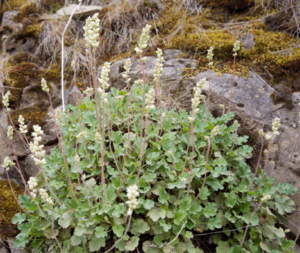
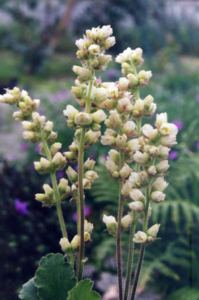
Round-Leaved Alumroot forms low-growing mounds of evergreen basal foliage 6-12 inches tall, with distinctive oval to round leaves that are often lobed or toothed. The leaves have a leathery texture and remain attractive throughout the growing season. From late spring to mid-summer, the plant produces striking flowering stems that can reach 12-35 inches in height, bearing dense cylindrical spikes of small, bell-shaped flowers in shades of cream, pale yellow, greenish-white, or pinkish.
Traditional Indigenous Uses
Round-Leaved Alumroot has always been known among indigenous people as a strong healing plant, one that offers medicine for both the body and the spirit. Its roots were valued most, for they could be made into many forms of remedy. When someone was wounded or cut, an infusion or decoction of the roots was used to wash and heal the sore. The crushed roots were also laid directly on cuts, bruises, or insect bites as a poultice to draw out pain and swelling. A gentler infusion was used as a wash for skin irritations and rashes, bringing relief to inflamed areas. When taken as tea, the root served as a digestive medicine, easing stomach troubles and calming diarrhea. Because of its strong astringent nature, the same plant was used to control bleeding and to strengthen the body after injury.
For those suffering from mouth sores or sore gums, the people would prepare a mild root infusion to gargle and rinse, soothing pain and inflammation. When swelling or joint pain troubled the body, the roots were again applied externally to reduce inflammation. Even the eyes could be treated with a very light root wash to ease irritation or redness. Poultice was also used for burns or damaged skin, helping to draw out the heat and promote healing. In times when the people needed strength, a tea of the roots was taken as a general tonic to support good health. The plant was known, too, for its cleansing power – a strong decoction made from the roots was used to wash infected wounds and fight off illness. Beyond its physical uses, the Round-Leaved Alumroot was also part of ceremony, used in healing and spiritual protection, reminding the people that true wellness came from balance between the body, the land, and the spirit.
Biochemical Compounds and Their Medicinal Properties
- Hydrolyzable Tannins (Primary Bioactive Compounds)
Three Most Important Compounds:
(i) Gallotannins (Polymeric galloyl esters)
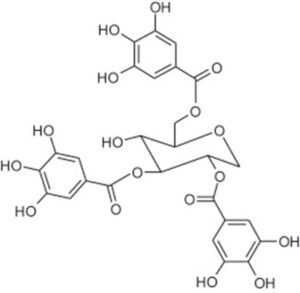
(ii) Ellagitannins (Complex hydrolyzable tannins)
(iii) Ellagic Acid (C₁₄H₆O₈) – Tannin metabolite

Medicinal Properties
- Astringent: Strong protein-binding and tissue-contracting effects
- Wound healing: Promotes tissue repair and collagen synthesis
- Antimicrobial: Broad-spectrum antibacterial and antifungal activity
- Anti-inflammatory: Reduces inflammatory mediators
- Flavonoids (Supporting Compounds)
Three Most Important Compounds:
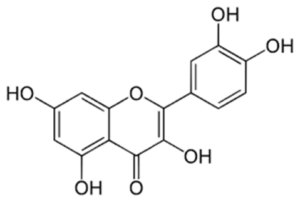
(i) Quercetin (C₁₅H₁₀O₇) – Major flavonol
(ii) Kaempferol (C₁₅H₁₀O₆) – Flavonol compound
(iii) Catechin (C₁₅H₁₄O₆) – Flavan-3-ol
- Phenolic Acids
Most Important Compound:
Gallic Acid (C₇H₆O₅) – Tannin precursor
Proposed Biochemical Mechanisms for Traditional Uses
Wound Healing (Root Poultices and Infusions)
- Hydrolyzable tannins act through:
- Protein precipitation forming protective barrier
- Hemostatic action promoting blood clotting
- Antimicrobial protection preventing infection
- Flavonoids contribute:
- Enhanced collagen synthesis and tissue repair
- Antioxidant protection of healing tissues
- Anti-inflammatory effects reducing wound inflammation
Astringent and Hemostatic Effects (Root Preparations)
- Gallotannins and ellagitannins provide:
- Protein cross-linking causing tissue contraction
- Reduced capillary permeability decreasing bleeding
- Protective coating over damaged tissues
- Gallic acid facilitates:
- Vasoconstriction reducing blood flow
- Enhanced coagulation cascade activation
- Antimicrobial barrier formation
Digestive Support (Root Tea)
- Tannins act as:
- Astringent compounds reducing intestinal secretions
- Protective coating for inflamed mucosa
- Antimicrobial agents against gut pathogens
- Flavonoids provide:
- Anti-inflammatory effects in digestive tract
- Antioxidant protection of intestinal cells
- Enhanced gut barrier function
Chemical Reactions and Molecular Interactions
Astringent and Hemostatic Mechanism (Tannins)
Gallotannins → Protein cross-linking → Tissue contraction → Reduced capillary permeability → Decreased bleeding
Tannins + Blood proteins → Coagulation → Hemostasis → Clot formation → Bleeding cessation
Wound Healing Acceleration (Multiple Compounds)
Ellagitannins → Fibroblast proliferation ↑ → Enhanced collagen synthesis → Improved tissue tensile strength → Faster healing
Flavonoids → VEGF expression ↑ → Enhanced angiogenesis → Improved blood supply → Accelerated wound closure
Antimicrobial Action (Tannins + Flavonoids)
Hydrolyzable tannins → Bacterial membrane disruption → Cell lysis → Increased permeability → ATP leakage → Cell death
Ellagic acid → Viral protein binding → Inhibited replication → Reduced viral load → Enhanced recovery
Anti-inflammatory Mechanism (Flavonoids + Ellagic Acid)
Quercetin → NF-κB pathway inhibition → ↓ Pro-inflammatory cytokines → Reduced tissue inflammation → Pain relief
Ellagic acid → COX-2 enzyme inhibition → ↓ Prostaglandin synthesis → Anti-inflammatory and analgesic effects
Digestive Protection (Tannins)
Gallotannins → Protein precipitation in gut → Protective barrier → Reduced inflammation → Enhanced gut healing
Tannins → Antimicrobial in intestines → Pathogen inhibition → Improved digestive health → Symptom relief
Traditional Preparation Methods and Biochemical Optimization
Root Infusion (Primary Traditional Method)
- Cold or warm water extraction: Optimizes tannin extraction
- Extended steeping: Increases concentration of bioactive compounds
- Fresh vs. dried roots: Both effective with different tannin profiles
- External application: Direct antimicrobial and astringent action
Poultice Preparation
- Crushed fresh roots: Maximum bioactive compound content
- Direct application: Immediate contact with wound surface
- Moisture retention: Maintains hydrated healing environment
- Protective barrier: Tannin-protein complex shields wound
Cultural and Ecological Significance
Indigenous practices emphasize:
- Sustainable root harvesting: Careful collection preserving plant populations
- Habitat recognition: Understanding alpine and rocky slope ecosystems
- Seasonal timing: Optimal collection periods for potency
- Multi-generational wisdom: Time-tested identification and preparation methods
Ornamental Value
Beyond medicine, round-leaved alumroot serves:
- Garden cultivation: Attractive foliage and flowers for landscaping
- Pollinator support: Flowers attract bees and beneficial insects
- Erosion control: Root systems stabilize rocky slopes
- Native plant restoration: Important for habitat rehabilitation
Safety Considerations and Traditional Wisdom
Indigenous preparation methods emphasize:
- Appropriate application: Primarily external use
- Proper concentration: Traditional strength for different conditions
- Quality assessment: Fresh, properly harvested roots
- Individual response: Monitoring for sensitivity
References
1) Elders and Community members of the Cayoose Creek Band of Sekw’el’was
2) (2025). Alpine alumroot (Heuchera cylindrica). https://calscape.org/Heuchera-cylindrica-(Alpine-Alumroot)
3) Plants for a Future. (2025). Heuchera cylindrica – Alum root, roundleaf alumroot. https://pfaf.org/user/Plant.aspx?LatinName=Heuchera+cylindrica
4) Abu‐Snaineh, A., Al‐Haj, N. A., & Khalaf, A. (2023, January 6). Therapeutic potential of flavonoids and tannins in management of oral infectious diseases. Frontiers in Pharmacology, 13, https://doi.org/10.3389/fphar.2023.9821998
5) Jdey, A., Ayeb‐Zakhama, A., & Hammami, S. (2023, February 10). Flavonoids as potential wound‐healing molecules. Antioxidants, 12(2), 305. https://doi.org/10.3390/antiox12020305
6) Ghosh, P., & Mandal, A. (2022, June 1). Phytochemistry and biological activity of medicinal plants in wound healing. Frontiers in Pharmacology, 13, https://doi.org/10.3389/fphar.2022.9182061
7) Sparrowhawk Native Plants. (2025). Alpine alumroot (Heuchera cylindrica). https://sparrowhawknativeplants.com/products/alpine-alumroot
8) Utah State University Extension. (2025). Heuchera cylindrica. https://cwelwnp.usu.edu/westernnativeplants/plantlist_view.php?id=31
9) Wild About Flowers. (2025). Heuchera cylindrica – Round-leaved alumroot. https://wildaboutflowers.ca/products/alumroot-round-leaved
10) (2025, July 17). Heuchera cylindrica. https://en.wikipedia.org/wiki/Heuchera_cylindrica
11) (2025, June 29). Heuchera. https://en.wikipedia.org/wiki/Heuchera