60 Showy Daisy
Names
Common name – Showy Daisy
Scientific name – Erigeron speciosus var. speciosus
Other names – aspen fleabane, showy fleabane, or garden fleabane
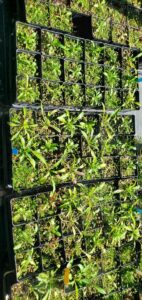
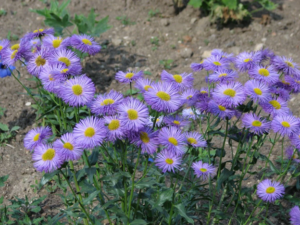
General Information
Showy Daisy is a perennial herbaceous flowering plant in the sunflower family (Asteraceae) native to western North America. This charming wildflower grows up to 100 cm (39 inches) tall from underground rhizomes and a woody caudex, forming attractive clumps in open areas. The plant features narrow leaves and produces spectacular flower heads with 75-150 white, lavender, or blue ray florets surrounding a bright yellow disc center, creating the classic daisy appearance. Each stem typically bears 2-20 flower heads that bloom from June to October.
Traditional Indigenous Uses
Showy Daisy is a small but powerful medicine, one that the people turned to often for healing many kinds of sickness. The whole plant could be used to make a tea that cleared the chest and eased coughs and colds, helping the breath to move freely again. When someone was hurt, the fresh leaves were crushed and laid over cuts or sores to help the wounds close and heal cleanly. The plant was also used for those suffering from stomach troubles or diarrhea, its tea calming the body and restoring balance to the digestion. When there was swelling or inflammation, the flowers and leaves were applied to the skin to reduce pain and bring down bruises.
Showy Daisy holds strong astringent properties. When boiled into a decoction, it could help stop bleeding and purify the blood. The leaves were also used as a wash for rashes and skin irritations, soothing the body and easing discomfort. Those with urinary problems or swelling from water retention drank the tea as a diuretic to cleanse the system. A mild infusion of the flowers was made as an eye wash to relieve irritation and redness. The whole plant was sometimes taken as a general tonic to strengthen the body and keep one in good health.
The crushed plant was used to keep away mosquitoes, its scent serving as a natural repellent when people were out on the land. In times of fever or general sickness, a warm tea of the plant was given to bring the heat down and restore wellness.
Biochemical Compounds and Their Medicinal Properties
- Flavonoids (Primary Bioactive Compounds)
Three Most Important Compounds:
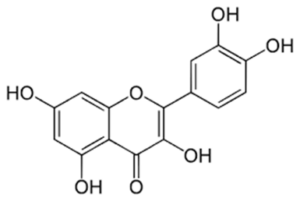
(i) Quercetin (C₁₅H₁₀O₇) – Major flavonol
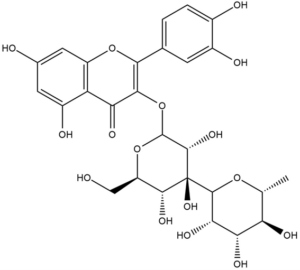
(ii) Rutin (C₂₇H₃₀O₁₆) – Quercetin-3-rutinoside
(iii) Luteolin (C₁₅H₁₀O₆) – Flavone compound
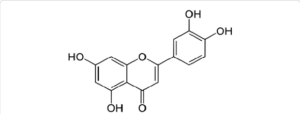
Medicinal Properties
- Anti-inflammatory: Potent inhibition of inflammatory pathways
- Antioxidant: Powerful free radical scavenging activity
- Antimicrobial: Broad-spectrum antibacterial properties
- Astringent: Tissue-tightening and wound-healing effects
- Phenolic Acids (Supporting Compounds)
Three Most Important Compounds:
(i) Caffeic Acid (C₉H₈O₄) – Hydroxycinnamic acid
(ii) Chlorogenic Acid (C₁₆H₁₈O₉) – Caffeoylquinic acid
(iii) Ferulic Acid (C₁₀H₁₀O₄) – Methoxycinnamic acid
- Essential Oil Components
Most Important Compound:
Limonene (C₁₀H₁₆) – Major monoterpene
Proposed Biochemical Mechanisms for Traditional Uses
Respiratory Support (Plant Infusions)
- Flavonoids act as:
- Anti-inflammatory agents reducing airway inflammation
- Bronchodilators relaxing airway smooth muscle
- Antimicrobials combating respiratory pathogens
- Essential oils contribute:
- Expectorant effects promoting mucus clearance
- Aromatherapeutic benefits for respiratory comfort
- Antimicrobial activity in respiratory tract
Wound Healing (Fresh Leaf Poultices)
- Quercetin and rutin provide:
- Enhanced collagen synthesis and tissue repair
- Antimicrobial protection preventing infection
- Antioxidant protection of healing tissues
- Caffeic acid facilitates:
- Astringent effects promoting wound closure
- Anti-inflammatory action reducing wound inflammation
- Antimicrobial activity inhibiting pathogens
Astringent and Antidiarrheal Effects (Tea Preparations)
- Flavonoids act through:
- Protein precipitation causing tissue contraction
- Reduced intestinal secretions
- Antimicrobial activity against gut pathogens
- Phenolic acids provide:
- Protective coating of intestinal mucosa
- Anti-inflammatory effects in digestive tract
- Enhanced gut barrier function
Chemical Reactions and Molecular Interactions
Anti-inflammatory Mechanism (Flavonoids)
Quercetin → NF-κB pathway inhibition → ↓ Pro-inflammatory cytokines → Reduced tissue inflammation → Symptom relief
Luteolin → COX-2 enzyme inhibition → ↓ Prostaglandin synthesis → Anti-inflammatory and analgesic effects
Antimicrobial Action (Flavonoids + Phenolic Acids)
Quercetin → Bacterial membrane disruption → Cell lysis → Increased permeability → ATP leakage → Cell death
Caffeic acid → Bacterial protein binding → Enzyme inactivation → Metabolic disruption → Growth inhibition
Wound Healing Mechanism (Multiple Compounds)
Rutin → Fibroblast proliferation ↑ → Enhanced collagen synthesis → Improved tissue tensile strength → Faster healing
Quercetin → VEGF expression ↑ → Enhanced angiogenesis → Improved blood supply → Accelerated wound closure
Astringent Action (Flavonoids + Tannins)
Quercetin + Rutin → Protein cross-linking → Tissue contraction → Reduced capillary permeability → Decreased bleeding
Phenolic compounds → Protective barrier formation → Reduced fluid loss
Antioxidant Protection (Multiple Compounds)
Quercetin + ROS → Quercetin radical + H₂O
(Direct radical scavenging)
Caffeic acid + O₂•⁻ → Caffeic acid radical + H₂O₂
(Superoxide dismutase-like activity)
Chlorogenic acid + Fe³⁺ → Chlorogenic acid-Fe complex
(Metal chelation preventing Fenton reactions)
Traditional Preparation Methods and Biochemical Optimization
Plant Infusion (Primary Traditional Method)
- Hot water extraction: Optimizes flavonoid and phenolic acid extraction
- Whole plant use: Utilizes complete phytochemical profile
- Fresh material: Maximum vitamin and volatile compound content
- Covered steeping: Prevents loss of volatile essential oils
Fresh Poultice Preparation
- Crushed fresh leaves: Maximum bioactive compound content
- Direct application: Immediate antimicrobial and anti-inflammatory action
- Moisture retention: Maintains hydrated healing environment
- Regular changes: Ensures continuous therapeutic effect
Cultural and Ecological Significance
Indigenous practices emphasize:
- Sustainable harvesting: Careful collection preserving rhizomatous populations
- Habitat recognition: Understanding meadow and aspen grove ecosystems
- Seasonal timing: Optimal collection during flowering period
- Proper identification: Distinguishing from similar aster-family species
Ornamental and Pollinator Value
Beyond medicine, showy daisy serves:
- Garden cultivation: Attractive native plant for landscaping
- Pollinator support: Important nectar source for bees and butterflies
- Long bloom period: June to October flowering provides extended resources
- Naturalizing: Spreads via rhizomes creating beautiful colonies
Safety Considerations and Traditional Wisdom
Traditional Guidelines
Indigenous preparation methods emphasize:
- Moderate consumption: Generally safe in traditional doses
- External preference: Primarily topical applications for wounds
- Fresh plant optimal: Best therapeutic effects from fresh material
- Proper identification: Distinguishing from potentially toxic look-alikes
Modern Safety Notes
- Generally recognized as safe: Long history of traditional use
- Allergic reactions: Possible in individuals sensitive to Asteraceae
- Skin testing: Test small area before extensive topical application
- Quality control: Proper species identification important
References
1) Elders and Community members of the Cayoose Creek Band of Sekw’el’was
2) Lady Bird Johnson Wildflower Center. (2025). Erigeron speciosus (Aspen fleabane). https://www.wildflower.org/plants/result.php?id_plant=ersp4
3) NC State Extension. (2025). Erigeron speciosus (Aspen fleabane, showy daisy). https://plants.ces.ncsu.edu/plants/erigeron-speciosus/
4) (2025). Erigeron canadensis: Medicinal uses. https://plantids.com/1353-erigeron-canadensis.html
5) Kula, M., Majda, T., & Góra, J. (2018). Chemical composition of the essential oils from the roots of Erigeron acris and Erigeron annuus. Molecules, 23(11), 2948. https://doi.org/10.3390/molecules23112948
6) Yao, X., Xu, J., Li, M., Zhang, H., & Wang, W. (2023). Phytochemistry and biological activity of Erigeron annuus (L.) Pers. Phytochemistry Reviews, 22(4), 1001–1021. https://doi.org/10.1007/s11101-023-09821-2
7) Zhao, L., Peng, Y., & Song, X. (2025). Compositional variability of essential oils and their bioactivity in native and invasive Erigeron Industrial Crops and Products, 213, 117425. https://doi.org/10.1016/j.indcrop.2025.117425
8) (2025). Erigeron – An overview. ScienceDirect Topics. https://www.sciencedirect.com/topics/agricultural-and-biological-sciences/erigeron
9) Bhatnagar, N., & Kaur, R. (2023). Harnessing unexplored medicinal values of Erigeron bonariensis. South African Journal of Botany, 157, 445–456. https://doi.org/10.1016/j.sajb.2023.02.019
10) (2025, June 7). Erigeron speciosus. https://en.wikipedia.org/wiki/Erigeron_speciosus
11) Wildflower Center of Southwest USA. (2025). Showy daisy (Erigeron speciosus). https://www.americansouthwest.net/plants/wildflowers/erigeron-speciosus.html