63 Smooth Scouring Rush
Names
Common name – Smooth Scouring Rush
Scientific name – Equisetum laevigatum
Other names – mú7cwań
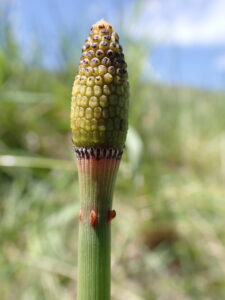
Source – https://www.flickr.com/photos/35478170@N08/52166900672/
General information
Smooth scouring rush (Equisetum laevigatum A. Braun) is one of several horsetail species in the genus Equisetum, family Equisetaceae. Equisetum is a “living fossil”, the only living genus of the entire subclass Equisetidae, which for over 100 million years was much more diverse and dominated the understorey of late Paleozoic forests. These primitive vascular plants are perennials that reproduce by spores rather than seeds. The plants grow 1-5 feet tall with hollow, jointed, bamboo-like stems that are ridged and segmented at nodes. The stems contain no true leaves but have whorls of small, tooth-like scale leaves at each node. The entire plant is distinctively rough to the touch due to silica deposits in the epidermis.
Unique Feature – Silicon Content: Chemical analysis revealed that silica is accumulated in horsetail in amounts of up to 25%. This makes horsetail one of the richest plant sources of bioavailable silicon, which is central to many of its therapeutic effects.
Traditional Indigenous Uses
Its hollow green stems, standing tall along the riverbanks, were known to cleanse and purify. When the kidneys or bladder were troubled, when there was pain or difficulty passing water, or when swelling gathered in the body, the people made tea from its stems to help the body release what it did not need. It was known to clear infections, dissolve stones, and calm inflammation in the urinary tract. For men, the same tea eased troubles of the prostate, bringing comfort and balance. Women also used it to steady their monthly cycles, to ease heavy bleeding, and to heal after childbirth.
Scouring rush was strong medicine for the blood and bones, used as a tonic to strengthen the body after winter, to purify the blood, and to help broken bones mend. Its tea was given for arthritis and rheumatism, restoring movement to stiff joints, and it helped the hair and nails grow strong. When bleeding would not stop (e.g. wound or a nosebleed) the crushed stems or their tea was used to slow it. The same plant soothed stomach pain, diarrhea, and dysentery, and even treated the body against old diseases like gonorrhea or syphilis. Its gritty stems were once used to polish arrows, clean cooking pots, and smooth wood, shining them to perfection. Some of the young shoots were even eaten in spring, like tender asparagus, though only in small amounts.
SAFETY NOTE: Horsetail contains thiaminase enzyme which breaks down thiamine (vitamin B1). Long-term use or large doses can cause thiamine deficiency. Use in moderation and not for extended periods.
Biochemical Basis for Medicinal Properties
Equisetaceae family contained alkaloids, carbohydrate, proteins and amino acids, phytosterols, saponins, sterols, ascorbic acid, silicic acid, phenol, tannin, flavonoids, triterpenoids, volatile oils and many other biological active constituents.
1. Silicon Compounds (5-25% of dry weight) – The Primary Bioactive
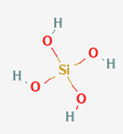
(i) Silicic Acid (Orthosilicic Acid, Si(OH)₄ or H₄SiO₄)
Molecular Weight: 96.11 g/mol
Concentration: Horsetail contains 5% to 8% silica and silicic acid, substances that play a role in the formation of connective tissue.
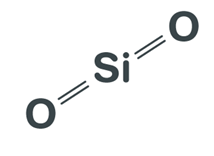
(ii) Silica (Silicon Dioxide, SiO₂)
Forms in Horsetail:
Amorphous (Non-crystalline) Silica; Polymerized network of Si-O-Si bonds In horsetail: Forms silica deposits in cell walls, creating the characteristic rough texture
2. Flavonoids
Beyond silica, horsetail contains flavonoids (including quercetin, kaempferol, and luteolin glycosides) that contribute to its antioxidant and anti-inflammatory properties.
(i). Quercetin-3-glucoside (Isoquercitrin, C₂₁H₂₀O₁₂)
Molecular Weight: 464.38 g/mol
Structure: Quercetin aglycone + glucose at position 3
(ii) Kaempferol-3-O-glucoside (Astragalin, C₂₁H₂₀O₁₁)
Molecular Weight: 448.38 g/mol
(iii) Luteolin glycosides
All structures provided in previous responses.
3. Phenolic Acids
Five main phenolic acids (gallic acid, chlorogenic acid, p-coumaric acid, isoquercitrin, and rutin).
(i) Caffeic Acid (C₉H₈O₄)
- Antioxidant and anti-inflammatory
(ii) Chlorogenic Acid (C₁₆H₁₈O₉)
- Ester of caffeic acid and quinic acid
(iii) p-Coumaric Acid (C₉H₈O₃)
4. Saponins
Equisetonin and related triterpene saponins
- Contribute to diuretic effects
- Structure similar to other triterpene saponins (oleanane-type)
5. Alkaloids
Nicotine (trace amounts, C₁₀H₁₄N₂)
- Present in very small quantities
- Not primary bioactive
Palustrine and related alkaloids
- Minor components
6. Sterols
β-Sitosterol (C₂₉H₅₀O)
- Plant sterol with anti-inflammatory properties
- Structure provided in previous responses
Campesterol
- Related phytosterol
7. Other Compounds
- Vitamin C (Ascorbic Acid): Moderate amounts
- Thiaminase: Enzyme that degrades thiamine (vitamin B1) – responsible for toxicity with long-term use
- Tannins: Astringent properties
- Minerals: Calcium, potassium, manganese, iron
Chemical Reactions and Biochemical Mechanisms (Condensed)
A. Bone and Connective Tissue Support – Silicon’s Primary Role
Mechanism 1: Collagen Cross-Linking Enhancement
Silicic Acid + Collagen → Enhanced collagen structure Silicon stabilizes collagen through: 1. Cross-linking of collagen fibers 2. Enhancement of prolyl hydroxylase activity (collagen synthesis enzyme) 3. Stimulation of osteoblast differentiation Reaction at molecular level: Si(OH)₄ + Collagen-OH groups → Si-O-Collagen bonds(Silicon forms bridges between collagen molecules) Result: Stronger, more stable collagen matrix
Mechanism 2: Bone Mineralization
Silicon + Calcium + Bone Matrix Proteins →Enhanced hydroxyapatite deposition →Increased bone mineral density Silicon is concentrated in:- Active calcification sites- Osteoid (unmineralized bone matrix)- Young bone tissue Silicon accelerates: Ca₁₀(PO₄)₆(OH)₂ (hydroxyapatite) formation
Mechanism 3: Glycosaminoglycan (GAG) Synthesis
Silicon → Stimulates synthesis of:- Hyaluronic acid- Chondroitin sulfate- Dermatan sulfate These GAGs are essential components of:- Cartilage- Synovial fluid (joint lubrication)- Connective tissue matrix- Skin structure
B. Diuretic Effects
Mechanism 4: Renal Tubule Stimulation
Flavonoids + Saponins → Increased renal blood flow →Enhanced glomerular filtration rate (GFR) →Increased urine production Also: Inhibition of sodium reabsorption in tubules →Osmotic retention of water in urine → Diuresis
Mechanism 5: Potassium-Sparing Diuretic
Unlike pharmaceutical diuretics, horsetail’s mineral content(especially potassium) replaces electrolytes lost in urine →No potassium depletion Result: Safe, gentle diuretic effect
C. Hemostatic (Blood Clotting) Effects
Mechanism 6: Vascular Wall Strengthening
Silicon + Flavonoids → Enhanced capillary integrity →Reduced capillary fragility → Less bleeding Silicon strengthens:- Endothelial cell connections- Basement membrane structure- Vascular smooth muscle
Mechanism 7: Platelet Aggregation
Phenolic compounds → Modulate platelet function →Appropriate clotting response (neither excessive nor insufficient)
D. Anti-Inflammatory Mechanisms
Mechanism 8: COX and LOX Inhibition
Flavonoids + Phenolic acids →Inhibit cyclooxygenase (COX-2) →Reduced prostaglandin synthesis →Decreased inflammation Also: Lipoxygenase (LOX) inhibition →Reduced leukotriene production
Mechanism 9: Antioxidant Protection
Quercetin + Kaempferol + Caffeic acid + ROS →Neutralized free radicals →Protection from oxidative inflammation Silicon itself has antioxidant properties: Si(OH)₄ + •OH → Complexes that neutralize radicals
E. Antimicrobial Effects
Mechanism 10: Silica Abrasive Action
Physical mechanism: Silica particles (rough texture) → Mechanical disruption of:- Bacterial cell walls- Fungal cell walls- Parasites Combined with: Saponins + Phenolics → Chemical antimicrobial effects
F. Hair and Nail Strengthening
Mechanism 11: Keratin Structure Enhancement
Silicon incorporation into keratin: Si(OH)₄ → Absorbed and transported to hair follicles/nail matrix →Cross-links sulfur bridges in keratin →Stronger, more flexible hair and nails Reaction: Silicon stabilizes disulfide bonds (S-S) in keratin structure
Mechanism 12: Improved Microcirculation to Follicles
Flavonoids → Enhanced blood flow to scalp →Better nutrient delivery to hair follicles →Healthier hair growth
G. Kidney Stone Prevention
Mechanism 13: Urinary pH Modification
Alkaloid and mineral content →Slight increase in urinary pH →Reduced crystallization of calcium oxalate and uric acid →Prevention of kidney stone formation Also: Increased urine volume (diuretic effect) →Dilution prevents crystal formation
H. Wound Healing
Mechanism 14: Enhanced Epithelialization
Silicon → Stimulates fibroblast proliferation →Increased collagen deposition →Faster wound closure Flavonoids → Antimicrobial protection +Antioxidant protection during healing Astringent tannins → Protein precipitation →Protective layer on wound surface
I. Thiaminase Toxicity Mechanism (Safety Concern)
Mechanism 15: Vitamin B1 Degradation
Thiaminase enzyme (in horsetail) + Thiamine (Vitamin B1) →Thiamine breakdown → Thiamine deficiency Reaction: Thiamine (intact) –[Thiaminase]–> Pyrimidine fragment + Thiazole fragment (inactive) Result: With long-term use:- Beriberi symptoms (neurological, cardiovascular)- Muscle weakness- Cognitive impairment Prevention: Moderate use, supplementation if needed
Structure-Activity Relationships
- Small Size of Silicic Acid Monomer: Enables absorption and transport throughout body; crosses into cells and tissues
- Multiple Hydroxyl Groups (Si(OH)₄):High water solubility; ability to form hydrogen bonds with proteins and polysaccharides
- Silicon-Oxygen Bond Formation: Creates stable cross-links in connective tissue; strengthens structural proteins
- Flavonoid Phenolic Structure: Antioxidant activity; enzyme inhibition; vascular protection
- Amorphous Silica Structure: Rough texture provides physical abrasive properties for cleaning and antimicrobial action
- Saponin Amphipathic Nature: Enables membrane interaction for diuretic and antimicrobial effects
Preparation and Safety Considerations
Traditional Tea Preparation
- Use 1-2 teaspoons dried horsetail stems per cup
- Simmer (not just steep) for 10-15 minutes to extract silicon
- Strain thoroughly
- Drink 1-3 cups daily for short periods (2-3 weeks maximum)
For External Use
- Poultice of fresh crushed stems
- Decoction as wash for wounds
- Hair rinse from strong decoction
CRITICAL SAFETY WARNINGS
- Thiaminase Content:
-
- Destroys vitamin B1 (thiamine)
- Do NOT use long-term (maximum 6 weeks)
- Take breaks between courses
- Consider B-vitamin supplementation with use
- Not for
-
- Pregnant or breastfeeding women
- Children
- People with heart or kidney disease (diuretic effect)
- Those with edema from heart/kidney disease
- Diabetics (may affect blood sugar)
- Drug Interactions
-
- Diuretic medications (additive effect)
- Lithium (reduced excretion)
- Diabetes medications (may lower blood sugar)
- Potassium supplements (risk of hyperkalemia)
- Other Concerns
-
- Contains nicotine (trace amounts) – avoid if nicotine-sensitive
- May worsen hypokalemia (low potassium)
- Harvest from clean areas only (accumulates heavy metals)
- Proper Identification: Ensure correct species; some toxic look-alikes exist
References
1) Elders and Community members of the Cayoose Creek Band of Sekw’el’was
2) Brinker, F. (2010). Herb contraindications and drug interactions (4th ed.). Eclectic Medical Publications.
3) Carneiro, D. M., Freire, R. C., Honório, T. C. D., Zoghaib, I., Cardoso, F. F. D. S., Tresvenzol, L. M., & de Paula, J. R. (2014). Randomized, double-blind clinical trial to assess the acute diuretic effect of Equisetum arvense (field horsetail) in healthy volunteers. Evidence-Based Complementary and Alternative Medicine, 2014, Article 760683. https://doi.org/10.1155/2014/760683
4) Corletto, F. (1999). Female climacteric osteoporosis therapy with titrated horsetail (Equisetum arvense) extract plus calcium (osteosil calcium): Randomized double blind study. Minerva Ortopedica e Traumatologica, 50, 201–206.
5) Exley, C. (2015). A possible mechanism of biological silicification in plants. Frontiers in Plant Science, 6, 853. https://doi.org/10.3389/fpls.2015.00853
6) Felter, H. W., & Lloyd, J. U. (1898). King’s American dispensatory (18th ed.). Ohio Valley Company. [Historical reference]
7) Grieve, M. (1931). A modern herbal. Dover Publications (1971 reprint). [Historical reference]
8) Johnston, A. (1987). Plants and the Blackfoot (Occasional Paper No. 15). Lethbridge Historical Society.
9) Jugdaohsingh, R. (2007). Silicon and bone health. The Journal of Nutrition, Health & Aging, 11(2), 99–110. https://doi.org/10.1007/BF02982270
10) Lewin, J., & Reimann, B. E. (1969). Silicon and plant growth. Annual Review of Plant Physiology, 20(1), 289–304. https://doi.org/10.1146/annurev.pp.20.060169.001445
11) Mimica-Dukić, N., Simin, N., Cvejić, J., Jovin, E., Orcić, D., & Bozin, B. (2008). Phenolic compounds in field horsetail (Equisetum arvense) as natural antioxidants. Molecules, 13(7), 1455–1464. https://doi.org/10.3390/molecules13071455
12) Moerman, D. E. (1998). Native American ethnobotany. Timber Press.
13) Sandhu, N. S., Kaur, S., & Chopra, D. (2010). Equisetum arvense: Pharmacology and phytochemistry—A review. Asian Journal of Pharmaceutical and Clinical Research, 3(3), 146–150.
14) Sripanyakorn, S., Jugdaohsingh, R., Thompson, R. P. H., & Powell, J. J. (2005). Dietary silicon and bone health. Nutrition Bulletin, 30(3), 222–230. https://doi.org/10.1111/j.1467-3010.2005.00507.x
15) Turner, N. J., Thompson, L. C., Thompson, M. T., & York, A. Z. (1990). Thompson ethnobotany: Knowledge and usage of plants by the Thompson Indians of British Columbia. Royal British Columbia Museum.