64 Snowberry
Names
Common name – Snowberry
Scientific name – Symphoricarpos albus
Other names – zekwzekwúkws, common snowberry or waxberry
General information
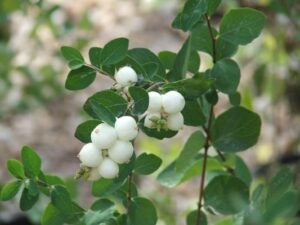
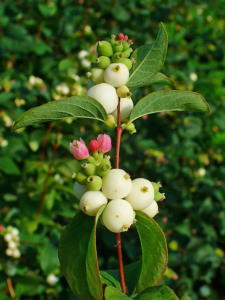
Snowberry is a deciduous shrub in the honeysuckle family (Caprifoliaceae) native to North America. This hardy plant grows 1-2 meters (3.5-6.5 feet) tall, producing stiff, branching stems and often spreading through rhizomes to form dense thickets. The leaves are oppositely arranged, generally oval, and vary in size and shape. Small, pink, bell-shaped flowers bloom in late spring to summer, attracting pollinators.
The most distinctive feature is the white, waxy berries that appear in late summer and persist through winter, giving the plant its common name. These round, soft berries contain saponins and are poisonous to humans when ingested in quantity, though they were carefully used medicinally by Indigenous peoples. The plant is highly valued by wildlife, with the berries providing winter food for birds, and the dense foliage offering shelter for small animals.
Traditional Indigenous Uses
The crushed berries were often applied to the skin to treat burns, warts, rashes, and sores, their juices acting as a natural cleanser that soothed and purified. The same berries, when rubbed into the hair, worked as a natural shampoo, keeping the scalp clean and healthy. Some people would even use them under their arms to reduce sweating and body odor.
When someone was cut or injured, the people chewed the leaves and placed them directly on the wound to draw out infection and speed healing. Tea made from the roots was taken for stomach troubles, calming pain and easing digestion. The roots and stems, when brewed together, were used to help with urinary problems and to clear the bladder when urination was painful or difficult. Stronger decoction was used for more serious illnesses such as tuberculosis and venereal diseases, helping to cleanse the body from within and fight infection.
Tea made from twigs helped bring down fever and soothe toothache, while a light infusion of the plant could be used to wash the eyes when they were sore or red. For babies and small children, the diluted berry juice served as a gentle cleanser for their delicate skin. Even when the people struggled with lice or other body parasites, the Snowberry was used externally to remove them, leaving the skin refreshed and clean.
Biochemical Compounds and Their Medicinal Properties
1. Triterpenoid Saponins (Primary Bioactive Compounds)
Three Most Important Compounds:
(i) Oleanolic Acid Saponins (C₃₀H₄₈O₃ + sugar moieties)
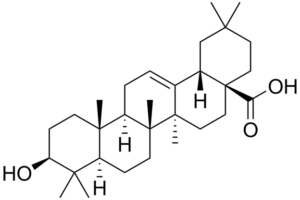
(ii) Ursolic Acid Derivatives (C₃₀H₄₈O₃ + sugars)
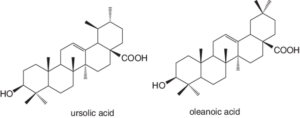
(iii) Betulinic Acid Glycosides (C₃₀H₄₈O₃ + sugars)
Medicinal Properties
- Surfactant/Cleansing: Natural soap-like foaming properties
- Anti-inflammatory: Reduces inflammatory mediators
- Antimicrobial: Broad-spectrum antibacterial and antifungal activity
- Anti-carcinogenic: Potential cancer-fighting properties
2. Phenolic Compounds (Supporting Compounds)
Three Most Important Compounds:
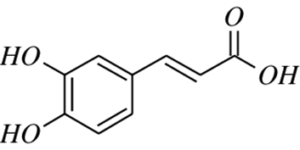
(i) Caffeic Acid (C₉H₈O₄)
(ii) Chlorogenic Acid (C₁₆H₁₈O₉)
(iii) Flavonoids (Quercetin derivatives)
Proposed Biochemical Mechanisms for Traditional Uses
Skin Cleansing and Healing (Crushed Berry Applications)
- Triterpenoid saponins act as:
-
- Natural surfactants creating foam for cleansing
- Antimicrobial agents preventing infection
- Anti-inflammatory compounds reducing skin irritation
- Phenolic compounds provide:
-
- Antioxidant protection of skin cells
- Enhanced wound healing through collagen synthesis
- Antimicrobial synergy with saponins
Shampoo and Scalp Health (Berry Applications)
- Saponins provide:
-
- Natural cleansing through surfactant action
- Antimicrobial protection against scalp infections
- Mild astringent effects improving scalp health
- Amphiphilic structure allows oil and dirt removal
- Gentle enough for regular use without harsh chemicals
Digestive Support (Root Tea)
- Triterpenoid saponins act through:
-
- Stimulation of digestive secretions
- Anti-inflammatory effects on gut mucosa
- Antimicrobial activity against pathogens
- Phenolic acids contribute:
-
- Antioxidant protection of digestive tissues
- Enhanced gut barrier function
- Reduced inflammation
Wound Healing (Leaf Poultices)
- Saponins facilitate:
-
- Antimicrobial protection preventing infection
- Enhanced blood flow to wound site
- Reduced inflammation promoting healing
- Phenolic compounds provide:
-
- Antioxidant protection of healing tissues
- Enhanced collagen synthesis
- Improved tissue repair
Chemical Reactions and Molecular Interactions
Surfactant/Cleansing Action (Saponins)
Saponin → Amphiphilic structure → Micelle formation ↓Oil/dirt solubilization → Cleansing effect Hydrophilic (sugar) head + Hydrophobic (triterpene) tail ↓Emulsification → Removal of sebum and impurities
Anti-inflammatory Mechanism (Saponins + Phenolics)
Triterpenoid saponins → NF-κB pathway inhibition → ↓ Pro-inflammatory cytokines ↓Reduced tissue inflammation → Symptom relief Caffeic acid → COX-2 enzyme inhibition → ↓ Prostaglandin synthesis ↓Anti-inflammatory and analgesic effects
Antimicrobial Activity (Saponins)
Saponins → Bacterial membrane disruption → Cell lysis ↓Cholesterol binding → Membrane destabilization → Cell death Saponins → Fungal cell wall interaction → Ergosterol binding ↓Increased membrane permeability → Growth inhibition
Wound Healing Enhancement (Multiple Compounds)
Saponins → Fibroblast proliferation ↑ → Enhanced collagen synthesis ↓Improved tissue tensile strength → Faster healing Phenolic compounds → VEGF expression ↑ → Enhanced angiogenesis ↓Improved blood supply → Accelerated wound closure
Antiperspirant Action (Saponins)
Saponins → Astringent effects → Pore constriction ↓Reduced sweat secretion → Odor control Antimicrobial action → Bacterial growth inhibition ↓Reduced odor-causing bacteria → Deodorant effect
Safety Considerations
- Berries poisonous when ingested in quantity (can cause vomiting, dizziness)
- Traditional external uses generally safe
- Internal use should be cautious and under supervision
Traditional Preparation Methods
Crushed Berry Preparation (Primary External Use)
- Fresh berry crushing: Releases saponins for immediate use
- Direct skin application: Maximum bioactive compound contact
- Gentle rubbing: Activates foaming properties
- Multiple applications: Daily use for cleansing
Root and Stem Decoction
- Extended boiling: Extracts water-soluble saponins and phenolics
- Moderate concentration: Balances efficacy with safety
- Internal use cautious: Traditional knowledge respects toxicity
Ecological Significance
- Erosion control: Rhizomatous growth stabilizes soil
- Wildlife habitat: Dense thickets provide shelter
- Nitrogen fixation: Some species improve soil quality
- Native landscaping: Hardy ornamental for gardens
References
1) Elders and Community members of the Cayoose Creek Band of Sekw’el’was
2) Greg App. (2024, March 20). Symbolism and benefits of the common snowberry. https://greg.app/common-snowberry-benefits/
3) Health Benefits Times. (2020, December 4). Uses and benefits of snowberry. https://www.healthbenefitstimes.com/snowberry/
4) (2025). Snowberry (plants of the Middle Rio Grande Bosque). https://www.inaturalist.org/guide_taxa/355794
5) Native Plants PNW. (2025). Common snowberry (Symphoricarpos albus). http://nativeplantspnw.com/common-snowberry-symphoricarpos-albus/
6) Natural Medicinal Herbs. (2025). Snowberry (Symphoricarpos albus laevigatus). https://www.naturalmedicinalherbs.net/herbs/s/symphoricarpos-albus-laevigatus=snowberry.php
7) National Park Service. (2025). Common snowberry. https://www.nps.gov/articles/000/common-snowberry.htm
8) Kaushik, N., & Gupta, G. (2023). Saponins of selected triterpenoids as potential therapeutic agents. Molecules, 28(6), 2590. https://doi.org/10.3390/molecules28062590
9) University of Washington Bothell. (2023, July 12). Snowberry – North Creek Wetland. https://www.uwb.edu/wetland/plants/symphoricarpos-albus
10) White Rabbit Institute of Healing. (2025, March 26). https://www.whiterabbitinstituteofhealing.com/herbs/snowberry/
11) (2025). Symphoricarpos. https://en.wikipedia.org/wiki/Symphoricarpos