70 Timber Milk-Vetch
Names
Common name – Timber Milk-Vetch
Scientific name – Astragalus miser
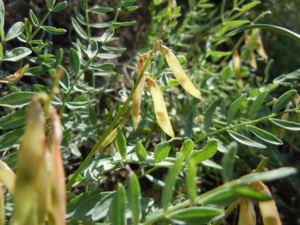
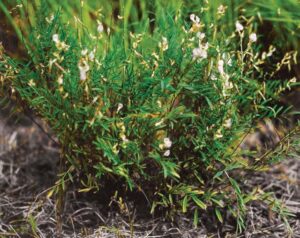
General information
Important Safety Warning: Timber milk-vetch contains miserotoxin and 3-nitropropanol, causing acute and chronic toxicity in cattle and sheep, and has also poisoned honey bees that forage on its flowers.
Limited Documented Traditional Uses
While some Astragalus species were used medicinally by Indigenous peoples, specific documentation for A. miser is extremely limited due to its toxic nature. However, related species were used: Astragalus canadensis (Canadian milk-vetch) was used medicinally by Native American groups such as the Blackfoot and Lakota people, particularly the roots, which were eaten raw or boiled and used in broth. Members of the Lakota tribe chewed Astragalus root to relieve back pain and cough, and Lakota women consumed Astragalus roots to increase breast milk production.
Traditional Indigenous Uses
Certain kinds of Milk-Vetch were not to be used because of their poison. Animals that fed on the plant sometimes grew weak or sick.
Other kinds of Milk-Vetch were valued and used with care. The roots of these non-toxic species were dug in the spring or fall, when their strength was concentrated. Boiled or eaten raw, the roots were taken to ease back pain and calm persistent coughing. In some teachings, a mild decoction or broth made from the roots was also used to support milk flow in new mothers, strengthening the body after childbirth and helping to nourish the child. The medicine was considered gentle when used properly, but only with the safe varieties known to the local people.
Note: The above uses apply to non-toxic Astragalus species, NOT A. miser
Biochemical Basis – Toxic Compounds in A. miser
Primary Toxic Compound: Miserotoxin
 Miserotoxin is 3-nitro-1-propyl-β-d-glucopyrannoside, a glycoside found in Astragalus miser.
Mechanism of Toxicity
Step 1: Hydrolysis Miserotoxin must be hydrolyzed by β-glucosidase to release the nitropropanol moiety to cause poisoning.
Chemical Reaction:
Miserotoxin + H₂O → β-glucosidase → 3-nitropropanol + D-glucose
(C₉H₁₇NO₈) + H₂O → (C₃H₇NO₃) + (C₆H₁₂O₆)
Step 2: Metabolic Conversion 3-nitropropanol (NPOH) is rapidly metabolized to 3-nitropropionic acid (NPA) in the rumen.
Chemical Reaction:
3-nitropropanol → 3-nitropropionic acid
C₃H₇NO₃ → C₃H₅NO₄ + H₂
Step 3: Toxic Effects These compounds cause nitrite oxidation of hemoglobin and inhibition of cellular metabolism.
Mechanisms:
- Hemoglobin oxidation: Conversion of hemoglobin to methemoglobin
- Cellular respiration inhibition: Interference with mitochondrial function
- Metabolic disruption: Inhibition of succinate dehydrogenase
Toxicity Data
The LD₅₀ for 3-nitropropanol was 0.58 mmol/kg in male Wistar rats, while 3-nitropropionic acid had an LD₅₀ of 0.56 mmol/kg.
Miserotoxin given orally had an LD₅₀ > 2.5 g/kg, but its aglycone NPOH (LD₅₀ = 77 mg/kg) was at least 10 times more toxic.
Detoxification Mechanisms
Some grasshopper species (Melanoplus bivittatus and M. sanguinipes) can tolerate high levels of miserotoxin and detoxify the aglycone, but mammals lack this detoxification capability.
Important Notes
- No Safe Traditional Uses: Astragalus miser (Timber Milk-Vetch) has no documented safe traditional medicinal uses due to its toxic nature.
- Confusion with Related Species: Traditional uses attributed to “milk-vetch” likely refer to non-toxic Astragalus species like A. canadensis.
- Biochemical Toxicity: The plant’s toxicity is well-characterized, involving glycoside hydrolysis, metabolic conversion, and disruption of cellular respiration and hemoglobin function.
- Clinical Significance: Animals with low β-glucosidase activity may be less susceptible to poisoning, but the plant remains dangerous to most mammals.
Critical Warning: Timber Milk-Vetch should never be used for medicinal purposes due to its well-documented toxicity. Any traditional plant medicine use should only occur under qualified supervision and with properly identified, non-toxic species.
References
1) Elders and Community members of the Cayoose Creek Band of Sekw’el’was
2) Stermitz, F. R., Norris, F. A., & Williams, M. C. (1969). Miserotoxin, a new naturally occurring nitro compound. Journal of the American Chemical Society, 91(17), 4599–4600. https://doi.org/10.1021/ja01044a078
3) Muir, A. D., Majak, W., Pass, M. A., & Yost, G. S. (1984). Conversion of 3-nitropropanol (miserotoxin aglycone) to 3-nitropropionic acid in cattle and sheep. Toxicology Letters, 20(2), 137–141. https://doi.org/10.1016/0378-4274(84)90138-3
4) Anderson, R. C., Majak, W., Rasmussen, M. A., Callaway, T. R., Beier, R. C., Nisbet, D. J., & Allison, M. J. (2005). Toxicity and metabolism of the conjugates of 3-nitropropanol and 3-nitropropionic acid in forages poisonous to livestock. Journal of Agricultural and Food Chemistry, 53(6), 2344–2350. https://doi.org/10.1021/jf040392j
5) Majak, W., Pass, M. A., & Madryga, F. J. (1983). Toxicity of miserotoxin and its aglycone (3-nitropropanol) to rats. Toxicology Letters, 19(1–2), 171–178. https://doi.org/10.1016/0378-4274(83)90279-5
6) Majak, W., Neufeld, R., & Corner, J. (1980). Toxicity of Astragalus miser serotinus to the honeybee. Journal of Apicultural Research, 19(3), 196–199. https://doi.org/10.1080/00218839.1980.11100022
7) Johnson, D. L., Majak, W., & Benn, M. H. (2001). Excretion of miserotoxin and detoxification of the aglycone by grasshoppers (Orthoptera: Acrididae). Phytochemistry, 58(5), 739–742. https://doi.org/10.1016/S0031-9422(01)00310-7
8) Native American Ethnobotany Database. (n.d.). Astragalus canadensis (Canadian milk-vetch) — documented uses (e.g., Blackfoot, Lakota). Botanical Research Institute of Texas. Retrieved September 16, 2025, from https://naeb.brit.org/uses/species/466/