79 Wolf Willow
Names
Common name – Wolf Willow
Scientific name – Elaeagnus commutata
Other names – Silverberry
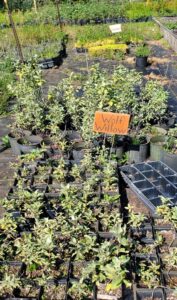
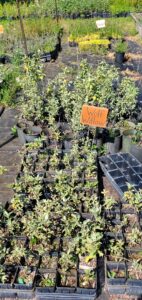
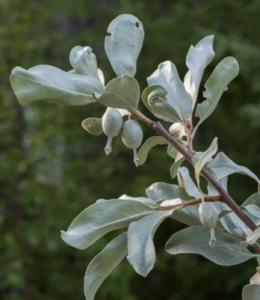
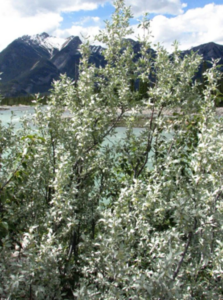
General Information
Wolf Willow (Elaeagnus commutata), also known as Silverberry, is a hardy deciduous shrub native to western and boreal North America. This resilient plant, characterized by its distinctive silvery foliage and fragrant yellow flowers, has been a valuable resource for Indigenous peoples across the prairie provinces and northern regions for centuries. Indigenous peoples have traditionally utilized different parts of this plant for medicinal, ceremonial, and practical purposes. Wolf Willow’s medicinal properties stem from its rich content of bioactive compounds including flavonoids, phenolic acids, and other secondary metabolites that contribute to its anti-inflammatory, antimicrobial, and healing properties. The plant’s ability to thrive in harsh prairie conditions and its multiple traditional applications have made it an important component of Indigenous pharmacopoeias across its natural range.
Traditional Indigenous Uses
From the bark, teas were brewed to ease chest colds, coughs, and other breathing troubles, helping to clear the lungs and restore the voice. The same bark, when softened and mixed with animal grease, was rubbed onto frostbitten skin to draw out the cold and bring back warmth.
The inner bark of Wolf Willow provided the strong fibers used to make ropes and baskets, The seeds were turned into beads for regalia and spiritual objects, worn during dances and ceremonies.
Medicinally, the bark and leaves of Wolf Willow were also prepared into salves and poultices to treat wounds, cuts, and abrasions. These same preparations were used to reduce swelling and ease joint pain, while mild teas from the inner bark soothed the stomach and supported digestion.
Biochemical Basis for Medicinal Properties
Primary Bioactive Compounds (Based on Elaeagnus Genus Research)
1. Flavonoids
Quercetin Derivatives
- Chemical Formula: C₁₅H₁₀O₇ (base structure)
- Properties: Strong antioxidant, anti-inflammatory, antimicrobial
- Mechanism: Free radical scavenging, enzyme inhibition
Kaempferol Glycosides
- Chemical Formula: C₁₅H₁₀O₆ (aglycone)
- Properties: Anti-inflammatory, antioxidant, wound healing
- Distribution: Found in leaves and flowers
Rutin (Quercetin-3-rutinoside)
- Chemical Formula: C₂₇H₃₀O₁₆
- Properties: Vascular protective, anti-inflammatory, antioxidant
2. Phenolic Acids
Chlorogenic Acid
- Chemical Formula: C₁₆H₁₈O₉
- Properties: Antioxidant, anti-inflammatory, antimicrobial
- Source: Leaves and bark
Gallic Acid
- Chemical Formula: C₇H₆O₅
- Properties: Antimicrobial, astringent, antioxidant
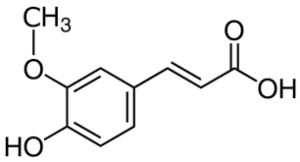
Ferulic Acid
- Chemical Formula: C₁₀H₁₀O₄
- Properties: Anti-inflammatory, antioxidant, skin protective
3. Tannins
Condensed Tannins (Proanthocyanidins)
- Properties: Astringent, antimicrobial, wound healing
- Mechanism: Protein binding, antimicrobial activity
- Traditional use: Wound treatment, skin conditions
4. Triterpenes and Sterols
β-Sitosterol
- Chemical Formula: C₂₉H₅₀O
- Properties: Anti-inflammatory, cholesterol-lowering
- Mechanism: Membrane stabilization, inflammatory modulation
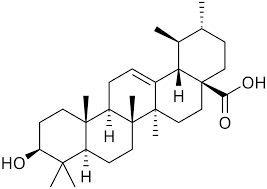
Ursolic Acid
- Chemical Formula: C₃₀H₄₈O₃
- Properties: Anti-inflammatory, antimicrobial, hepatoprotective
5. Essential Oil Components
Volatile Compounds
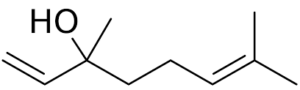
- Linalool: Antimicrobial, anti-inflammatory
- α-Pinene: Antimicrobial, respiratory benefits
- Limonene: Antioxidant, anti-inflammatory
Chemical Structures of some Key Compounds
Ursolic Acid
Linalool
Ferulic Acid
Mechanism of Action
Anti-inflammatory Properties
- Cyclooxygenase (COX) inhibition by flavonoids and phenolic acids
- Nuclear factor-κB (NF-κB) pathway modulation
- Cytokine production reduction (TNF-α, IL-1β, IL-6)
- Prostaglandin synthesis inhibition
Antimicrobial Activity
- Cell membrane disruption by phenolic compounds
- Protein denaturation by tannins
- DNA interaction by flavonoids
- Biofilm inhibition by multiple compounds
Wound Healing Mechanisms
- Collagen synthesis stimulation by flavonoids
- Angiogenesis promotion by phenolic compounds
- Antimicrobial protection preventing infection
- Anti-inflammatory effects reducing tissue damage
Antioxidant Activity
- Free radical scavenging by flavonoids and phenolic acids
- Metal chelation by polyphenolic compounds
- Lipid peroxidation inhibition
- Cellular protective effects
Pharmacological Activities
| Activity | Responsible Compounds | Mechanism | Traditional Application |
| Anti-inflammatory | Flavonoids, phenolic acids | COX inhibition, cytokine modulation | Frostbite treatment, swelling reduction |
| Antimicrobial | Tannins, phenolic compounds | Cell membrane disruption, protein binding | Wound care, skin infections |
| Wound healing | Flavonoids, tannins | Collagen synthesis, antimicrobial action | Cuts, abrasions, skin injuries |
| Antioxidant | Quercetin, chlorogenic acid | Free radical scavenging, metal chelation | General health, cellular protection |
| Respiratory support | Essential oil compounds | Anti-inflammatory, antimicrobial | Chest colds, respiratory conditions |
| Astringent | Tannins | Protein precipitation, tissue contraction | Skin tightening, bleeding control |
Biochemical Reactions
Antioxidant Mechanisms
Quercetin + ROS → Quercetin radical + H₂O (or neutralized radical)
Anti-inflammatory Pathway
Flavonoids → COX-1/COX-2 inhibition → ↓ Prostaglandin synthesis → ↓ Inflammation
Tannin-Protein Interaction
Tannin + Protein → Tannin-Protein complex (precipitation)
Antimicrobial Action
Phenolic compounds + Microbial cell membrane → Membrane disruption → Cell death
Traditional Preparation Methods
Frostbite Ointment
- Ingredients: Wolf Willow bark + animal grease (bear fat, etc.)
- Method: Bark processed and mixed with rendered fat
- Application: Applied to frostbitten areas for healing and protection
Respiratory Tea
- Ingredients: Inner bark of Wolf Willow
- Method: Gentle simmering in water to extract active compounds
- Dosage: Small amounts, used for chest colds and coughs
Wound Treatment
- Preparation: Fresh or dried bark processed into poultices
- Application: Direct application to cuts and skin injuries
- Benefits: Antimicrobial protection and healing acceleration
Safety and Dosage Considerations
Safety Profile
- Generally safe when used traditionally in appropriate amounts
- Mild gastrointestinal effects possible with excessive internal use
- Skin sensitivity rare but possible with concentrated preparations
- No major toxicity reported in traditional literature
Traditional Dosage Guidelines
- Bark tea: Small amounts of inner bark, gently simmered
- Topical preparations: Applied as needed to affected areas
- Ointments: Mixed with fats in traditional ratios
- Internal use: Conservative amounts as practiced traditionally
Modern Research Validation
Confirmed Activities (Based on Related Elaeagnus Species)
- Anti-inflammatory effects: Inhibition of COX-1, COX-2 and corticosterone release confirmed as possible mechanism for therapeutic potential
- Antioxidant properties: Antioxidant properties that protect cells from oxidative damage
- Complex phytochemistry: Chemical components are complex and diverse, mainly containing phenolic acids, flavonoids, alkaloids, triterpenes, sterols, and polysaccharides
- Multiple bioactivities: Numerous biological activities such as anti-inflammatory, antiedema, antinociceptive, and muscle relaxant functions
Clinical Relevance
- Arthritis treatment: Significant decrease in serum TNFα, IL-10, IL-1β, MMP-1, MMP-13 levels indicated potential as an anti-arthritic compound
- Pain management: Widely used to relax muscles, kill pains, treat inflammation, ease fever and cure ulcers
Important Disclaimers
Cultural Respect: Traditional Indigenous knowledge represents sophisticated understanding developed over centuries. This knowledge is the intellectual property of Indigenous communities and should be approached with appropriate respect and cultural protocols.
Scientific Limitation: While extensive research exists on related Elaeagnus species, specific phytochemical studies on E. commutata are limited. The medicinal properties described are extrapolated from closely related species and traditional knowledge.
Medical Disclaimer: This information is provided for educational purposes only. Traditional preparations should not be attempted without proper guidance from qualified practitioners familiar with both traditional methods and modern safety considerations.
Sustainable Harvesting: Wolf Willow should be harvested sustainably with respect for ecosystem health and Indigenous rights to traditional territories and resources.
Identification: Proper botanical identification is essential before any use. Consult with qualified botanists or traditional knowledge holders for accurate plant identification.
References
1) Elders and Community members of the Cayoose Creek Band of Sekw’el’was
2) Flora of North America Editorial Committee. (2022). Elaeagnus commutata. In Flora of North America North of Mexico (Vol. 10). https://dev.floranorthamerica.org/Elaeagnus_commutata floranorthamerica.org
3) S. Department of Agriculture, Natural Resources Conservation Service. (2006). American silverberry (Elaeagnus commutata) (Plant Guide) (Prepared by G. Nesom). https://plants.usda.gov/DocumentLibrary/plantguide/pdf/pg_elco.pdf plants.usda.gov
4) Moerman, D. E. (n.d.). Elaeagnus commutata—Native American Ethnobotany Database. University of Michigan–Dearborn / Botanical Research Institute of Texas. Retrieved September 15, 2025, from https://naeb.brit.org/uses/species/1374/
5) Hellson, J. C. (1974). Ethnobotany of the Blackfoot Indians (Mercury Series, Canadian Ethnology Service, Paper No. 19). National Museums of Canada. https://press.uottawa.ca/en/9781772821819/ethnobotany-of-the-blackfoot-indians/
6) Farzaei, M. H., Bahramsoltani, R., Abbasabadi, Z., & Rahimi, R. (2015). A comprehensive review on phytochemical and pharmacological aspects of Elaeagnus angustifolia Journal of Pharmacy and Pharmacology, 67(11), 1467–1480. https://doi.org/10.1111/jphp.12442
7) Saboonchian, F., Jamei, R., & Sarghein, S. H. (2014). Phenolic and flavonoid content of Elaeagnus angustifolia leaf and flower. Avicenna Journal of Phytomedicine, 4(4), 231–238. https://pmc.ncbi.nlm.nih.gov/articles/PMC4110780/ PMC