92 Large-Fruited Desert-Parsley
Names
Common name – Large-Fruited Desert-Parsley
Scientific name – Lomatium macrocarpum
Other names – bigseed lomatium, bigseed biscuitroot, or biscuit root
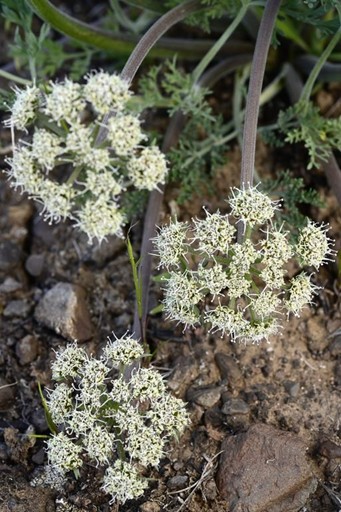
Fig 42.1: Close-up of the characteristic off-white to yellowish flowers of the Large-Fruited Desert-Parsley (Lomatium macrocarpum).
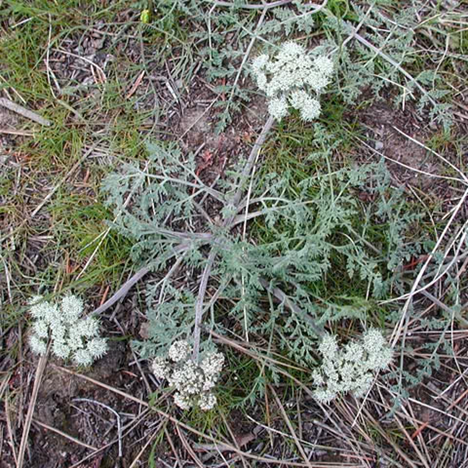
Fig 42.2: A photograph of Large-Fruited Desert-Parsley (Lomatium macrocarpum) growing in its natural habitat, displaying its highly dissected grey-green foliage.
General Information
Large-Fruited Desert-Parsley is a perennial flowering plant in the carrot family (Apiaceae) native to much of western North America. [6, 14] This robust herb grows up to about half a meter (20 inches) tall with hairy, gray-green herbage and a thick, deep taproot that can extend several feet into the ground. [3, 11] The plant is characterized by its finely divided, fern-like leaves and large, conspicuous clusters of small, off-white to yellowish flowers arranged in compound umbels typical of the carrot family. [3, 6] The “large-fruited” designation comes from its relatively large, winged seeds compared to other Lomatium species. [4] Large-fruited desert-parsley has been a crucial plant for Indigenous peoples across its range, serving as both an important food source and powerful medicinal plant. [2, 11]
Traditional Indigenous Uses
Its roots were dug in early spring, carefully cleaned, and brewed into a strong tea to treat coughs, colds, and lung troubles such as pneumonia and bronchitis. [2] The same root was used as an antiviral, known to fight infections and strengthen the body during outbreaks of influenza. [2, 5] When breathing became labored or the lungs felt heavy, the steam from its tea was inhaled to open the chest and ease conditions like asthma or even tuberculosis. [2, 13] Its roots were used to soothe sore throats through gargles or warm teas, and to bring down fevers when the body burned with sickness. [2]
The roots were mashed into poultices or washes to draw out infection from cuts, sores, and boils, and were sometimes placed over bruises or sprains to ease swelling. [2, 10] It was said to even help in the mending of broken bones, used externally to strengthen the body’s natural healing. [2] The same medicine could be applied to skin conditions such as rashes, sores, or even infections such as smallpox, showing the deep versatility of the root. [5, 8] A mild tea also aided digestion, restoring the body’s balance after sickness or weakness. [2]
When burned, its smoke was used in ceremonies of purification and protection, cleansing both space and spirit. [2] Some preparations were made especially for women, helping with postpartum recovery and strengthening reproductive health. [2] Taken regularly in small doses, it was also said to fortify the immune system, keeping illness away. [2]
Biochemical Compounds and Their Medicinal Properties
Three Most Important Compounds:
(i) Osthol (C₁₅H₁₆O₃) – Major coumarin compound [9]

Fig 42.3: Chemical structure of osthol, a major coumarin compound found in Large-Fruited Desert-Parsley.
(ii) Oxypeucedanin (C₁₆H₁₄O₅) – Furanocoumarin [9]
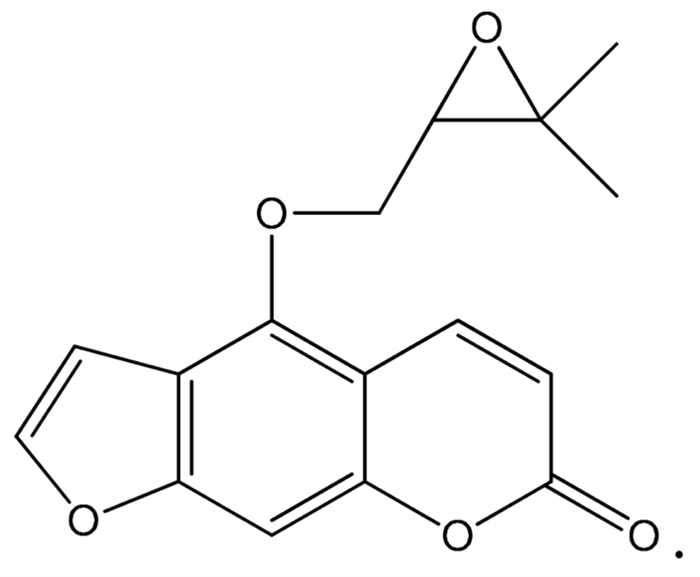
Fig 42.4: Chemical structure of oxypeucedanin, a furanocoumarin compound found in Large-Fruited Desert-Parsley.
(iii) Imperatorin (C₁₆H₁₄O₄) – Linear furanocoumarin [9]

Fig 42.5: Chemical structure of imperatorin, a linear furanocoumarin compound found in Large-Fruited Desert-Parsley.
Medicinal Properties
- Antiviral: Potent activity against respiratory viruses [7]
- Antimicrobial: Broad-spectrum antibacterial and antifungal effects [7, 13]
- Anti-inflammatory: Reduces inflammation in respiratory and other tissues [8]
- Immune-modulating: Enhances immune system response [12]
- Chromones (Supporting Compounds) [9]
Three Most Important Compounds
(i) 2-Methyl-5-hydroxy-6-(3-methyl-2-butenyl)-7-methoxychromone
(ii) Methoxychromone derivatives
(iii) Hydroxychromone compounds
- Essential Oil Components [1]
Most Important Compound
α-Pinene (C₁₀H₁₆) – Major monoterpene [1]
Proposed Biochemical Mechanisms for Traditional Uses
Antiviral Activity (Root Preparations) [7, 9]
- Coumarins (osthol, imperatorin) act through: [7, 9]
- Inhibition of viral RNA polymerase enzymes
- Disruption of viral protein synthesis
- Prevention of viral entry into host cells
- Chromones contribute: [9]
- Direct viral inactivation
- Enhancement of interferon production
- Immune system stimulation
Respiratory Support (Root Decoctions)
- Furanocoumarin compounds provide: [9]
- Bronchodilation through smooth muscle relaxation
- Anti-inflammatory effects in respiratory tract
- Antimicrobial activity against respiratory pathogens
- Essential oil components facilitate: [1]
- Expectorant action promoting mucus clearance
- Antimicrobial protection in lungs
- Improved oxygen exchange
Anti-inflammatory and Wound Healing (Topical Applications)
- Coumarin derivatives act as: [9, 12]
- Cyclooxygenase (COX) enzyme inhibitors
- Nuclear factor-κB (NF-κB) pathway modulators
- Antioxidant compounds protecting tissues
- Chromones provide: [9]
- Enhanced collagen synthesis
- Improved circulation to healing tissues
- Antimicrobial protection of wounds
Chemical Reactions and Molecular Interactions
Antiviral Mechanism (Coumarins) [7, 9]
Osthol → Viral RNA polymerase binding → Enzyme inactivation → Inhibited viral replication → Reduced viral load
Imperatorin → Viral envelope disruption → Loss of infectivity → Prevention of viral entry → Host cell protection
Anti-inflammatory Pathway (Multiple Compounds) [8, 12]
Coumarins → COX-2 enzyme inhibition → ↓ Prostaglandin E₂ synthesis → Reduced inflammation and pain → Tissue healing
Chromones → NF-κB pathway inhibition → ↓ Pro-inflammatory cytokines → Reduced inflammatory response → Pain relief
Antimicrobial Action (Furanocoumarin System) [9]
Oxypeucedanin → Bacterial cell membrane disruption → Cell lysis → Increased membrane permeability → ATP leakage → Cell death
UV activation: Furanocoumarin + UV light → DNA cross-linking → Bacterial/fungal DNA damage → Growth inhibition
Respiratory Relief Mechanism (Essential Oils + Coumarins) [1]
α-Pinene → β₂-adrenergic receptor activation → Bronchodilation → Relaxed airway smooth muscle → Improved breathing
Coumarins → Histamine release inhibition → Reduced airway inflammation → Decreased respiratory tract swelling → Better airflow
Immune Enhancement (Multiple Compounds) [12]
Chromones → Macrophage activation → ↑ Phagocytosis → Enhanced pathogen clearance → Improved immune response
Coumarins → Interferon production ↑ → Antiviral state induction → Enhanced cellular immunity → Viral resistance
Traditional Medicine Applications
Modern validation supports traditional uses:
- Desert parsley roots are used for asthma, colds, cough, flu, lung injuries, pneumonia, tuberculosis, and viral infections [8, 12]
- Lomatium can be used externally for smallpox, skin rashes, cuts, and sores [5]
Cultural and Historical Significance
Indigenous Food and Medicine Systems
Large-fruited desert-parsley holds special significance:
- Several species including L. macrocarpum are known as biscuit roots for their starchy edible roots – eaten cooked or dried and ground into flour [11, 14]
- It was an important food source for many interior First Nations peoples, who ate the root in spring either raw or cooked [2, 11]
Traditional Ecological Knowledge
Indigenous practices emphasize: [2]
- Deep root harvesting: Specialized digging techniques for accessing taproots
- Sustainable collection: Careful harvesting preserving plant populations
- Seasonal timing: Spring collection when roots are most potent
- Multi-generational knowledge: Time-tested preparation methods
Safety Considerations and Traditional Wisdom
Traditional Preparation Guidelines
Indigenous knowledge emphasizes: [2]
- Proper identification: Distinguishing from potentially toxic umbellifers
- Root processing: Traditional methods reducing potential irritation
- Dosage management: Appropriate amounts for different conditions
- Preparation timing: Fresh vs. dried root applications
Modern Safety Notes
Contemporary considerations include:
- Photosensitivity: Furanocoumarin content may increase UV sensitivity [8, 12]
- Individual sensitivity: Some people may experience skin reactions [8, 12]
- Quality control: Proper species identification and preparation standards [12]
- Professional guidance: Consultation for serious respiratory conditions [12]
References
- Asuming, W. A., Beauchamp, P. S., & Descalzo, J. T. (2005). Essential oil composition of four Lomatium species and their chemotaxonomy. Biochemical Systematics and Ecology, 33 (1), 17–26. https://doi.org/10.1016/j.bse.2004.06.005
- Elders and Community members of the Cayoose Creek Band of Sekw’el’was. (n.d.). Traditional knowledge.
- Friends of Edgewood. (2025, May 8). Large-fruited Lomatium. https://friendsofedgewood.org/large-fruited-lomatium
- Gaïan EthnoBotany. (2017, June 28). Lomatium macrocarpum. https://gaianethnobotany.com/2017/06/01/lomatium-macrocarpum/
- Healthy Planet Canada. (2025, May 26). A powerful antiviral herb: Desert parsley. https://www.healthyplanetcanada.com/blog/a-powerful-antiviral-herb-desert-parsley/
- iNaturalist. (2025). Large-fruited desert parsley (Lomatium macrocarpum). Retrieved September 28, 2025, from https://www.inaturalist.org/guide_taxa/618478
- McCutcheon, A. R., Roberts, T. E., Gibbons, E., Ellis, S. M., Babiuk, L. A., Hancock, R. E. W., & Towers, G. H. N. (1995). Antiviral screening of British Columbian medicinal plants. Journal of Ethnopharmacology, 49 (2), 101–110. https://doi.org/10.1016/0378-8741(95)01312-1
- RxList. (2021, June 11). Desert parsley: Health benefits, side effects, uses, dose & precautions. Retrieved September 28, 2025, from https://www.rxlist.com/supplements/desert_parsley.htm
- ScienceDirect Topics. (2025). Lomatium—An overview. Retrieved September 28, 2025, from https://www.sciencedirect.com/topics/pharmacology-toxicology-and-pharmaceutical-science/lomatium
- Secrets of the Tribe. (2023, April 7). 5 surprising but less-known Lomatium benefits everyone should know. https://secrets.shop/blogs/learn-the-herbs/lomatium-benefits
- Splitrock Environmental. (2025). Large-fruited desert-parsley. <a href="https://splitrockenvironmental.ca/products/large-fruited-desert-parsley” rel=”noopener” target=”_new”> https://splitrockenvironmental.ca/products/large-fruited-desert-parsley
- WebMD. (2025). Desert parsley: Overview, uses, side effects, precautions, interactions, dosing and reviews. Retrieved September 28, 2025, from https://www.webmd.com/vitamins/ai/ingredientmono-1275/desert-parsley
- White Rabbit Institute of Healing. (2025, March 13). Lomatium (Lomatium). https://www.whiterabbitinstituteofhealing.com/herbs/lomatium/
- Wikipedia contributors. (2025). Lomatium. In Wikipedia, The Free Encyclopedia. Retrieved September 28, 2025, from https://en.wikipedia.org/wiki/Lomatium