110 Indian Ricegrass
Names
Common name – Indian Ricegrass
Scientific name – Oryzopsis hymenoides, now classified as Achnatherum hymenoides
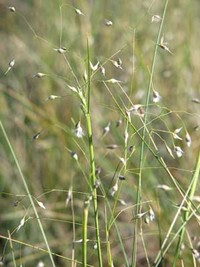
Fig 37.1: Mature Indian ricegrass (Achnatherum hymenoides) showing the characteristic open, branching panicle with feathery-awned seeds enclosed in papery hulls, illustrating the plant’s distinctive cloud-like appearance at seed maturity
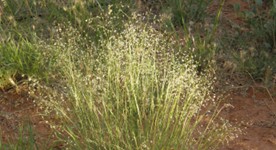
Fig 37.2: A dense cespitose clump of Indian ricegrass (Achnatherum hymenoides) in its native arid-steppe habitat, displaying slender, in-rolled leaves and erect culms topped by delicate, spreading seed panicles
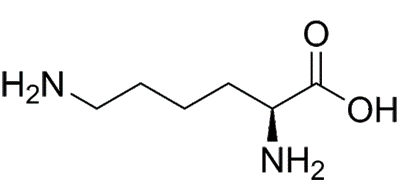
Fig 37.3: Chemical structure of Lysine (C₆H₁₄N₂O₂), an essential diaminocarboxylic acid present in Indian ricegrass seeds at concentrations higher than most common cereal grains; lysine is critical for collagen cross-linking, tissue repair, and wound healing
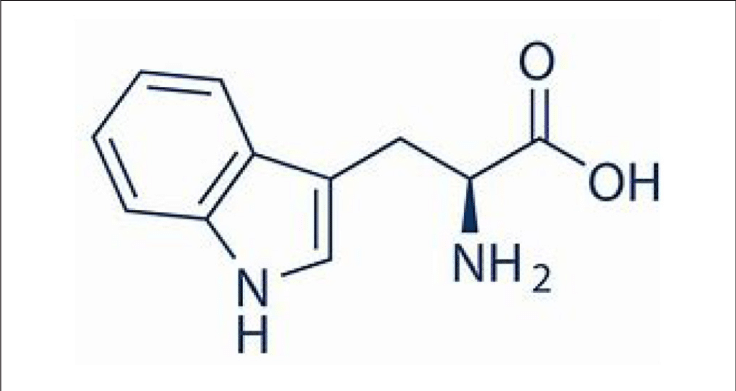
Fig 37.4: Chemical structure of Tryptophan (C₁₁H₁₂N₂O₂), an indole-containing essential amino acid and key dietary precursor to the neurotransmitter serotonin via the 5-HTP intermediate, present in the seeds of Indian ricegrass (Achnatherum hymenoides)
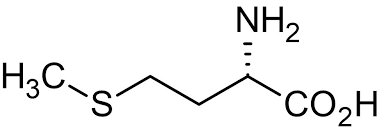
Fig 37.5: Chemical structure of Methionine (C₅H₁₁NO₂S), the essential sulfur-containing amino acid found in Indian ricegrass seeds; methionine serves as the universal methyl donor in biological methylation reactions and is required for antioxidant glutathione synthesis
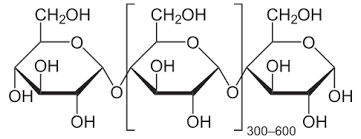
Fig 37.6: Molecular structure of Amylose (C₆H₁₀O₅)ₙ, the linear α-1,4-glucan polysaccharide component of starch present in Indian ricegrass seeds; its helical conformation confers slow enzymatic digestion, producing a gradual glucose release and a low glycaemic index response
General information
Indian Ricegrass (Achnatherum hymenoides, formerly Oryzopsis hymenoides) is a hardy, long-lived perennial bunchgrass native to the arid and semi-arid regions of western North America. [9] This distinctive grass grows 8–30 inches tall, forming tight clumps (cespitose) with narrow, thread-like leaves that are often rolled inward (convolute) and appear almost needle-like. [9] The plant is easily recognizable by its large, open, branching seed panicles (9–20 cm long, 8–14 cm wide) that create a delicate, cloud-like appearance when mature. [6] Each seed is enclosed in a distinctive papery hull (lemma) with long, feathery awns. [9] Indian ricegrass thrives in elevations from 3,000 to 10,000 feet across diverse habitats including desert flats, foothills, mountain slopes, and plateau country. [9] Found from British Columbia south to Southern California and east to Colorado, this drought-tolerant grass is uniquely adapted to sandy, gravelly, and shallow soils. [9] For thousands of years, Indigenous peoples have valued Indian ricegrass not only as a crucial food source but also for its medicinal properties, using various parts of the plant for nutritional support, digestive health, and overall wellness. [3, 7, 11]
Traditional Indigenous Uses
The seeds were ground into meal or flour and used as food for those in need of strength, especially during hard times when other food was scarce. [3, 7, 11]
For those with weak stomachs or recovering from illness, the seeds were cooked into a soft porridge or gruel, easy to digest and soothing to the body. [7, 11] Mothers would make a fine paste from the flour for postpartum healing, supporting recovery and strength after childbirth. [3] The same meal, when mixed with water, was given to children or infants as a first solid food during weaning, keeping them strong when other nourishment was not yet possible. [3, 7] The roasted seeds were also eaten whole, used by travelers and hunters to sustain their energy during long journeys. [11]
Its meal was sometimes made into a thick paste and applied to small wounds or irritated skin to soothe and heal. [7] When diarrhea or stomach troubles struck, the people cooked the seeds into a thick gruel to calm the belly and stop the illness. [7, 11] Steam from its leaves was used to ease mild respiratory congestion, while the plant itself was included in ceremonies as a symbol of blessing and spiritual endurance. [3]
Biochemical Compounds and Their Medicinal Properties
- Proteins and Amino Acids (Primary Nutritional Compounds)
Three Most Important Compounds:
- Essential Amino Acids: All 9 essential amino acids present [14]
- Lysine: Higher content than most cereal grains [14]
- Leucine and Isoleucine: Branch-chain amino acids for muscle health [14]
Amino Acid Structure Example – Lysine (C₆H₁₄N₂O₂)
- Tryptophan (C₁₁H₁₂N₂O₂) – Serotonin precursor [4]
- Methionine (C₅H₁₁NO₂S) – Essential sulfur-containing amino acid [14]
- Complex Carbohydrates and Fiber (Energy and Digestive Support)
Three Most Important Compounds:
- Amylose (C₆H₁₀O₅)ₙ – Slow-release starch [10]
- Minerals and Micronutrients
Most Important Compound:
Iron-containing compounds (Fe²⁺/Fe³⁺) – Essential for blood health [11]
- Heme-like complexes: Iron bound to organic compounds [11]
- Mineral chelates: Iron complexed with amino acids for better absorption [11]
Proposed Biochemical Mechanisms for Traditional Uses
Nutritional Medicine (Seed Meal/Flour)
- Complete protein profile provides: [14]
- All essential amino acids for tissue repair and growth
- Lysine for collagen synthesis and wound healing
- Tryptophan for serotonin production and mood regulation [4]
- Complex carbohydrates contribute: [10]
- Sustained energy release preventing blood sugar spikes
- Prebiotic fiber supporting beneficial gut bacteria
- Slow-digesting starches for prolonged satiation
Digestive Support (Cooked Seeds)
- Beta-glucan fiber acts through: [10]
- Forming protective gel layer in digestive tract
- Binding toxins and facilitating their removal
- Promoting healthy gut microbiome
- Amino acids provide: [14]
- L-glutamine for intestinal wall repair
- Glycine for digestive enzyme production
- Proline for gut barrier integrity
Blood Strengthening (Regular Dietary Use)
- Iron chelates enhance: [11]
- Hemoglobin synthesis and oxygen transport
- Myoglobin production for muscle function
- Cytochrome enzyme activity for cellular energy
- B-vitamins support: [11]
- Red blood cell formation
- DNA synthesis in blood cells
- Methylation processes for blood health
Chemical Reactions and Molecular Interactions
Protein Synthesis Support (Essential Amino Acids)
Lysine + Other amino acids → Protein synthesis → Collagen formation → Enhanced tissue repair → Wound healing acceleration [14]
Tryptophan → 5-HTP → Serotonin → Improved mood and digestion [4]
Digestive Healing Mechanism (Beta-glucan)
Beta-glucan + Water → Viscous gel formation → Protective coating → Reduced inflammation → Enhanced gut barrier function [10]
Beta-glucan → Immune system activation → ↑ Macrophage activity → Enhanced pathogen clearance in digestive tract [10]
Energy Metabolism (Complex Carbohydrates)
Amylose → α-amylase → Maltose → Glucose → Cellular ATP (slow breakdown) → Sustained energy release → Stable blood sugar [10]
Inulin → Gut bacteria fermentation → Short-chain fatty acids → Enhanced colon health → Improved nutrient absorption [10]
Iron Absorption and Utilization
Iron chelates → Enhanced absorption → Hemoglobin synthesis → Improved oxygen transport → Reduced fatigue [11]
Iron + Amino acids → Myoglobin formation → Enhanced muscle function [11]
Nutritional Analysis and Modern Validation
Protein Quality
Indian ricegrass contains 18–24% protein with a complete amino acid profile, making it nutritionally superior to many common cereals. [11, 14] The protein digestibility is high, supporting traditional use for nutritional medicine. [14]
Mineral Content
- Iron: 4–6 mg per 100g (supporting blood health) [11]
- Magnesium: 120–150 mg per 100g (muscle and nerve function) [11]
- Phosphorus: 300–400 mg per 100g (bone health) [11]
- Potassium: 350–450 mg per 100g (cardiovascular health) [11]
Fiber and Glycemic Benefits
Contains 12–15% dietary fiber with low glycemic index, supporting traditional use for digestive health and sustained energy. [10, 11]
Traditional Preparation Methods and Biochemical Optimization
Processing Techniques
- Parching: Removes seed hairs and enhances digestibility [3, 9]
- Grinding: Breaks down cell walls for nutrient accessibility [3, 11]
- Cooking: Gelatinizes starches for easier digestion [10]
- Fermentation: May enhance nutrient bioavailability [14]
Seasonal Harvesting
Traditional late-summer harvest ensures: [9, 12]
- Maximum protein content: Fully mature seeds [9]
- Optimal carbohydrate storage: Peak energy reserves [9]
- Concentrated minerals: Reduced water content increases nutrient density [11]
Safety and Sustainability
Traditional Wisdom
- Sustainable harvesting: Leaving adequate seed for natural regeneration [3]
- Proper processing: Removing irritant seed hairs through toasting [3, 9]
- Balanced use: Combining with other foods for complete nutrition [14]
- Cultural protocols: Respectful gathering practices [3]
References
- Anderson, M. K. (1999). The fire, pruning, and coppice management of temperate ecosystems for basketry material by California Indian tribes. Human Ecology, 27 (1), 79–113. https://doi.org/10.1023/A:1018757317568
- Dunmire, W. W., & Tierney, G. D. (1997). Wild plants and native peoples of the Four Corners. Museum of New Mexico Press.
- Elders and Community members of the Cayoose Creek Band of Sekw’el’was. (n.d.). [Oral traditional knowledge and personal communications].
- Fernstrom, J. D., & Wurtman, R. J. (1971). Brain serotonin content: Physiological dependence on plasma tryptophan levels. Science, 173 (3992), 149–152. https://doi.org/10.1126/science.173.3992.149
- Great Basin Seeds. (n.d.). Bluebunch wheatgrass (Pseudoroegneria spicata). Retrieved September 25, 2025, from https://greatbasinseeds.com/product/bluebunch-wheatgrass/
- Lady Bird Johnson Wildflower Center. (2025, March 31). Achnatherum hymenoides (Indian ricegrass). https://www.wildflower.org/plants/result.php?id_plant=achy
- Moerman, D. E. (1998). Native American ethnobotany. Timber Press.
- Native Foods Nursery. (n.d.). Indian ricegrass. Retrieved September 25, 2025, from https://nativefoodsnursery.com/indian-ricegrass/
- Rhode, D. (2002). Native plants of southern Nevada: An ethnobotany. University of Utah Press.
- Tiwari, U., & Cummins, E. (2011). Meta-analysis of the effect of β-glucan intake on blood cholesterol and glucose levels. Nutrition, 27 (10), 1008–1016. https://doi.org/10.1016/j.nut.2010.11.006
- University of Kansas, American Indian Health and Diet Project. (n.d.). Indian ricegrass: Foods Indigenous to the Western Hemisphere. Retrieved September 25, 2025, from https://aihd.ku.edu/foods/indian_ricegrass.html
- U.S. Forest Service. (n.d.). Indian ricegrass—Achnatherum hymenoides (Plant of the Week). Retrieved September 25, 2025, from https://www.fs.usda.gov/wildflowers/plant-of-the-week/achnatherum_hymenoides.shtml
- Utah State University Extension. (n.d.). Indian ricegrass. Retrieved September 25, 2025, from https://extension.usu.edu/rangeplants/grasses-and-grasslikes/indian-ricegrass
- Young, V. R., & Pellett, P. L. (1994). Plant proteins in relation to human protein and amino acid nutrition. The American Journal of Clinical Nutrition, 59 (5), 1203S–1212S. https://doi.org/10.1093/ajcn/59.5.1203S