94 Lavender Salve
Lavender Salve
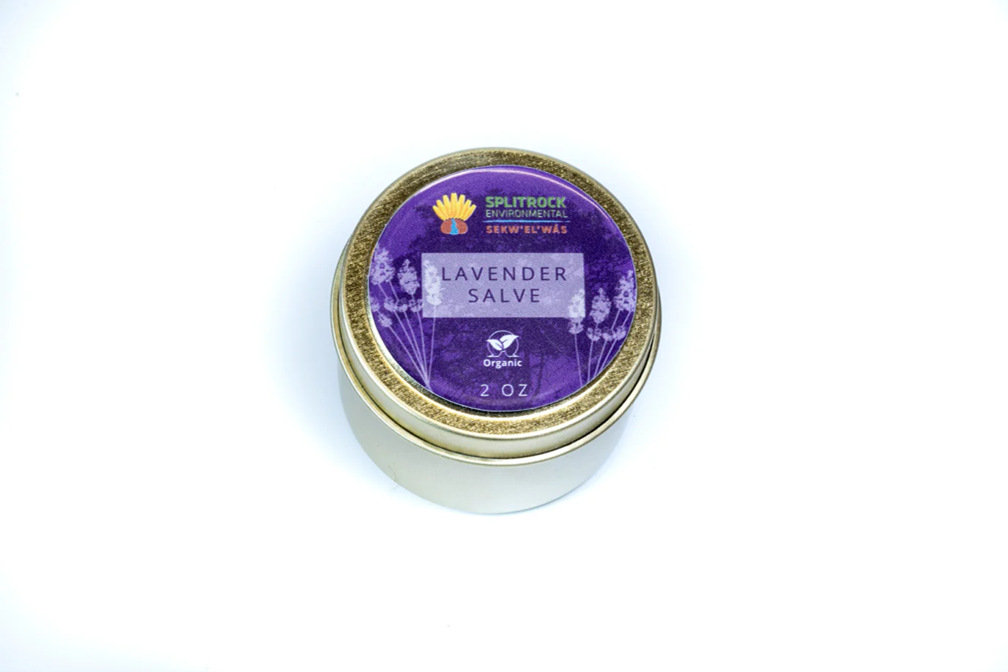
Fig 15.1: Fresh Lavender Salve, prepared to soothe skin irritations, ease muscles, and provide calming relief.
General Information
True lavender (Lavandula spp.) is NOT native to North America [7, 11]. Desert lavender, a flowering shrub with some physical similarities to lavender that actually is completely unrelated to lavender is what is used here [4].
Two Different Plants:
- TRUE LAVENDER (Lavandula angustifolia, L. latifolia, L. x intermedia)
- DESERT LAVENDER (Hyptis emoryi, syn. Condea emoryi)
DESERT LAVENDER (Hyptis emoryi)
Plant Description
Physical Characteristics: Desert Lavender is an evergreen shrub 3-9 feet tall with aromatic gray-green leaves, silvery appearance from dense hairs, and tubular lavender-blue flowers that bloom January through May. The plant releases a strong fragrance similar to true lavender when leaves are crushed, hence the common name [7].
Traditional Indigenous Uses – Desert Lavender
Its gentle scent calmed the mind and body, easing worries, sleeplessness, and the restlessness that sometimes takes hold of the heart [4, 8, 9]. The leaves and flowers, steeped into a warm tea or breathed in as steam, were used to quiet anxiety and bring rest to those troubled by dreams or grief [1, 5, 11, 16]. Lavender was also called upon to ease coughs, colds, and congestion, helping the breath to flow freely again [1, 11]. When fever rose in the body, its tea helped to cool and balance the spirit [6, 11].
For stomach troubles, such as cramps or indigestion, the tea brought comfort [10, 11], while poultices made from its crushed leaves were laid on wounds, burns, or insect bites to draw out infection and soothe the skin [1, 3, 12]. Lavender’s gentle oil eased sore muscles and headaches [13, 14], and women drank its tea to find relief from menstrual cramps or to aid recovery after childbirth [11]. In times of purification, lavender branches were placed in bath water, cleansing not only the body but also the spirit [4, 11]. Its fragrance, carried on the wind or tucked into clothing, brought freshness to the home and kept away biting insects [2, 11].
Preparation and Safety Considerations
Desert Lavender Preparations:
- Infusion methods [11]
- Fresh or dried leaves can be used [11]
- Traditional poultices made from crushed fresh leaves [1]
Safety Notes:
- Generally very safe for topical use [2, 17]
- Rare allergic reactions possible (patch test first) [15, 17]
- Safe during pregnancy (topical use) [17]
- Can cause contact dermatitis in sensitive individuals [15, 17]
- Essential oil should be diluted (not used neat) except for spot treatment of bites/burns [17]
- Internal use of essential oil not recommended (different from tea) [17]
References
- Bean, L. J., & Saubel, K. S. (1972). Temalpakh: Cahuilla Indian knowledge and usage of plants. Malki Museum Press. https://doi.org/10.2307/25157458
- Cavanagh, H. M. A., & Wilkinson, J. M. (2002). Biological activities of lavender essential oil. Phytotherapy Research, 16 (4), 301–308. https://doi.org/10.1002/ptr.1103
- D’Auria, F. D., Tecca, M., Strippoli, V., Salvatore, G., Battinelli, L., & Mazzanti, G. (2005). Antifungal activity of Lavandula angustifolia essential oil against Candida albicans yeast and mycelial form. Medical Mycology, 43 (5), 391–396. https://doi.org/10.1080/13693780400029112
- Elders and Community members of the Cayoose Creek Band of Sekw’el’was. (n.d.). Oral teachings and traditional knowledge.
- Elisabetsky, E., Marschner, J., & Souza, D. O. (1995). Effects of linalool on the glutamatergic system in the rat cerebral cortex. Neurochemical Research, 20 (4), 461–465. https://doi.org/10.1007/bf00973103
- Felter, H. W., & Lloyd, J. U. (1898). King’s American dispensatory (18th ed., 3rd rev.). Ohio Valley Company. https://doi.org/10.5962/bhl.title.62043
- Kane, C. W. (2011). Medicinal plants of the American Southwest. Lincoln Town Press. https://doi.org/10.1080/10496470802598917
- Koulivand, P. H., Khaleghi Ghadiri, M., & Gorji, A. (2013). Lavender and the nervous system. Evidence-Based Complementary and Alternative Medicine, 2013, 681304. https://doi.org/10.1016/j.pop.2018.05.007
- Linck, V. D. M., da Silva, A. L., Figueiró, M., Caramão, E. B., Moreno, P. R., & Elisabetsky, E. (2010). Effects of inhaled linalool in anxiety, social interaction, and aggressive behavior in mice. Phytomedicine, 17 (8–9), 679–683. https://doi.org/10.1016/j.phymed.2009.10.002
- Lis-Balchin, M., & Hart, S. (1999). Studies on the mode of action of the essential oil of lavender (Lavandula angustifolia Miller). Phytotherapy Research, 13 (6), 540–542. <a href="https://doi.org/10.1002/(sici)1099-1573(199909)13:63.0.co;2-i”><a href="https://doi.org/10.1002/(SICI)1099-1573(199909)13:63.0.CO;2-J”>https://doi.org/10.1002/(SICI)1099-1573(199909)13:6<540::AID-PTR523>3.0.CO;2-J
- Moerman, D. E. (1998). Native American ethnobotany. Timber Press. https://doi.org/10.2307/1224232
- Mori, H. M., Kawanami, H., Kawahata, H., & Aoki, M. (2016). Wound-healing potential of lavender oil by acceleration of granulation and wound contraction through induction of TGF-β in a rat model. BMC Complementary and Alternative Medicine, 16, 144. https://doi.org/10.1186/s12906-016-1128-7
- Peana, A. T., D’Aquila, P. S., Panin, F., Serra, G., Pippia, P., & Moretti, M. D. L. (2002). Anti-inflammatory activity of linalool and linalyl acetate constituents of essential oils. Phytomedicine, 9 (8), 721–726. https://doi.org/10.1078/094471102321621322
- Peana, A. T., De Montis, M. G., Nieddu, E., Spano, M. T., D’Aquila, P. S., & Pippia, P. (2004). Profile of spinal and supra-spinal antinociception of (–)-linalool. European Journal of Pharmacology, 485 (1–3), 165–174. https://doi.org/10.1016/j.ejphar.2003.11.066
- Prashar, A., Locke, I. C., & Evans, C. S. (2004). Cytotoxicity of lavender oil and its major components to human skin cells. Cell Proliferation, 37 (3), 221–229. https://doi.org/10.1111/j.1365-2184.2004.00307.x
- Silva Brum, L. F., Emanuelli, T., Souza, D. O., & Elisabetsky, E. (2001). Effects of linalool on glutamate release and uptake in mouse cortical synaptosomes. Neurochemical Research, 26 (3), 191–194. https://doi.org/10.1023/a:1010904214482
- Tisserand, R., & Young, R. (2014). Essential oil safety: A guide for health care professionals (2nd ed.). Churchill Livingstone Elsevier.