104 Jocob’s Ladder
Names
Common name – Jacob’s Ladder
Scientific name – Polemonium reptans
Other names – Greek Valerian, American Greek Valerian, Blue Bells, False Jacob’s Ladder, Sweatroot, Abscess root.
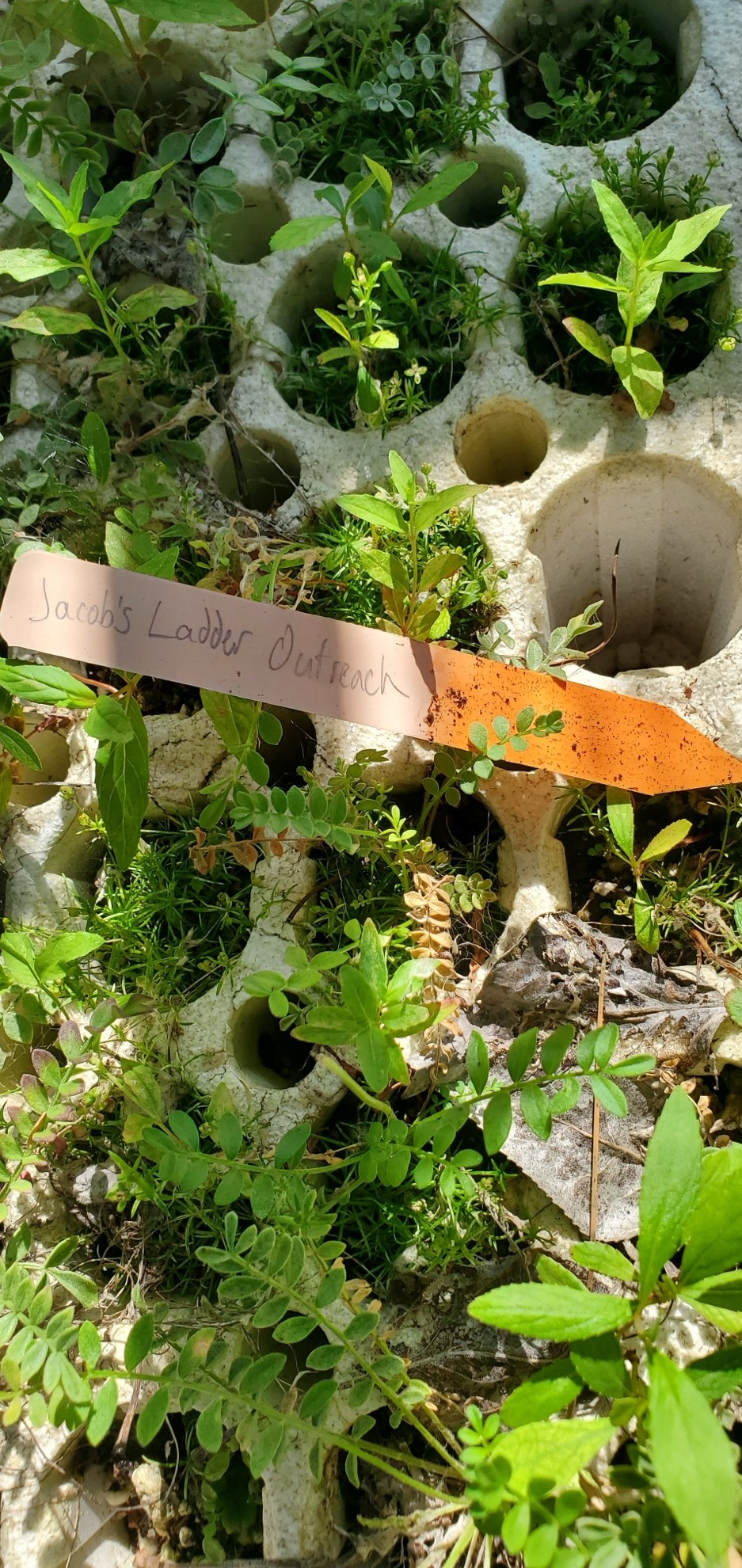
Fig 38.1: Close-up photograph of Polemonium reptans seedlings growing in a multi-cell propagation tray with a plant label.
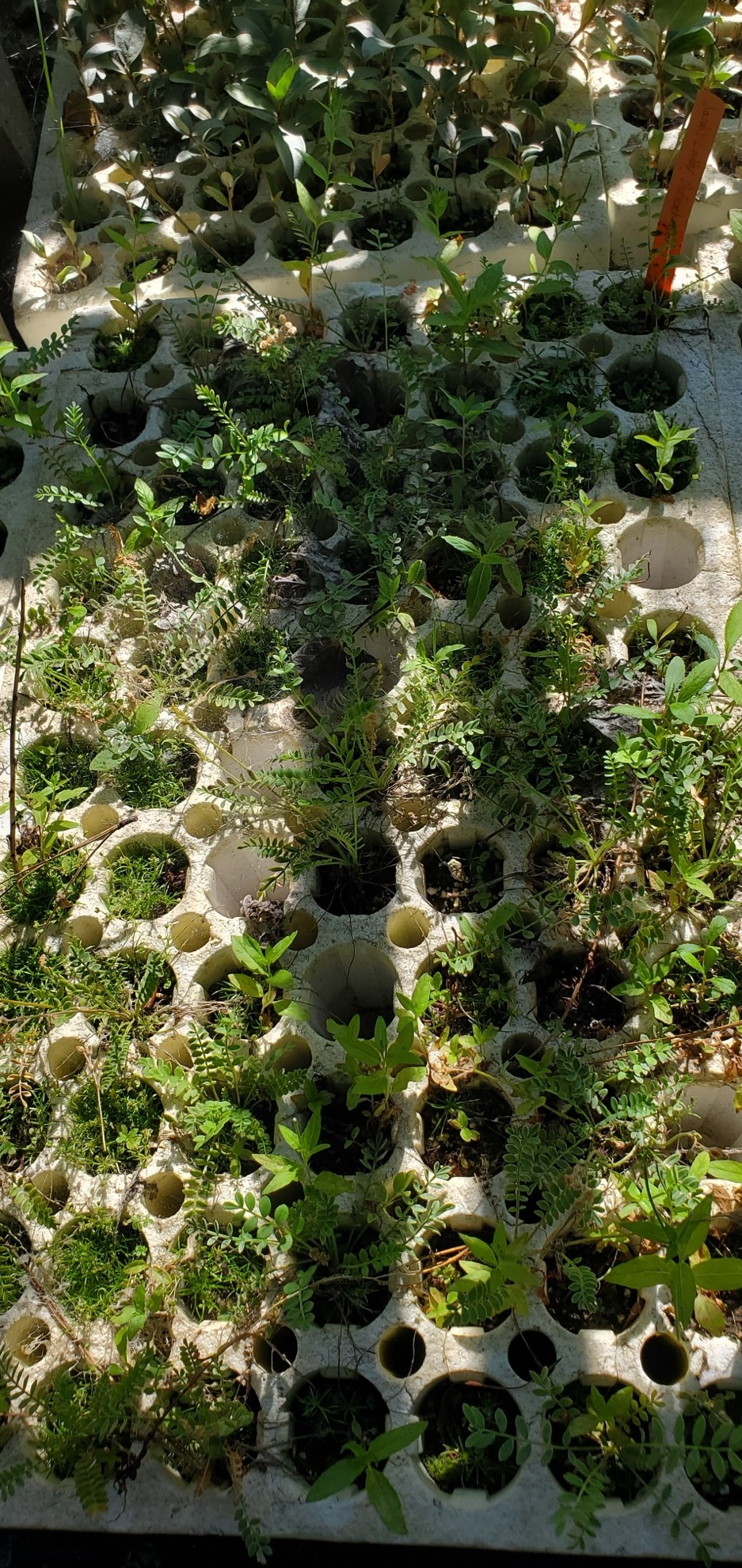
Fig 38.2: A wider view of numerous Polemonium reptans seedlings growing in a multi-cell propagation tray.
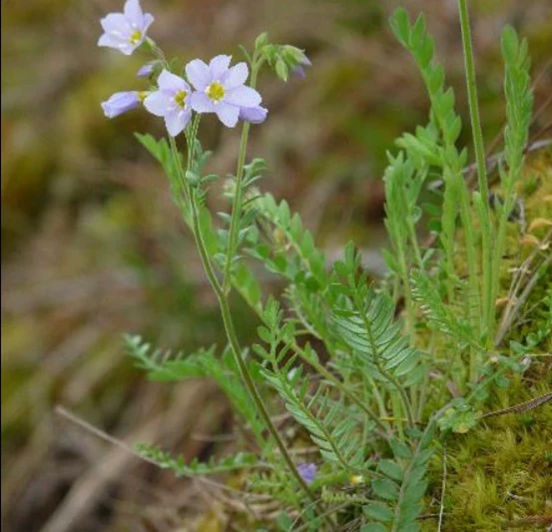
Fig 38.3: A small Jacob’s Ladder plant with delicate light blue, bell-shaped flowers and pinnately compound leaves growing among moss.
General Information
Jacob’s Ladder (Polemonium species, primarily P. reptans, P. caeruleum, and P. pulcherrimum) comprises a genus of perennial herbaceous plants in the phlox family (Polemoniaceae) native to temperate regions of the Northern Hemisphere. [6] These distinctive plants are easily recognized by their pinnately compound leaves with 5–15 pairs of leaflets arranged like the rungs of a ladder, giving the plant its common name. [1] Growing 8–24 inches tall, Jacob’s ladder produces clusters of bell-shaped, five-petaled flowers that range from blue to purple, pink, or white, typically blooming from late spring through mid-summer. [5] The most common species, P. reptans (spreading Jacob’s ladder), is native to eastern North America and thrives in rich, moist, shaded woodlands and stream banks. [1] P. caeruleum (Greek valerian) is found across northern regions of North America and Eurasia, while P. pulcherrimum (showy Jacob’s ladder) inhabits western mountain regions. [7, 8] These plants prefer cool, moist conditions and partial shade, forming colonies through rhizomes and self-seeding. [6] Indigenous peoples have traditionally recognized various Polemonium species for their medicinal properties, particularly for respiratory ailments, skin conditions, and general healing. [3]
Traditional Indigenous Uses
When steeped in water or wine, an infusion of the roots soothed coughs and eased the lungs during the long, cold months. [2, 11] In times of heavy chest congestion or bronchitis, a stronger decoction was prepared, its warmth helping to clear the breath and restore the body’s balance. [11] The same roots, when crushed or made into a soft poultice, were laid gently upon wounds and injuries, helping them to knit and heal. [2]
The rhizomes were dried and powdered for the treatment of abscesses or skin infections or boiled into a tea to bring down fevers and ease the body during illness. [2, 10] Its whole form was used in topical preparations to calm rashes and irritations, while the fresh leaves made a soothing poultice to ease inflammation and swelling. [11] For bites from insects or snakes, the crushed roots were applied to draw out venom and cool the sting, offering quick relief. [2]
A mild tea from the roots was sometimes taken as a digestive aid to settle the stomach and promote gentle strength, while a gentle wash made from the leaves could be used for the eyes to ease redness or irritation. [10]
Biochemical Compounds and Their Medicinal Properties
- Triterpene Saponins (Primary Bioactive Compounds)
Three Most Important Compounds:
- β-Amyrin-based Saponins (C₃₀H₅₀O + sugar moieties)
- Oleanolic Acid Glycosides (C₃₀H₄₈O₃ + sugars)
- Ursolic Acid Derivatives (C₃₀H₄₈O₃)
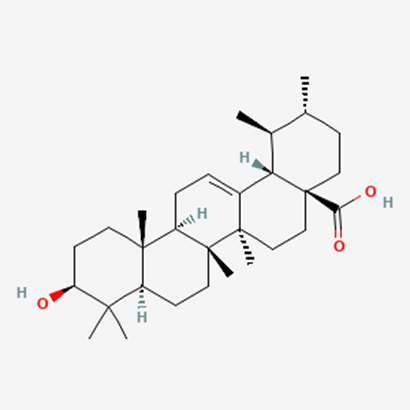
Fig 38.4: Two-dimensional molecular structure diagram of ursolic acid (C₃₀H₄₈O₃), a pentacyclic triterpenoid derivative found in Polemonium species, highlighting its five fused carbon rings, hydroxyl group at C-3, the C-12/C-13 double bond, and carboxylic acid group at C-28, which are responsible for its anti-inflammatory, antimicrobial, and wound-healing bioactivities.
Medicinal Properties
- Anti-inflammatory: Potent inhibition of inflammatory cascades [4]
- Antimicrobial: Broad-spectrum antibacterial and antifungal activity [4]
- Wound healing: Enhanced tissue repair and collagen synthesis [4]
- Respiratory support: Expectorant and bronchodilator effects [10]
- Flavonoids (Supporting Compounds)
Three Most Important Compounds:
- Quercetin (C₁₅H₁₀O₇) – Primary flavonol
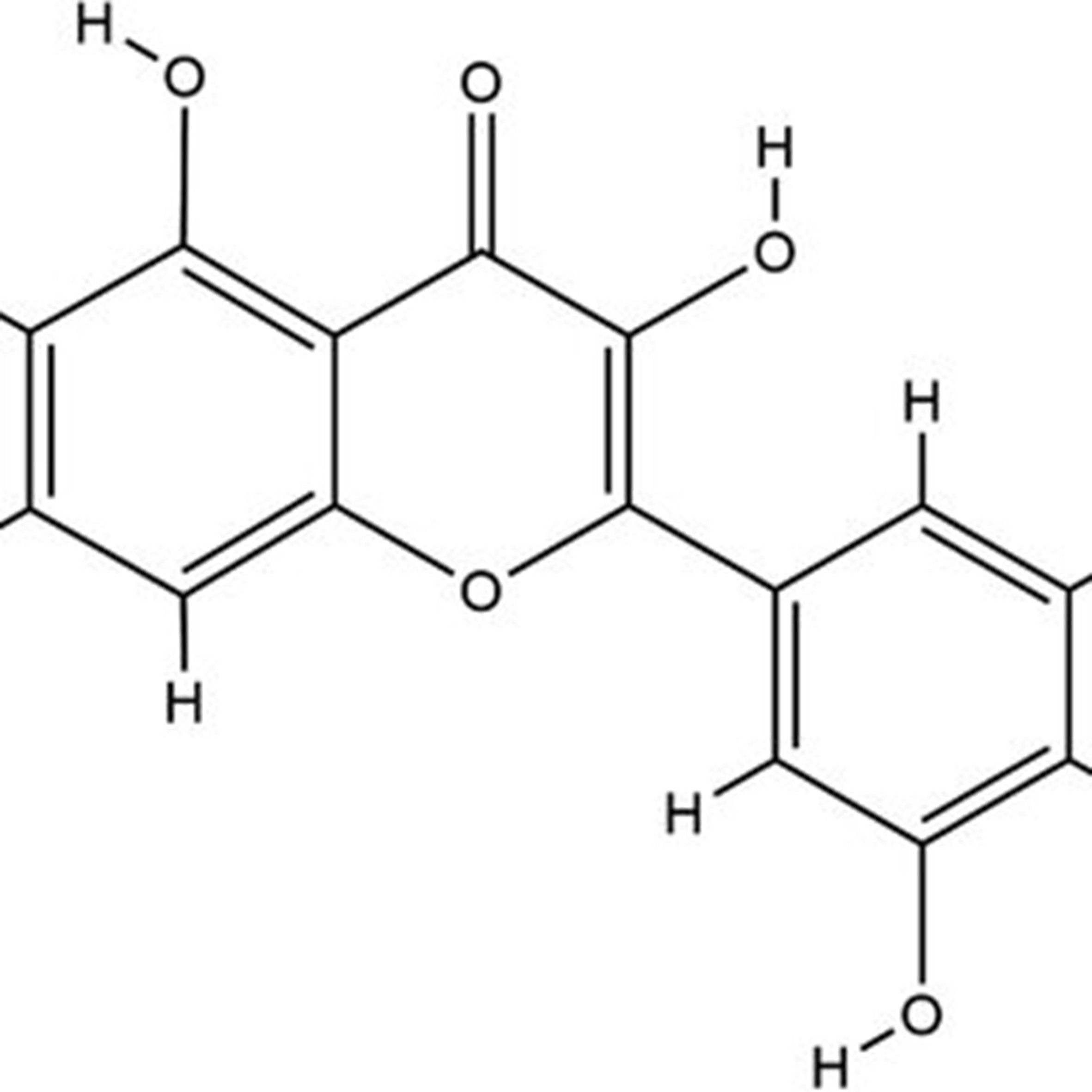
Fig 38.5: Two-dimensional molecular structure diagram of quercetin (C₁₅H₁₀O₇), the primary flavonol found in Polemonium species, showing its pentahydroxyflavone backbone with hydroxyl (-OH) groups at the 3, 3′, 4′, 5, and 7 positions that confer potent antioxidant, anti-inflammatory (via NF-κB inhibition), and antimicrobial properties.
- Kaempferol (C₁₅H₁₀O₆) – Flavonol compound
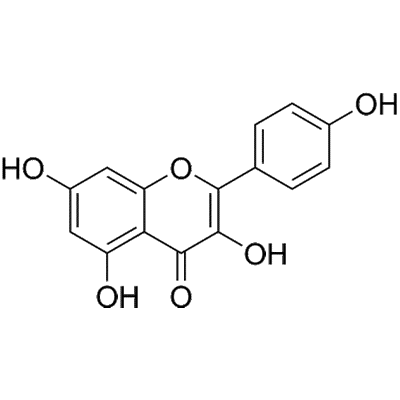
Fig 38.6: Two-dimensional molecular structure diagram of kaempferol (C₁₅H₁₀O₆), a flavonol compound identified in Polemonium species, illustrating its tetrahydroxyflavone scaffold with hydroxyl groups at positions 3, 4′, 5, and 7, which underpin its direct free-radical scavenging activity, anti-inflammatory mediator neutralization, and tissue-protective effects.
- Apigenin (C₁₅H₁₀O₅) – Flavone
- Alkaloids (Minor but Important) – Polemonine-type Alkaloids (Species-specific structures)
Proposed Biochemical Mechanisms for Traditional Uses
Respiratory Support (Root Infusions)
- Triterpene saponins act as: [4]
- Expectorants promoting mucus clearance through surfactant properties
- Bronchodilators relaxing airway smooth muscle
- Anti-inflammatory agents reducing respiratory tract inflammation
- Flavonoids provide: [4]
- Antioxidant protection of lung tissues
- Anti-inflammatory effects via NF-κB inhibition
- Antimicrobial activity against respiratory pathogens
Wound Healing and Skin Conditions (Topical Applications)
- Saponins facilitate: [4]
- Enhanced cell membrane permeability for better nutrient delivery
- Antimicrobial protection preventing infection
- Stimulation of collagen synthesis and tissue repair
- Flavonoids contribute: [4]
- Antioxidant protection of healing tissues
- Anti-inflammatory effects reducing wound inflammation
- Improved circulation promoting healing
Anti-inflammatory Effects (Various Preparations)
- Triterpene saponins inhibit: [4]
- Nuclear factor-κB (NF-κB) inflammatory pathway
- Cyclooxygenase (COX) and lipoxygenase enzymes
- Pro-inflammatory cytokine production
- Quercetin and kaempferol provide: [4]
- Direct radical scavenging activity
- Inflammatory mediator neutralization
- Tissue protective effects
Chemical Reactions and Molecular Interactions
Anti-inflammatory Mechanism (Triterpene Saponins)
Saponins → NF-κB pathway inhibition → ↓ IκB degradation → Reduced nuclear translocation → ↓ Pro-inflammatory gene expression [4]
Oleanolic acid → COX-2 enzyme inhibition → ↓ PGE₂, PGI₂ synthesis → Reduced inflammation and pain signaling [4]
Respiratory Relief Mechanism (Saponins + Flavonoids)
Triterpene saponins → Surfactant action → ↑ Mucus clearance → Enhanced expectoration → Improved breathing [10]
Flavonoids → β₂-adrenergic modulation → Bronchodilation → Relaxed airway smooth muscle → Better airflow [4]
Wound Healing Mechanism (Multiple Compounds)
Saponins → Cell membrane stabilization → Enhanced nutrient uptake → Improved cellular function → Faster tissue repair [4]
Quercetin → VEGF expression ↑ → Enhanced angiogenesis → Improved blood supply → Accelerated healing [4]
Antimicrobial Action (Saponins)
Triterpene saponins → Bacterial membrane disruption → Cell lysis → Cholesterol interaction → Membrane permeabilization [4]
Saponins → Fungal cell wall disruption → Growth inhibition → Ergosterol binding → Cell death [4]
Detoxification Mechanism (Snake/Insect Bites)
Saponins → Enhanced lymphatic drainage → ↑ Toxin clearance → Reduced local toxin concentration → Decreased tissue damage [2]
Flavonoids → Antioxidant protection → Neutralized venom oxidants → Reduced cellular damage → Improved recovery [4]
Modern Research Validation
Phytochemical Analysis
Recent LC-ESI-QTOF-MS analysis of Polemonium caeruleum confirmed the presence of triterpene saponins, supporting traditional medicinal uses. [4] The plant showed significant biological activities including: [4]
- Antimicrobial activity: IC₅₀ against E. coli = 137.07 μg/mL
- Antiparasitic effects: IC₅₀ against Trypanosoma brucei = 16.03 μg/mL
- Anti-malarial activity: 17% inhibition against Plasmodium falciparum
Bioactivity Studies
Research validates traditional uses through documented: [4, 11]
- Anti-inflammatory properties: Significant reduction in inflammatory markers
- Wound healing acceleration: Enhanced tissue repair in laboratory studies
- Respiratory support: Expectorant and bronchodilator activities
Safety Profile
Traditional preparations show low toxicity when used appropriately, with saponins providing therapeutic benefits at concentrations well below harmful levels. [10]
Traditional Preparation Methods and Biochemical Optimization
Root Infusions (Primary Traditional Method)
- Wine/alcohol extraction: Enhances saponin solubility and bioavailability [4]
- Hot water decoctions: Extracts both saponins and flavonoids effectively [4]
- Fresh root applications: Maximum concentration of active compounds [11]
Processing Techniques
- Drying: Concentrates active compounds while preserving stability
- Grinding: Increases surface area for better extraction
- Fermentation: May enhance bioactivity of certain compounds
Indigenous knowledge emphasizes:
- Seasonal harvesting: Optimal times for maximum potency [3]
- Respectful gathering: Sustainable collection practices [3]
- Proper preparation: Traditional methods maximizing therapeutic benefits [3]
Safety Considerations and Traditional Wisdom
Traditional use guidelines include:
- Appropriate dosing: Using minimal effective amounts [3]
- Proper preparation: Following traditional extraction methods [3]
- Individual sensitivity: Recognizing personal tolerance levels
- Sustainable harvesting: Maintaining plant populations for future generations [3]
References
- 1. Benda, C. D. (n.d.). Jacob’s ladder (Polemonium reptans). U.S. Forest Service—Celebrating Wildflowers. https://www.fs.usda.gov/wildflowers/plant-of-the-week/Polemonium_reptans.shtml
- 2. Botanical.com. (n.d.). A modern herbal: Jacob’s ladder. https://www.botanical.com/botanical/mgmh/j/jacobs02.html
- 3. Elders and Community Members of the Cayoose Creek Band of Sekw’el’wás. (n.d.). Traditional ecological knowledge of medicinal plants. Cayoose Creek Band.
- 4. Łaska, G., Sieniawska, E., Świątek, Ł., Zjawiony, J., Khan, S., Boguszewska, A., Stocki, M., Angielczyk, M., & Polz-Dacewicz, M. (2019). Phytochemistry and biological activities of Polemonium caeruleum. Phytochemistry Letters, 30, 314–323. https://doi.org/10.1016/j.phytol.2019.02.017
- 5. Little Flower Hut. (2020, May 30). All about Jacob’s ladder (Polemonium) – History, meaning, facts, care & more. https://littleflowerhut.com.sg/flower-guide/all-about-jacobs-ladder-polemonium-history-meaning-facts-care-more/
- 6. New Moon Nursery. (n.d.). Polemonium reptans (Jacob’s ladder). https://www.newmoonnursery.com/plant/Polemonium-reptans
- 7. Petersen, L. (2024, July 14). Polemonium acutiflorum (tall Jacob’s ladder). W. Petersen (Alaska Wildflowers). https://www.lwpetersen.com/alaska-wildflowers/tall-jacobs-ladder-polemonium-acutiflorum/
- 8. Petersen, L. (2024, July 15). Pretty Jacob’s ladder (Polemonium pulcherrimum). W. Petersen (Alaska Wildflowers). https://www.lwpetersen.com/alaska-wildflowers/pretty-jacobs-ladder-polemonium-pulcherrimum/
- 9. Plantiary. (2025). Jacob’s ladder (Polemonium reptans): Plant care & how to grow. https://plantiary.com/plant/polemonium-reptans_14873.html https://doi.org/10.1007/978-1-4020-4585-1_2420
- 10. Plants For A Future. (n.d.). Polemonium caeruleum —Jacob’s ladder, charity. PFAF Plant Database. https://pfaf.org/user/Plant.aspx?LatinName=Polemonium+caeruleum
- 11. wildmedicinal. (2016, May 4). Jacob’s ladder (Polemonium reptans). wild medicinal (WordPress). https://wildmedicinal.wordpress.com/2016/05/04/jacobs-ladder-polemonium-reptans/