156 Wild Asparagus
Names
Common Name – Wild Asparagus
Scientific Name: Asparagus officinalis
Other Names: Sparrowgrass, garden asparagus
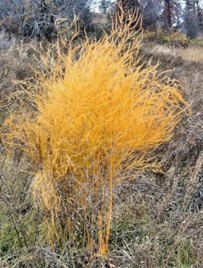
Fig 77.1: Mature wild asparagus plant growing along a trail near Kamloops, British Columbia, showing its characteristic feathery foliage.
Image Source: http://web.archive.org/web/20210619053805/https://kamloopstrails.net/news/wild-asparagus/
The young shoots of wild asparagus are an important food source. While low in calories, asparagus contains many vitamins and minerals and is high in protein and dietary fiber which is important for digestive health and may help reduce the risk of diabetes. [2] Wild asparagus also contains saponins, flavonoids and sterols. [1]
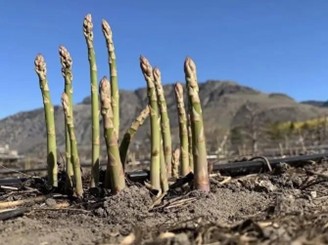
Fig 77.2: Fresh, edible young wild asparagus shoots emerging from the ground in the Similkameen region.
Image Source: https://infotel.ca/inwine/okanagan-asparagus-season-is-underway/it82118
The dietary fibre in asparagus contains high quantities of pectin (structure shown below), as well as cellulose and lignin. [4] It is also interesting to note that, although the young shoots are eaten because the taste and texture becomes less palatable as the stalks age, the young shoots actually contain more nutrients than the older shoots do as well. [1]
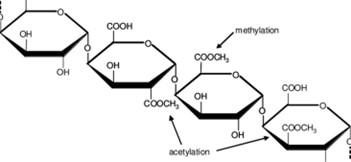
Fig 77.3: Chemical structure of pectin, a major structural heteropolysaccharide found in the dietary fiber of wild asparagus.
Although edible, handling wild asparagus can cause dermatitis and so should be collected and handled with care. It is also possible to have an allergy to asparagus which may result in asthma- like symptoms. [3]
References
- Chileh Chelh, T., Rincón-Cervera, M. Á., Gómez-Mercado, F., López-Ruiz, R., Gallón-Bedoya, M., Ezzaitouni, M., & Guil-Guerrero, J. L. (2023). Wild asparagus shoots constitute a healthy source of bioactive compounds. Molecules, 28 (15), 5786. https://doi.org/10.3390/molecules28155786
- Guo, Q., Wang, N., Liu, H., Li, Z., Lu, L., & Wang, C. (2020). The bioactive compounds and biological functions of Asparagus officinalis L. – A review. Journal of Functional Foods, 65, 103727. https://doi.org/10.1016/j.jff.2019.103727
- Tabar, A. I., Alvarez-Puebla, M. J., Gomez, B., Sanchez-Monge, R., Garcia, B. E., Echechipia, S., Olaguibel, J. M., & Salcedo, G. (2004). Diversity of asparagus allergy: Clinical and immunological features. Clinical and Experimental Allergy, 34 (1), 131–136. https://pubmed.ncbi.nlm.nih.gov/14720273/ https://doi.org/10.1111/j.1365-2222.2004.01856.x
- Waldron, K. W., & Selvendran, R. R. (1990). Composition of the cell walls of different asparagus (Asparagus officinalis) tissues. Physiologia Plantarum, 80 (4), 568–575. https://doi.org/10.1034/j.1399-3054.1990.800412.x