91 Stinging Nettle Tea
Names
Common Name – Stinging Nettle
Scientific Name – Urtica dioica
Other Names – Common Stinging Nettle, Burn Nettle, Nettle Leaf, Grande Ortie.
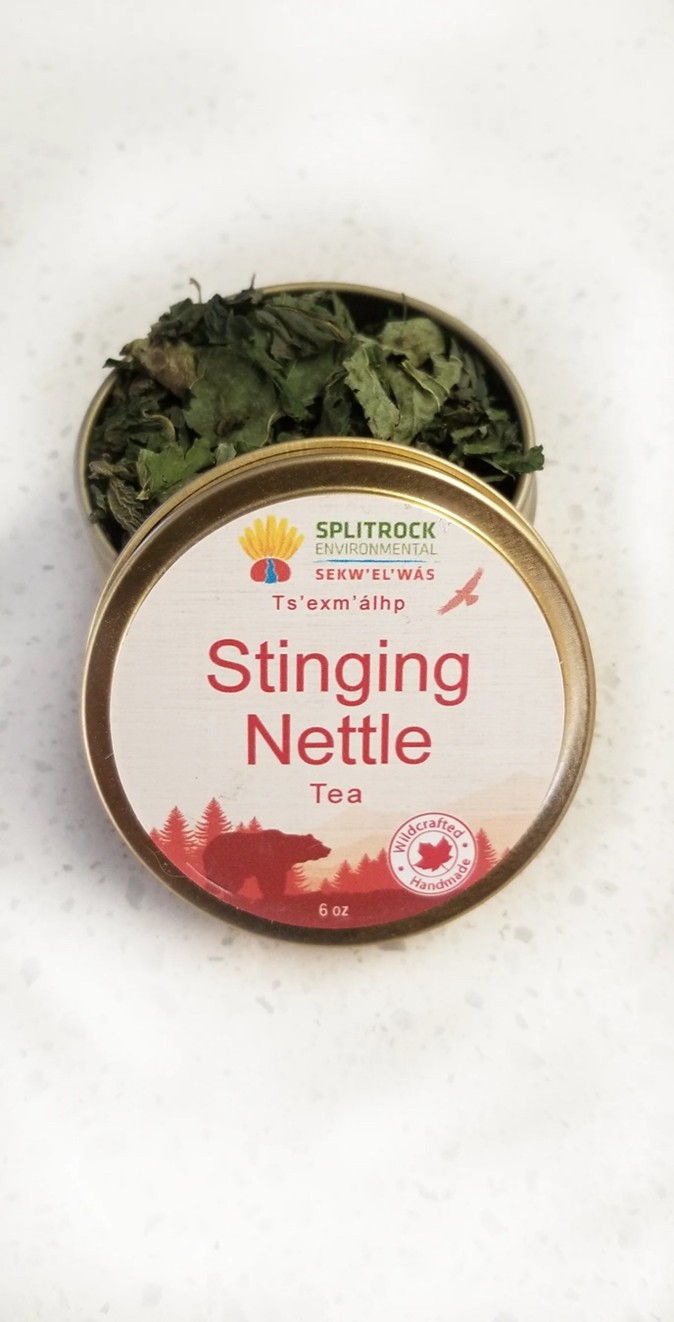
Fig 12.1: A round tin container of dried stinging nettle tea.
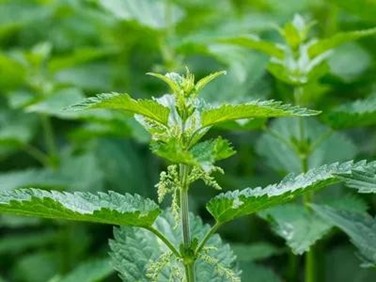
Fig 12.2: The serrated leaves of the stinging nettle plant, characterized by their stinging hairs.
Image Source: https://www.britannica.com/plant/stinging-nettle
The young leaves can be eaten as greens and contain iron which can help treat anemia [3, 9]. The name stinging nettle comes from the tiny hairs on the plant that act like needle when touched [1]. The resulting pain is caused by neurotransmitters such as histamine, acetylcholine and serotonin, and by acidic components such as formic acid, tartaric acid and oxalic acid [1].
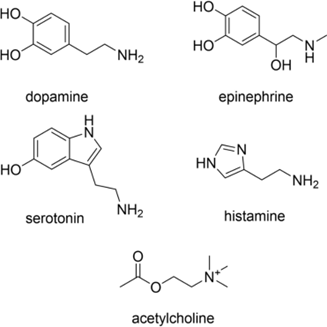
Fig 12.3: Chemical structures of several neurotransmitters, including those responsible for the pain response upon contact with stinging nettle hairs.
Image Source: https://www.researchgate.net/figure/Some-important-amino-based- neurotransmitters_fig1_353203150
Despite the pain caused by touching the plant, several parts of the stinging nettle can be used for medicinal purposes [7, 9]. Stinging nettle is rich in vitamins A, B, C, D and K and can be applied topically as an anti-inflammatory or to help treat arthritis [2, 9]. When consumed as a tea, it provides absorbable iron and polyphenols, again, demonstrating anti-inflammatory properties [3, 5]. Research has found that stinging nettles also contain terpenes, fatty acids, carotenes and carotenoids, polyphenolic compounds and amino acids amongst other compounds [3]. Many of these were also shown to be present in higher concentrations in mature leaves as opposed to young leaves [3].
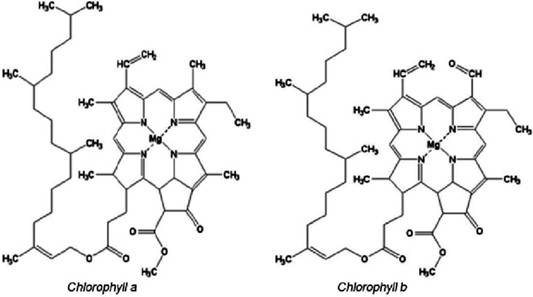
Fig 12.4: Molecular structures of chlorophyll a and chlorophyll b, bioactive components identified in the stems and leaves of stinging nettle.
Image Source: https://www.researchgate.net/figure/Molecular-structure-of-chlorophyll-a-and- chlorophyll-b_fig1_283281046
Traditional Indigenous Uses
It was one of the first greens to appear in the spring, pushing up through the soil when the snow had barely melted [4, 6]. The young leaves, gathered before the plant flowered, were cooked and eaten like spinach or made into soup to bring strength after the long winter [4, 6]. When brewed into a tea, nettle became a cleansing tonic, purifying the blood, strengthening the liver, and restoring energy to the body [4]. It was known to the people as a “spring cleanser,” helping to awaken the body and spirit [4].
For women, it was used to ease labor pains, regulate menstruation, and prevent excessive bleeding after childbirth [6]. Mothers would drink nettle tea to strengthen the uterus and to help bring in milk after their babies were born [6]. Nettle supported the blood. Its tonic was used for anemia, to increase vitality, and to balance the body’s inner strength [4, 6]. The plant’s power extended to the kidneys and bladder, where it worked as a gentle diuretic to relieve urinary troubles and even help men with prostate issues [6, 8].
Those who suffered from arthritis, sore muscles, or back pain used nettle both inside and out [4, 11]. The fresh stinging leaves, when brushed lightly on the skin, were believed to draw pain away from the joints and restore circulation [4]. Steamed leaves were made into poultices to soothe the body, and teas were taken to ease the inflammation within [6]. Nettle was also valued for respiratory troubles e.g. coughs, asthma, hay fever, and bronchial congestion were all treated with its warm infusion [4, 10]. On the outside, nettle was applied as a wash or poultice to heal wounds, burns, eczema, and other skin irritations [4, 11]. Some used the rinse for their hair to strengthen it and prevent loss [4]. The plant’s fibers, drawn from the long stems, were used for weaving rope, nets, and cloth [6].
Preparation and Safety Considerations
Tea Preparation
- Use dried leaves (stinging compounds neutralized) or carefully blanched fresh leaves [7]
- Steep 1-2 teaspoons dried herb per cup in hot water (80-90°C) [7]
- Infuse 10-15 minutes for optimal extraction [7]
- Can be consumed 2-3 times daily [7]
Safety Notes
- Fresh plant causes dermal irritation; always cook, dry, or blanch before internal use [1]
- High vitamin K content may interfere with anticoagulant medications (warfarin) [9]
- May lower blood pressure and blood sugar (monitor if on medications) [9]
- Generally safe during pregnancy based on traditional use, but consult healthcare provider [4, 6]
- Root extracts should be reserved for specific prostate indications [2, 8]
References
- Brunning, A. (2015). The chemistry of stinging nettles. Compound Interest. https://www.compoundchem.com/2015/06/04/nettles/
- Chrubasik, J. E., Roufogalis, B. D., Wagner, H., & Chrubasik, S. (2007). A comprehensive review on the stinging nettle effect and efficacy profiles. Part II: Urticae radix. Phytomedicine, 14 (7–8), 568–579. https://doi.org/10.1016/j.phymed.2007.03.014
- Durovic, S., Kojic, I., Radic, D., Smyatskaya, Y. A., Bazarnova, J. G., Filip, S., & Tosti, T. (2024). Chemical constituent of stinging nettle (Urtica dioica L.): A comprehensive review on phenolic and polyphenolic compounds and their bioactivity. International Journal of Molecular Sciences, 25 (6), 3430. https://doi.org/10.3390/ijms25063430
- Elders and Community Members of the Cayoose Creek Band of Sekw’el’was. (n.d.).
- Gülçin, İ., Küfrevioğlu, Ö. İ., Oktay, M., & Büyükokuroğlu, M. E. (2004). Antioxidant, antimicrobial, antiulcer and analgesic activities of nettle (Urtica dioica). Journal of Ethnopharmacology, 90 (2–3), 205–215. https://doi.org/10.1016/j.jep.2003.09.028
- Hamel, P. B., & Chiltoskey, M. U. (1975). Cherokee plants and their uses: A 400 year history. Herald Publishing Co.
- Jones, B. (2024). Medicinal herbs of Western Canada (1st ed.). Nimbus Publishing.
- Konrad, L., Müller, H. H., Lenz, C., Laubinger, H., Aumüller, G., & Lichius, J. J. (2000). Antiproliferative effect on human prostate cancer cells by a stinging nettle root (Urtica dioica) extract. Planta Medica, 66 (1), 44–47. https://doi.org/10.1055/s-2000-11120
- Kregiel, D., Pawlikowska, E., & Antolak, H. (2018). Urtica spp.: Ordinary plants with extraordinary properties. Molecules, 23 (7), 1664. https://doi.org/10.3390/molecules23071664
- Mittman, P. (1990). Randomized, double-blind study of freeze-dried Urtica dioica in the treatment of allergic rhinitis. Planta Medica, 56 (1), 44–47. https://doi.org/10.1055/s-2006-960881
- Splitrock Environmental. (n.d.). Stinging nettle salve. <a href="https://splitrockenvironmental.ca/products/stinging-nettle-salve?variant=33785190744123″> https://splitrockenvironmental.ca/products/stinging-nettle-salve?variant=33785190744123