90 Sage Tea
Names
Common Name – Sage
Scientific Name – Artemisia tridentata
Other Names – káwkwu, Big Sage, Sagebrush
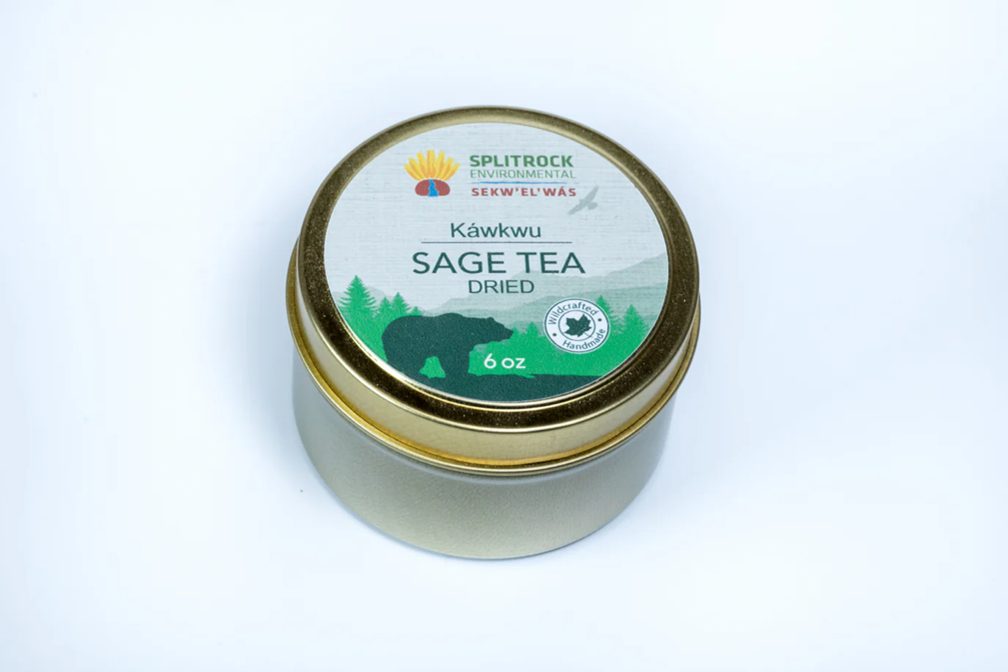
Fig 11.1: A round tin container of dried sage tea.
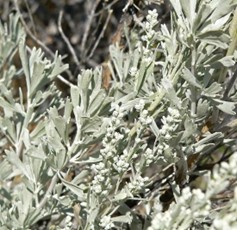
Fig 11.2: The leaves and buds of the sage plant.
Image Source: <a href="https://splitrockenvironmental.ca/products/big-sagebrush-“> https://splitrockenvironmental.ca/products/big-sagebrush- kawkwu?variant=40347062960294
A common traditional use of sage is for smudging, a process where a plant, often sage, is burned to purify the “mind, body, heart and spirit” of those who enter a space. [3] Other medicinal uses for sage are as an antifungal, digestive aid and to help with symptoms of arthritis. [11, 20] Generally, it is applied topically to fungal infections or to help with pain from arthritis or sprains. [11] Small quantities of tea made from sage could be consumed to help with congestion, colds, coughs and fevers. [8] The bark was also used for weaving. [20]
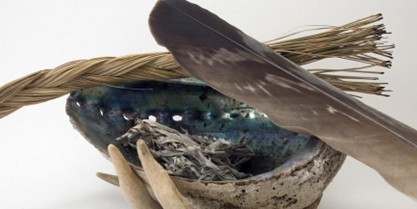
Fig 11.3: A shell container for smudging using sagebrush.
Image Source: https://www.ictinc.ca/blog/a-definition-of-smudging
Although the diversity of species in the Artemisia genus and the large volume of literature surrounding sage with regards to essential oil and other therapeutic uses makes it difficult to find research specific to the species and the bioactive components it contains, the leaves of the sage plant have been shown to contain lactones, flavonoids and to exhibit antioxidant activity. [2] It is also likely to contain other bioactive constituents including other phenolic compounds. [1, 4] Fig 11.4 shows compounds present in different Artemisia species. [1, 4]
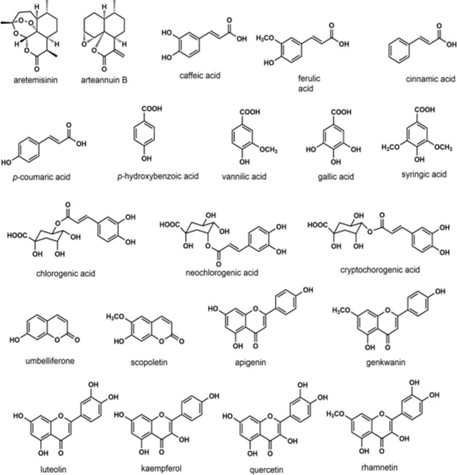
Fig 11.4: Chemical structures of compounds commonly found in members of the Artemisia genus.
Image Source: https://journals.sagepub.com/doi/full/10.1177/1934578X19850354
Conservation Note: White sage is currently threatened by over-harvesting and commercial poaching, causing concern among Indigenous communities about cultural appropriation and ecological sustainability. [7]
Traditional Indigenous Uses
Sage had always been used to purify both the body and the spirit, its smoke carrying prayers and cleansing away heaviness or sorrow. [8, 1, 3] In ceremonies, it was burned in smudges or placed in sweat baths, the rising smoke a blessing for all who gathered. [8] Beyond its spiritual strength, sage was deeply valued as medicine. The people brewed its leaves into tea to ease coughs, sore throats, and chest congestion, and to bring comfort to those suffering from colds, bronchitis, or asthma. [5, 6, 8] The same tea calmed troubled stomachs, relieving cramps, indigestion, and diarrhea. [11]
Sage was used by women to bring balance to their bodies, soothing cramps, regulating menstruation, and aiding recovery after childbirth. [22] A wash made from its leaves healed cuts, bruises, and burns, while poultices drew out infection from the skin. [11] Some used a single sage seed to clear dust or irritants from the eyes, and its strong tea reduced fever and sweating during illness. [5] The people also chewed sage leaves for toothaches or used the tea as a mouthwash to keep gums healthy. [11] Its seeds could be ground into food, and its leaves were sometimes used to flavor meals. [1, 3]
Structure-Activity Relationships
- Bicyclic Monoterpene Structure: Enables membrane penetration, volatility for inhalation delivery, receptor binding for neurological effects [1, 2]
- Catechol Groups (Carnosic Acid, Rosmarinic Acid): Powerful electron donors for antioxidant activity, metal chelation capability [9, 17]
- Multiple Phenolic Hydroxyl Groups: Free radical scavenging, enzyme inhibition, antimicrobial protein precipitation [17, 18]
- Lipophilic Diterpene Backbone: Cell membrane permeability, accumulation in lipid-rich tissues (brain, cell membranes) [19]
- Carboxylic Acid Groups: Water solubility, ion channel modulation, enzyme active site interactions [10]
- Volatile Nature of Monoterpenes: Enables respiratory delivery through smoke or steam, rapid absorption through mucous membranes [21, 2, 3]
- Missing reference placeholder.
- Pojar, J., & MacKinnon, A. (1994). Plants of Coastal British Columbia. Lone Pine Publishing.
- Kuhnlein, H. V., & Turner, N. J. (1991). Traditional Plant Foods of Canadian Indigenous Peoples. Gordon and Breach.
- Moerman, D. E. (1998). Native American Ethnobotany. Timber Press.
Preparation and Safety Considerations
Traditional Tea Preparation [1, 6]
- Use 1-2 teaspoons dried sage leaves per cup
- Steep in hot water (80-90°C) for 5-10 minutes
- Strain and drink 1-3 times daily
- Fresh leaves can also be used (slightly stronger)
Safety Notes
- Thujone Content: High doses or prolonged use can be neurotoxic due to thujone; traditional preparations in moderation are safe [4]
- Pregnancy: Traditionally used for menstrual regulation; may stimulate uterine contractions – avoid during pregnancy except under guidance [11]
- Lactation: Can suppress milk production; avoid during breastfeeding unless specifically desired [11]
- Epilepsy: High thujone content may lower seizure threshold; use with caution [4, 10]
- Diabetes: May lower blood sugar; monitor if on medications [10, 18]
References
1. Adams, J. D., & Garcia, C. (2005). The advantages of traditional Chumash healing. Evidence-Based Complementary and Alternative Medicine, 2 (1), 19–23. https://doi.org/10.1093/ecam/neh050
2. Anibogwu, R., De Jesus, K., Pradhan, S., Van Leuven, S., & Sharma, K. (2024). Sesquiterpene lactones and flavonoid from the leaves of basin big sagebrush (Artemisia tridentata subsp. tridentata): Isolation, characterization and biological activities. Molecules, 29 (4), 802. https://doi.org/10.3390/molecules29040802
3. Asikinak, B. (n.d.). Smudging. In Indigenous Saskatchewan Encyclopedia. Retrieved April 18, 2025, from https://teaching.usask.ca/indigenoussk/import/smudging.php
4. Baricevic, D., & Bartol, T. (2000). The biological/pharmacological activity of the Salvia genus. In S. E. Kintzios (Ed.), Sage: The genus Salvia (pp. 143–184). Harwood Academic Publishers.
5. Barrows, D. P. (1977). Ethno-botany of the Coahuilla Indians of Southern California (Reprint of 1900 ed.). Malki Museum Press.
6. Bean, L. J., & Saubel, K. S. (1972). Temalpakh: Cahuilla Indian knowledge and usage of plants. Malki Museum Press.
7. California Native Plant Society. (n.d.). Saging the world. Retrieved April 18, 2025, from https://www.cnps.org/conservation/white-sage
8. Elders and community members of the Cayoose Creek Band of Sekw’el’was. (n.d.).
9. Ghorbani, A., & Esmaeilizadeh, M. (2017). Pharmacological properties of Salvia officinalis and its components. Journal of Traditional and Complementary Medicine, 7 (4), 433–440. https://doi.org/10.1016/j.jtcme.2016.12.014
10. Hamidpour, M., Hamidpour, R., Hamidpour, S., & Shahlari, M. (2014). Chemistry, pharmacology, and medicinal property of sage (Salvia) to prevent and cure illnesses such as obesity, diabetes, depression, dementia, lupus, autism, heart disease, and cancer. Journal of Traditional and Complementary Medicine, 4 (2), 82–88. https://doi.org/10.4103/2225-4110.130373
11. Jones, R. (2024). Medicinal herbs of Western Canada (1st ed.). Nimbus Publishing.
12. Lopresti, A. L. (2017). Salvia (sage): A review of its potential cognitive-enhancing and protective effects. Drugs in R&D, 17 (1), 53–64. https://doi.org/10.1007/s40268-016-0157-8
13. Moerman, D. E. (1998). Native American ethnobotany. Timber Press.
14. Nigam, M., Atanassova, M., Mishra, A. P., Pezzani, R., Devkota, H. P., Plygun, S., Salehi, B., Setzer, W. N., & Sharifi-Rad, J. (2019). Bioactive compounds and health benefits of Artemisia species. Natural Product Communications, 14 (7). https://doi.org/10.1177/1934578X19850354
15. Perry, N. S., Bollen, C., Perry, E. K., & Ballard, C. (2003). Salvia for dementia therapy: Review of pharmacological activity and pilot tolerability clinical trial. Pharmacology Biochemistry and Behavior, 75 (3), 651–659. https://doi.org/10.1016/S0091-3057(03)00108-4
16. Raman, R. (2023). 9 emerging benefits and uses of sage tea. Healthline. https://www.healthline.com/nutrition/sage-tea
17. Ramos, A. A., Azqueta, A., Pereira-Wilson, C., & Collins, A. R. (2010). Polyphenolic compounds from Salvia species protect cellular DNA from oxidation and stimulate DNA repair in cultured human cells. Journal of Agricultural and Food Chemistry, 58 (12), 7465–7471. https://doi.org/10.1021/jf100871b
18. Sa, C. M., Ramos, A. A., Azevedo, M. F., Lima, C. F., Fernandes-Ferreira, M., & Pereira-Wilson, C. (2009). Sage tea drinking improves lipid profile and antioxidant defences in humans. International Journal of Molecular Sciences, 10 (9), 3937–3950. https://doi.org/10.3390/ijms10093937
19. Schaffer, S., Müller, W. E., & Eckert, G. P. (2013). Tocopherols, tocotrienols, and brain health. In A. M. Schaffer, W. E. Müller, & G. P. Eckert (Eds.), Aging and health – A systems biology perspective (Vol. 40, pp. 121–131). Karger Publishers. https://doi.org/10.1159/000346229
20. Splitrock Environmental. (n.d.). Sage (káwkwu). Retrieved November 19, 2024, from <a href="https://splitrockenvironmental.ca/products/big-sagebrush-kawkwu?variant=40347062960294″> https://splitrockenvironmental.ca/products/big-sagebrush-kawkwu?variant=40347062960294
21. Tildesley, N. T., Kennedy, D. O., Perry, E. K., Ballard, C. G., Savelev, S., Wesnes, K. A., & Scholey, A. B. (2003). Salvia lavandulaefolia (Spanish sage) enhances memory in healthy young volunteers. Pharmacology Biochemistry and Behavior, 75 (3), 669–674. https://doi.org/10.1016/S0091-3057(03)00122-9
22. Timbrook, J. (1990). Ethnobotany of Chumash Indians, California, based on collections by John P. Harrington. Economic Botany, 44 (2), 236–253. https://doi.org/10.1007/BF02860478
23. Wightman, E. L., Jackson, P. A., Spittlehouse, B., Heffernan, T., Guillemet, D., & Kennedy, D. O. (2021). The acute and chronic cognitive effects of a sage extract: A randomized, placebo-controlled study in healthy humans. Nutrients, 13 (1), 218. https://doi.org/10.3390/nu13010218