125 Needle and Thread Grass
Names
Common name – Needle and Thread Grass
Scientific name – Hesperostipa comata
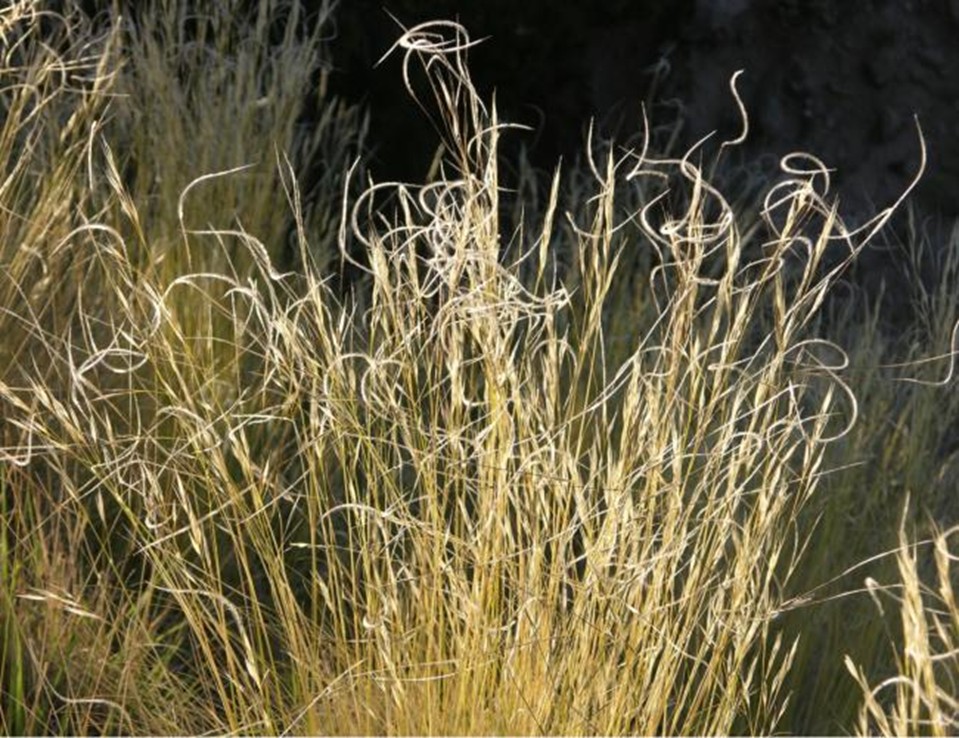
Fig 46.1: A dense tuft of Needle and Thread Grass growing in its natural dry prairie habitat.
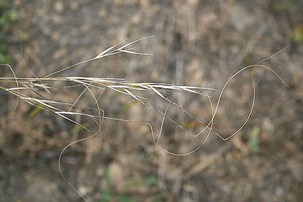
Fig 46.2: Close-up view of a few distinctive long, twisting awns of Needle and Thread Grass.
General Information
Needle and Thread Grass (Hesperostipa comata, formerly Stipa comata) is a perennial cool-season bunchgrass in the family Poaceae native to North America, especially the western third of the continent. [4, 9, 10] This distinctive grass grows 25-40 inches (60-100 cm) tall in small, dense tufts typically 1-3 inches in diameter, with erect, unbranched stems. [6, 10] The plant is instantly recognizable by its characteristic long, twisted, thread-like awns (stiff bristles) that can reach 3-8 inches (7.5-20 cm) in length, resembling a threaded sewing needle—hence the common name. [4, 6] These hygroscopic awns twist and bend with changes in humidity, enabling the seeds to drill themselves into the soil. [11] The narrow leaves are typically rolled or folded, and the loosely spreading panicle inflorescence is 4-8 inches long. [9] This hardy grass starts growth in early spring when moisture is available, with seeds maturing in early summer. [7, 9]
Traditional Indigenous Uses
The Elders spoke of Needle and Thread Grass as a humble yet powerful plant, one that sustained the people through times of plenty and times of hardship. [1] Its seeds were valued as a nourishing food, often ground into a fine meal or flour to strengthen the body during times of weakness or malnutrition. [1, 8] When cooked as porridge, the seeds soothed the stomach and helped those suffering from digestive troubles. [1] The young shoots that emerged in spring were eaten fresh as a tonic, helping the body awaken from winter’s sluggishness and restoring lost vitality. [1] The roots, when chewed or boiled into a decoction, served as astringent medicine to stop bleeding and ease mouth sores or diarrhea. [1, 8] In times of travel or scarcity, the parched seeds were eaten as emergency food, providing vital energy for long journeys and endurance during hunting. [1] The grass itself had healing uses as well – its dried bundles were used to pad wounds and absorb blood, while fresh blades could be applied to small cuts or abrasions to encourage healing. [1, 8] The people also made use of the plant’s cleansing power; its fresh juice or tea was taken in spring as a purifier to cleanse the blood and renew the spirit. [1] Women, especially after childbirth, relied on the seeds for strength and to support milk flow. [1] Beyond its physical benefits, Needle and Thread Grass held ceremonial importance, woven into sacred objects and used in spiritual offerings that honored the connection between the people and the land. [1] Through these many gifts, the plant was seen not merely as sustenance, but as a living medicine – one that cared for body, mind, and spirit alike. [1]
Biochemical Compounds and Their Medicinal Properties
Three Most Important Compounds
(i) Ferulic Acid (C₁₀H₁₀O₄) – Major cell wall phenolic

Fig 46.3: Chemical structure of Ferulic Acid.
(ii) p-Coumaric Acid (C₉H₈O₃) – Hydroxycinnamic acid
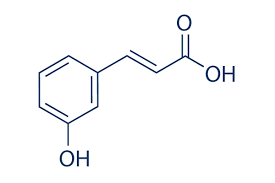
Fig 46.4: Chemical structure of m-Coumaric Acid (3-hydroxycinnamic acid), as the hydroxyl group is in the meta position, not the para position.
(iii) Caffeic Acid (C₉H₈O₄) – Dihydroxycinnamic acid
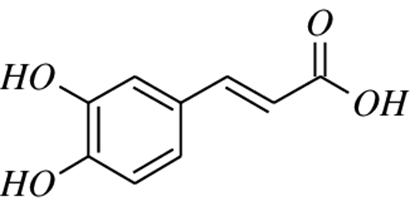
Fig 46.5: Chemical structure of Caffeic Acid.
- Antioxidant: Powerful free radical scavenging activity
- Anti-inflammatory: Inhibits inflammatory mediators
- Antimicrobial: Broad-spectrum antibacterial effects
- Cardioprotective: Supports cardiovascular health
Three Most Important Compounds
- (i) Apigenin (C₁₅H₁₀O₅) – Primary flavone
- (ii) Luteolin (C₁₅H₁₀O₆) – Flavone compound
- (iii) Tricin (C₁₇H₁₄O₇) – Grass-specific flavone
- Complex Carbohydrates and Proteins [3]
Most Important Compound:
Beta-glucan (C₆H₁₀O₅)ₙ – Immune-modulating fiber
(β-1,3 and β-1,4 linked glucose)
Proposed Biochemical Mechanisms for Traditional Uses
Nutritional Medicine (Seed Meal) [1, 8]
- Complete nutritional profile provides:
- Protein (8-12%) with essential amino acids for tissue repair
- Complex carbohydrates for sustained energy release
- Essential minerals (iron, magnesium, phosphorus) for metabolic function
- Phenolic acids contribute: [5, 12]
- Antioxidant protection during nutritional recovery
- Anti-inflammatory support for digestive health
- Enhanced mineral bioavailability through chelation
Digestive Support (Seeds and Roots) [1, 3]
- Beta-glucan fiber acts through: [3]
- Forming protective gel layer in digestive tract
- Binding toxins and facilitating elimination
- Promoting beneficial gut microbiome
- Phenolic compounds provide: [5]
- Astringent properties for diarrhea control
- Antimicrobial activity against pathogens
- Anti-inflammatory effects on intestinal mucosa
Spring Tonic and Blood Purification (Young Shoots) [1, 12]
- Flavonoids and phenolic acids facilitate: [12]
- Enhanced circulation and blood flow
- Antioxidant protection of blood cells
- Liver detoxification pathway support
- Fresh plant nutrients provide:
- Vitamin C and other essential micronutrients
- Chlorophyll for cellular oxygenation
- Mineral replenishment after winter scarcity
Chemical Reactions and Molecular Interactions
Antioxidant Mechanism (Phenolic Acids) [12]
Ferulic acid + ROS → Ferulic acid radical + H₂O (Direct radical scavenging)
p-Coumaric acid + O₂•⁻ → p-Coumaric acid radical + H₂O₂ (Superoxide dismutase-like activity)
Caffeic acid + Fe³⁺ → Caffeic acid-Fe complex (Metal chelation preventing Fenton reactions)
Anti-inflammatory Pathway (Flavonoids + Phenolic Acids) [5, 12]
Apigenin → NF-κB pathway inhibition → ↓ Pro-inflammatory cytokines → Reduced tissue inflammation → Pain relief
Ferulic acid → COX-2 enzyme inhibition → ↓ Prostaglandin synthesis → Anti-inflammatory and analgesic effects
Digestive Protection Mechanism (Beta-glucan) [3]
Beta-glucan + Water → Viscous gel formation → Protective coating → Reduced inflammation → Enhanced gut barrier function
Beta-glucan → Immune cell activation → ↑ Macrophage activity → Enhanced pathogen clearance in digestive tract
Energy Metabolism (Complex Carbohydrates) [3]
Starch → α-amylase → Maltose → Glucose → Cellular ATP (slow breakdown) → Sustained energy release → Stable blood sugar
Fiber → Gut bacteria fermentation → Short-chain fatty acids → Enhanced colon health → Improved nutrient absorption
Cardioprotective Action (Ferulic Acid) [12]
Ferulic acid → LDL oxidation inhibition → ↓ Atherosclerosis risk → Improved endothelial function → Better cardiovascular health
Ferulic acid → Platelet aggregation inhibition → ↓ Thrombosis risk → Improved blood flow → Reduced cardiovascular events
Seasonal Biochemical Variation
Spring Growth (Optimal Traditional Harvest for Greens) [7, 12]
- Peak vitamin content: Highest levels of vitamin C and B-complex
- Maximum phenolic concentration: Spring stress increases secondary metabolites
- Optimal digestibility: Young tissues have lower fiber, higher bioavailability
- Enhanced bioactivity: Environmental factors activate therapeutic compounds
Seed Maturation (Summer Harvest for Food Medicine) [8, 10]
- Concentrated nutrients: Mature seeds contain peak protein and minerals
- Stable compounds: Dried seeds preserve phenolic acids and flavonoids
- Energy storage: Maximum carbohydrate and oil content
- Long-term storage: Seeds remain viable for extended periods
Cultural and Ecological Significance
Traditional Food Systems [1, 8]
Needle and thread grass was integral to Plains Indigenous diets:
- Seed collection: Labor-intensive but reliable food source
- Processing methods: Traditional grinding and cooking techniques
- Storage practices: Seeds stored for winter food security
- Multi-generational knowledge: Specialized harvesting wisdom
- Pioneer species: Colonizes disturbed areas
- Soil stabilization: Extensive root system prevents erosion
- Wildlife support: Seeds provide food for birds and small mammals
- Drought tolerance: Survives harsh prairie conditions
Safety Considerations and Traditional Wisdom
Traditional Guidelines [1, 10]
- Awn caution: Sharp awns can injure livestock and penetrate skin
- Proper processing: Traditional methods remove dangerous awns
- Sustainable harvesting: Leaving adequate seed for regeneration
- Seasonal timing: Optimal collection periods for safety and efficacy
- Seed preparation: Thorough processing required to remove awns
- Digestibility: Proper cooking enhances nutrient availability
- Quality control: Ensure proper species identification
- Balanced diet: Used as part of diverse traditional food systems
References
- Elders and Community members of the Cayoose Creek Band of Sekw’el’was. (n.d.). Personal communication and traditional knowledge sharing.
- iNaturalist. (2025). Needle and thread grass (Hesperostipa comata). https://www.inaturalist.org/guide_taxa/1035076
- Jayachandran, M., Chen, J., Chung, S. S. M., & Xu, B. (2018). A critical review on the impacts of β-glucans on gut microbiota and human health. The Journal of Nutritional Biochemistry, 61, 101–110. https://doi.org/10.1016/j.jnutbio.2018.06.010
- Lady Bird Johnson Wildflower Center. (2025). Hesperostipa comata (Needle and thread). The University of Texas at Austin. https://www.wildflower.org/plants/result.php?id_plant=HECO26
- Maroyi, A. (2020). Phytochemical profiles and antioxidant activity of grasses used in South African traditional medicine. Plants, 9 (3), 371. https://doi.org/10.3390/plants9030371
- Minnesota Wildflowers. (2025). Hesperostipa comata (needle-and-thread grass). https://www.minnesotawildflowers.info/grass-sedge-rush/needle-and-thread-grass
- Montana Native Plant Society. (2018). Hesperostipa comata (needle-and-thread grass). https://mtnativeplants.org/wp-content/uploads/2018/07/LC-Hesporostipa-comata-needle-and-thread-grass.pdf
- U.S. Department of Agriculture, Forest Service. (2025). Ethnobotany: Medicinal botany. https://www.fs.usda.gov/wildflowers/ethnobotany/medicinal/index.shtml
- U.S. Department of Agriculture, Natural Resources Conservation Service. (2025). Hesperostipa comata (needle-and-thread grass): Plant fact sheet. https://plants.usda.gov/DocumentLibrary/factsheet/pdf/fs_hecoc8.pdf
- Utah State University Extension. (2025). Needle-and-thread. https://extension.usu.edu/rangeplants/grasses-and-grasslikes/needle-and-thread
- Wikipedia contributors. (2025). Hesperostipa comata. Wikipedia, The Free Encyclopedia. https://en.wikipedia.org/wiki/Hesperostipa_comata
- Zou, Y., Chen, X., Li, Y., & Zhang, T. (2023). Therapeutic potential of phenolic compounds in medicinal plants—Natural health products for human health. Molecules, 28 (4), 1845. https://doi.org/10.3390/molecules28041845