95 Arrow-Leaved Balsamroot
Names
Common name – Arrow-Leaved Balsamroot
Scientific name – Balsamorhiza sagittata
Other names – súxwem
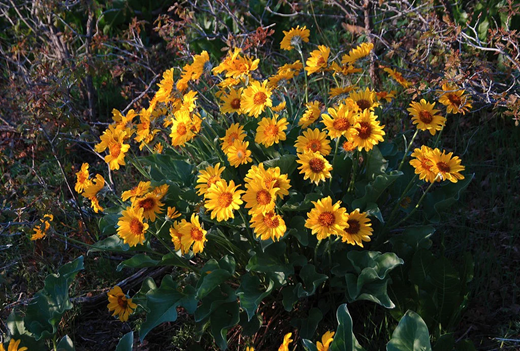
Fig 16.1: Bright yellow sunflower-like blooms of Arrow-Leaved Balsamroot in a natural landscape.
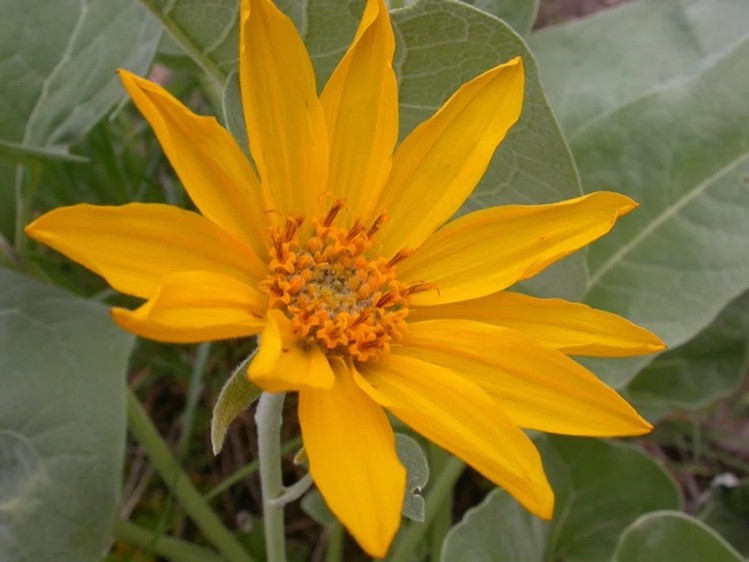
Fig 16.2: Close-up of the distinctive arrow-shaped leaves of the Balsamroot plant.
Fig 16.3: Arrow-Leaved Balsamroot thriving in a dry, rocky sagebrush steppe environment.
General information
Arrow-Leaved Balsamroot (Balsamorhiza sagittata) is a large, perennial wildflower in the sunflower family (Asteraceae) native to western North America. The plant is characterized by its distinctive arrow-shaped leaves that can grow up to 12 inches long, bright yellow sunflower-like blooms that appear in late spring to early summer, and a massive taproot that can extend 6-15 feet deep into the soil. Growing 8-32 inches tall, this hardy plant thrives in dry, rocky soils and sagebrush steppes. The plant’s common names include arrowleaf balsamroot, Oregon sunflower, and spring sunflower. [4, 6] Indigenous peoples have utilized virtually every part of this plant for food, medicine, and materials for thousands of years. [3]
Traditional Indigenous Uses
Its roots were especially powerful. When coughs, fevers, or lung problems settled in the chest, the roots were boiled into tea or decoction to clear the airways and ease breathing. The same preparation helped calm stomach pain and aided digestion, while also reducing fever and inflammation throughout the body. [3]
For wounds, blisters, or sore joints, the roots were ground and used as poultices or ointments to draw out pain and promote healing. The leaves, when fresh, were pressed directly onto burns, cuts, or insect bites to cool and soothe the skin. In colder seasons, dried leaves were tucked into moccasins for warmth. [3]
Arrow-Leaved Balsamroot also held spiritual importance. The roots were sometimes burned in ceremony, their smoke purifying and cleansing both the body and the spirit. Its seeds were ground into meal or pressed for oil, providing nourishment and strength when food was scarce. [3]
Biochemical Compounds and Their Medicinal Properties
1. Sesquiterpene Lactones (Guaianolides)
Primary Compounds:
- Highly oxygenated guaianolides (compounds 1-3) [7]
- 2-Deoxo-8-O-acetyl pumilin [7]
- Methyl-9β-(epoxyangeloyloxy)-5α,6α-dihydroxy-2-oxo-3,4-dehydro-δ-guaien-12-oate [7]
Chemical Structure Features:
- 15-carbon sesquiterpene backbone
- γ-lactone ring (5-membered lactone)
- Multiple hydroxyl and acetyl functional groups
- Highly oxygenated structure contributing to bioactivity [7]
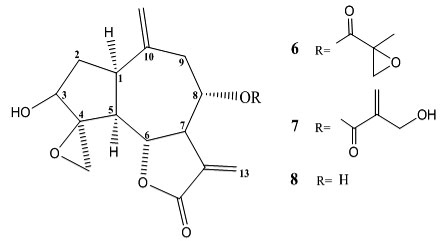
Fig 16.4: Chemical structure of highly oxygenated guaianolides.
Medicinal Properties:
- Anti-inflammatory: Guaianolides inhibit NF-κB pathway, reducing inflammatory cytokines [5]
- Antimicrobial: Disrupt bacterial cell membranes through interaction with membrane lipids [2]
- Wound healing: Promote cell proliferation and collagen synthesis [8]
Mechanism of Action:
Guaianolide → Cell membrane interaction → Disruption of lipid bilayer ↓Inhibition of bacterial growth (antimicrobial effect) [2] Guaianolide → NF-κB inhibition → ↓ TNF-α, IL-1β, IL-6 ↓Reduced inflammation and pain relief [5]
2. Essential Oil Components
Major Constituents:
- Germacrene D (10.8-34.5%) [9]
- β-Phellandrene (6.4-19.4%) [9]
- (E)-β-Caryophyllene (1.4-15.0%) [9]
- (E)-β-Ocimene (3.1-8.4%) [9]
- Limonene (13.7%) [9]
- Spathulenol (6.0%) [9]
Chemical Structures:
- Germacrene D: C₁₅H₂₄ (bicyclic sesquiterpene)
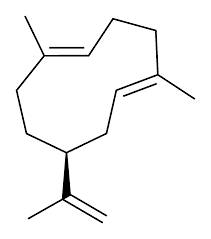
Fig 16.5: Chemical structure of Germacrene D, a major essential oil component.
- β-Caryophyllene: C₁₅H₂₄ (bicyclic sesquiterpene with cyclobutane ring)
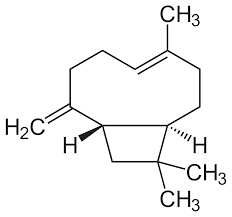
Fig 16.6: Chemical structure of β-Caryophyllene, a bicyclic sesquiterpene.
- Limonene: C₁₀H₁₆ (monocyclic monoterpene)
Medicinal Properties:
- Respiratory support: Volatile compounds act as expectorants and bronchodilators [2, 9]
- Antimicrobial: Essential oils disrupt microbial cell walls [2]
- Antifungal: Terpenes interfere with fungal membrane integrity [2]
3. Flavonoids
Primary Compound:
- 6-Hydroxy-kaempferol 7-methyl ether – (C₁₆H₁₂O₇) [1]
Chemical Structure:
- Flavonol backbone (C₆-C₃-C₆)
- Hydroxyl group at position 6
- Methyl ether at position 7 [1]
General structure of Kaempferol
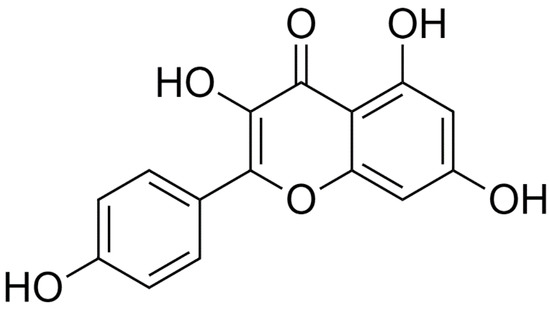
Fig 16.7: General chemical structure of Kaempferol.
Medicinal Properties:
- Antioxidant: Scavenges free radicals through electron donation [8]
- Anti-inflammatory: Inhibits cyclooxygenase and lipoxygenase enzymes [8]
- Wound healing: Promotes angiogenesis and tissue repair [8]
Biochemical Mechanism:
Flavonoid-OH + ROS → Flavonoid-O• + H₂O(Radical scavenging) [8] Flavonoid → COX/LOX enzyme inhibition → ↓Prostaglandins/Leukotrienes → Anti-inflammatory effect [8]
Proposed Biochemical Mechanisms for Traditional Uses
Respiratory Support (Root Decoctions)
- Volatile compounds (germacrene D, β-caryophyllene) act as:
- Guaianolides provide:
Wound Healing (Leaf Poultices)
- Flavonoids promote:
- Essential oils provide:
Anti-rheumatic Effects (Root Teas)
- Sesquiterpene lactones inhibit:
Chemical Reactions and Molecular Interactions
Antioxidant Mechanism (Flavonoids)
6-Hydroxy-kaempferol + O₂•⁻ → Oxidized flavonoid + H₂O₂(Superoxide radical scavenging) Flavonoid-OH + •OH → Flavonoid-O• + H₂O(Hydroxyl radical neutralization) [8]
Anti-inflammatory Pathway (Guaianolides)
Guaianolide → IκB kinase inhibition → IκB stabilization ↓NF-κB sequestration in cytoplasm → ↓ Inflammatory gene transcription [5]
Antimicrobial Action (Essential Oils)
Terpene compounds → Bacterial membrane destabilization ↓Increased membrane permeability → Cell death [2]
Important Disclaimers
Cultural Respect: Traditional Indigenous knowledge represents centuries of accumulated wisdom and practical experience. This knowledge belongs to Indigenous communities and should be approached with appropriate respect, acknowledgment, and cultural protocols.
Medical Disclaimer: This information is provided for educational purposes only. Traditional preparations should not be attempted without proper guidance from qualified practitioners familiar with both traditional methods and modern safety considerations.
Proper Identification: Accurate botanical identification is crucial, especially in alpine environments where multiple similar species may occur. Consult with qualified botanists or traditional knowledge holders for proper plant identification.
References
- Böhm, B. A., Choy, J. B., & Lee, A. Y.-M. (1989). Flavonoids of Balsamorhiza and Wyethia. Phytochemistry, 28 (2), 501–503. https://doi.org/10.1016/0031-9422(89)80041-X
- Burt, S. (2004). Essential oils: Their antibacterial properties and potential applications in foods—A review. International Journal of Food Microbiology, 94 (3), 223–253. https://doi.org/10.5772/intechopen.78033
- Elders and Community members of the Cayoose Creek Band of Sekw’el’was. (n.d.).
- Flora of North America Editorial Committee. (2020). Balsamorhiza sagittata. In Flora of North America North of Mexico (Vol. 21). Flora North America. https://floranorthamerica.org/Balsamorhiza_sagittata
- Hehner, S. P., Heinrich, M., Bork, P. M., Vogt, M., Ratter, F., Lehmann, V., Schulze-Osthoff, K., & Schmitz, M. L. (1998). Sesquiterpene lactones specifically inhibit activation of NF-κB by preventing the degradation of IκB-α and IκB-β. Journal of Biological Chemistry, 273 (3), 1288–1297. https://doi.org/10.1021/acs.biochem.9b00008.s001
- McWilliams, J. (2002). Balsamorhiza sagittata. In Fire Effects Information System (FEIS). U.S. Department of Agriculture, Forest Service, Rocky Mountain Research Station. https://www.fs.usda.gov/database/feis/plants/forb/balsag/all.html
- Mohamed, A. E.-H. H., Ahmed, A. A., Wollenweber, E., Bohm, B., & Asakawa, Y. (2006). Highly oxygenated guaianolides and eudesman-12-oic acids from Balsamorhiza sagittata and Balsamorhiza macrophylla. Chemical and Pharmaceutical Bulletin, 54 (2), 152–155. https://doi.org/10.1248/cpb.54.152
- Panche, A. N., Diwan, A. D., & Chandra, S. R. (2016). Flavonoids: An overview. Journal of Nutritional Science, 5, e47. https://doi.org/10.1201/9781003399964-2
- Swor, K., Satyal, P., Poudel, A., & Setzer, W. N. (2024). The essential oil of Balsamorhiza sagittata from southwestern Idaho: Chemical composition and enantiomeric distribution. Natural Product Communications, 19 (1), 1–7. https://doi.org/10.1177/1934578X231225842