120 Lance-Leaved Stonecrop
Names
Common name – Lance-Leaved Stonecrop
Scientific name – Sedum lanceolatum
Other name – spearleaf stonecrop
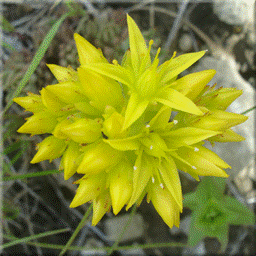
Fig 41.1: Compact rosette of spear-shaped, succulent leaves of Lance-Leaved Stonecrop (Sedum lanceolatum).
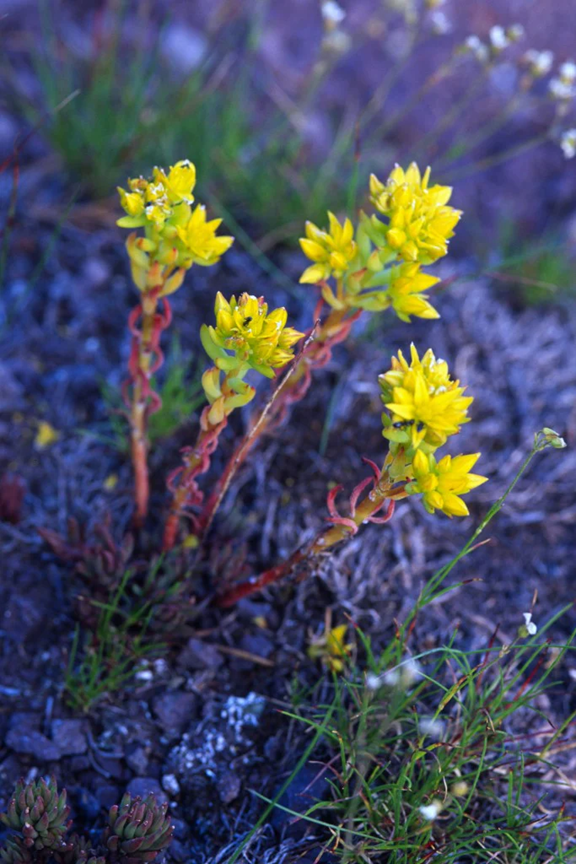
Fig 41.2: Bright yellow, star-shaped flowers of Lance-Leaved Stonecrop (Sedum lanceolatum) arranged in dense, flat-topped clusters.
General Information
Lance-Leaved Stonecrop (Sedum lanceolatum), also known as spearleaf stonecrop, is a hardy perennial succulent in the stonecrop family (Crassulaceae) native to western North America. [2, 6] This resilient plant typically grows 2-8 inches tall, forming compact rosettes of thick, spear-shaped, blue-green to reddish succulent leaves that can reach 1-2 inches in length. [10, 13] The plant produces bright yellow, star-shaped flowers arranged in dense, flat-topped clusters (cymes) on erect stems during summer months, creating a striking contrast against the fleshy foliage. [12] This alpine specialist thrives in exposed, rocky mountainous habitats at moderate to high elevations, reaching up to 4,048 meters (13,281 feet) in the Rocky Mountains. [10, 12] The plant’s remarkable adaptability allowed it to persist and evolve on sky islands and nunataks during Pleistocene glaciation events, making it one of the most cold-hardy and drought-tolerant plants in its range. [4] Indigenous peoples across western North America have traditionally recognized this hardy succulent for its medicinal properties, particularly for women’s health, digestive ailments, and wound care. [5]
Traditional Indigenous Uses
After childbirth, women would use an infusion or decoction of the whole plant to cleanse and strengthen the womb, helping the body to return to balance. [5] It was known as a gentle but thorough medicine, its tea or wash supporting women’s reproductive health through menstrual irregularities and fertility concerns. [5] The same plant, when prepared as a mild infusion, acted as a laxative to ease constipation and relieve sluggish digestion, and when chewed in moderation, its leaves settled the stomach and improved appetite. [5]
Its leaves were applied directly to cuts, scrapes, and wounds to draw out infection and speed recovery. [5] Poultices made from the stems and leaves reduced swelling, bruises, and sprains, while an external wash of the plant soothed rashes and other skin irritations. [5] The fresh juice was prized for treating burns and sunburns, its cooling touch calming the skin after exposure to fire or heat. [5] Even the eyes could benefit from its gentle infusion, which relieved redness and inflammation. [5]
A mild tea made from the dried plant served as a tonic for overall wellness, keeping the body steady through the changing seasons. [5] A weak infusion supported kidney function and helped flush the system, while the fresh leaves could be eaten in emergencies for nourishment and hydration. [5, 8]
Biochemical Compounds and Their Medicinal Properties
Three Most Important Compounds:
(i) Sedamine – Major Sedum alkaloid
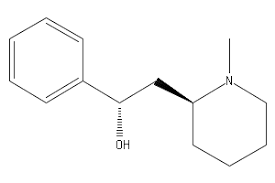
Fig 41.3: Chemical structure of sedamine, the major piperidine alkaloid found in Sedum lanceolatum.
(ii) Sedridine (C₈H₁₇NO) – Related alkaloid
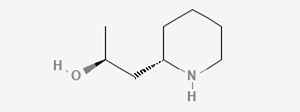
Fig 41.4: Chemical structure of sedridine, a related piperidine alkaloid present in the plant.
(iii) Isopelletierine (C₈H₁₅NO) – Piperidine alkaloid

Fig 41.5: Chemical structure of isopelletierine, another piperidine alkaloid contributing to its medicinal properties.
Medicinal Properties:
- Smooth muscle stimulant: Stimulates uterine contractions for postpartum cleansing [1, 7]
- Digestive stimulant: Enhances gastrointestinal motility and peristalsis [1]
- Anti-inflammatory: Reduces tissue inflammation and swelling [9]
- Antimicrobial: Provides protection against bacterial infections [7]
Three Most Important Compounds:
(i) Triterpenoid Saponins (General structure C₃₀H₄₈O + sugar moieties)
(ii) Oleanane-type Saponins
(iii) Ursane-type Saponins
Most Important Compound:
Quercetin (C₁₅H₁₀O₇) – Primary flavonol
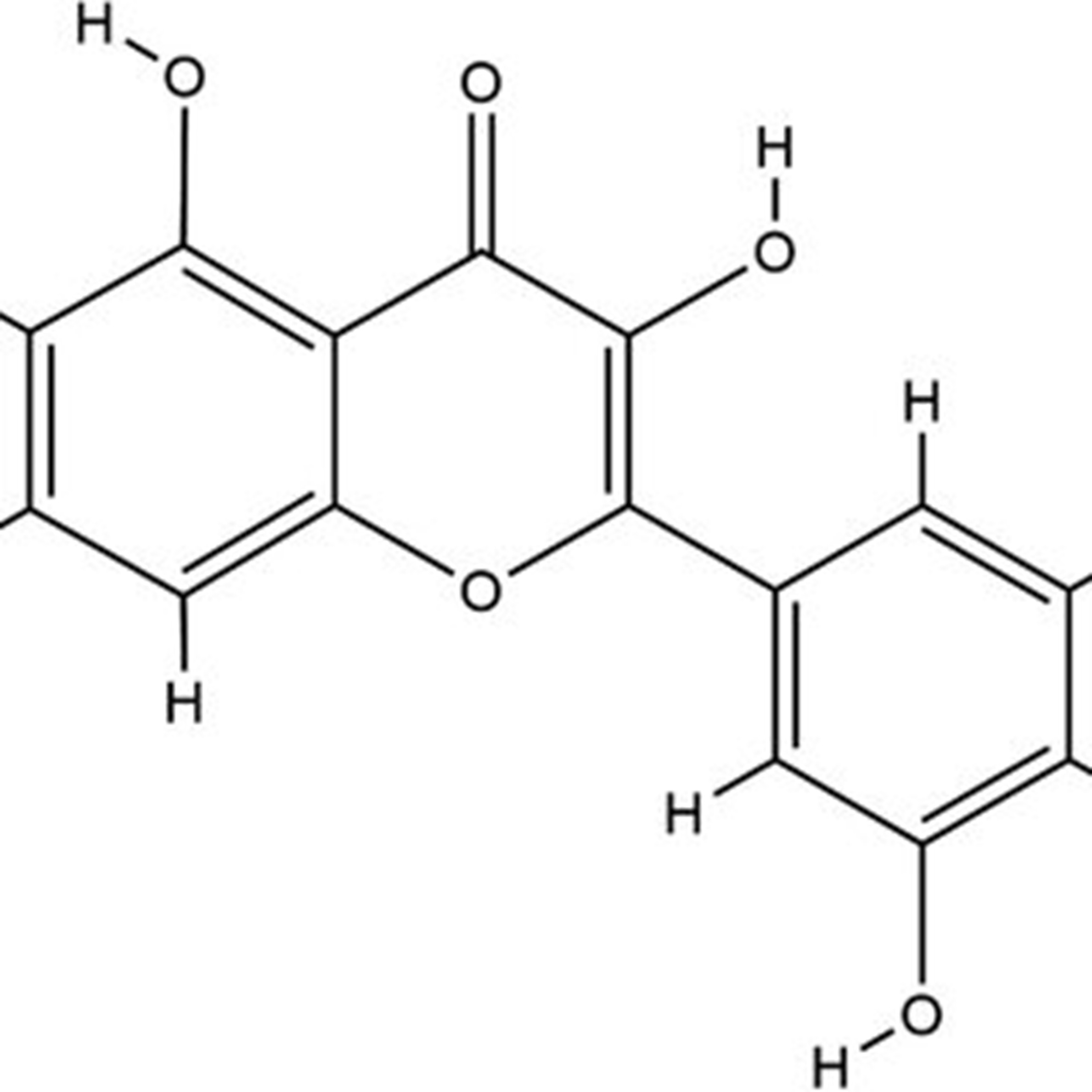
Fig 41.6: Chemical structure of quercetin, a primary flavonol offering anti-inflammatory and antioxidant benefits.
Proposed Biochemical Mechanisms for Traditional Uses
Postpartum Uterine Cleansing (Whole Plant Infusions) [1, 5, 7]
- Piperidine alkaloids act through:
- Direct smooth muscle stimulation of uterine tissue
- Enhanced uterine contractions promoting tissue expulsion
- Increased blood flow facilitating healing
- Saponins contribute:
- Antimicrobial protection preventing postpartum infections
- Astringent properties supporting tissue contraction
- Anti-inflammatory effects reducing postpartum inflammation
Laxative and Digestive Effects (Plant Infusions) [1, 5]
- Alkaloids (sedamine, sedridine) provide:
- Stimulation of intestinal smooth muscle contractions
- Enhanced peristalsis and bowel movement
- Increased digestive secretions
- Saponins facilitate:
- Increased intestinal water absorption
- Enhanced bile flow and fat digestion
- Gentle mucosal irritation promoting elimination
Wound Healing and Anti-inflammatory Action (Topical Applications) [5, 7, 9]
- Saponins act as:
- Natural surfactants cleaning wounds
- Anti-inflammatory agents reducing tissue swelling
- Antimicrobial compounds preventing infection
- Flavonoids provide:
- Antioxidant protection of healing tissues
- Enhanced collagen synthesis and tissue repair
- Improved circulation to wound sites
Chemical Reactions and Molecular Interactions
Smooth Muscle Stimulation (Alkaloids) [1, 3]
Sedamine → Calcium channel activation → ↑ Ca²⁺ influx → Enhanced muscle contraction → Uterine/intestinal motility
Piperidine alkaloids → Acetylcholine receptor modulation → Increased neuromuscular transmission → Enhanced peristalsis
Anti-inflammatory Mechanism (Saponins + Flavonoids) [9]
Triterpenoid saponins → NF-κB pathway inhibition → ↓ Pro-inflammatory cytokines → Reduced tissue inflammation → Pain relief
Quercetin → COX-2 enzyme inhibition → ↓ Prostaglandin synthesis → Anti-inflammatory and analgesic effects
Antimicrobial Action (Multiple Compounds) [7, 9]
Saponins → Bacterial membrane disruption → Cell lysis → Cholesterol binding → Membrane destabilization
Alkaloids → Bacterial enzyme inhibition → Growth arrest → Metabolic disruption → Cell death
Wound Healing Acceleration (Saponins + Flavonoids) [7, 9]
Saponins → Enhanced cell membrane permeability → ↑ Nutrient delivery → Improved cellular function → Faster tissue repair
Flavonoids → VEGF expression ↑ → Enhanced angiogenesis → Improved blood supply → Accelerated healing
Digestive Stimulation (Alkaloid-mediated) [1, 3]
Sedamine → Enteric nervous system activation → ↑ Gastric motility → Enhanced digestive enzyme secretion → Improved digestion
Isopelletierine → Smooth muscle calcium sensitization → Increased intestinal contractions → Laxative effect
Safety Considerations and Traditional Wisdom
Traditional Preparation Guidelines [5]
Indigenous knowledge emphasizes:
- Moderate consumption: Leaves should be eaten in moderation due to potential toxicity
- Proper preparation: Traditional infusion methods reduce potential adverse effects
- Appropriate timing: Specific uses aligned with physiological needs
- Individual sensitivity: Recognition of personal tolerance levels
Alkaloid Content Considerations [1, 3, 5]
The presence of piperidine alkaloids requires careful attention to:
- Dosage limitations: Traditional use emphasizes small amounts
- Preparation methods: Proper extraction techniques
- Duration of use: Typically short-term traditional applications
- Special populations: Particular caution during pregnancy (except specific postpartum uses)
Cultural and Ecological Significance
Alpine Adaptation and Potency [4, 7]
The extreme environments where lance-leaved stonecrop thrives contribute to concentrated bioactive compounds:
- High altitude stress: Increases secondary metabolite production
- Temperature extremes: Enhance protective compound synthesis
- UV exposure: Stimulates flavonoid and phenolic production
- Drought conditions: Concentrate active substances in succulent tissues
Traditional Ecological Knowledge [5]
Indigenous practices recognize:
- Seasonal timing: Optimal collection periods for maximum efficacy
- Sustainable harvesting: Careful collection preserving slow-growing populations
- Habitat respect: Understanding stonecrop’s specialized ecological niche
- Multi-generational knowledge: Time-tested preparation and application methods
References
- Bates, R. W., & Sa-Ei, K. (2002). Syntheses of the sedum and related alkaloids. Tetrahedron, 58 (30), 5957–5978. https://doi.org/10.1016/S0040-4020(02)00584-7
- Botanical Realm. (2024, October 15). Lanceleaf stonecrop (Sedum lanceolatum). https://www.botanicalrealm.com/plant-identification/lanceleaf-stonecrop-sedum-lanceolatum/
- Chevé-Kools, E., Gentelet, F., Morais Fernandes, J., Zucolotto, S. M., Ruprich-Robert, G., Chapeland-Leclerc, F., & Grougnet, R. (2025, July 3). Nitrogen-containing metabolites in the Crassulaceae family: Structures, biological activities, occurrence and phylogeny. Phytochemistry Reviews. https://doi.org/10.1007/s11101-025-10139-0
- DeChaine, E. G., & Martin, A. P. (2005). Marked genetic divergence among sky island populations of Sedum lanceolatum (Crassulaceae) in the Rocky Mountains. American Journal of Botany, 92 (3), 477–486. https://doi.org/10.3732/ajb.92.3.477
- Elders and Community members of the Cayoose Creek Band of Sekw’el’was. (n.d.). Traditional Indigenous knowledge.
- Natural Medicinal Herbs. (n.d.). Medicinal herbs: Spearleaf stonecrop (Sedum lanceolatum). https://www.naturalmedicinalherbs.net/herbs/s/sedum-lanceolatum=spearleaf-stonecrop.php
- ScienceDirect Topics. (n.d.). Sedum—An overview. https://www.sciencedirect.com/topics/agricultural-and-biological-sciences/sedum
- Succulent Hub. (2025, January 22). Sedum: The versatile succulent you didn’t know was medicinal. https://succulentshub.org/sedum-the-versatile-succulent-you-didnt-know-was-medicinal/
- Wang, B.-L., Ge, Z.-K., Qiu, J.-R., Luan, S.-Q., Hao, X.-C., & Zhao, Y.-H. (2024). Sedum aizoon: A review of its history, traditional uses, nutritional value, botany, phytochemistry, pharmacology, toxicology, and quality control. Frontiers in Pharmacology, 15, Article 1349032. https://doi.org/10.3389/fphar.2024.1349032
- Washington Native Plant Society. (n.d.). Sedum lanceolatum. https://www.wnps.org/native-plant-directory/421:sedum-lanceolatum
- Wikipedia. (n.d.). Sedum. Retrieved September 28, 2025, from https://en.wikipedia.org/wiki/Sedum
- Wikipedia. (n.d.). Sedum lanceolatum. Retrieved September 28, 2025, from https://en.wikipedia.org/wiki/Sedum_lanceolatum
- Wild About Flowers. (n.d.). Sedum lanceolatum—Lance-leaved stonecrop. https://wildaboutflowers.ca/products/stonecrop-lance-leaved