96 Big Sagebrush
Names
Common name – Big Sagebrush
Scientific name – Artemisia tridentata
Other names – káwkwu
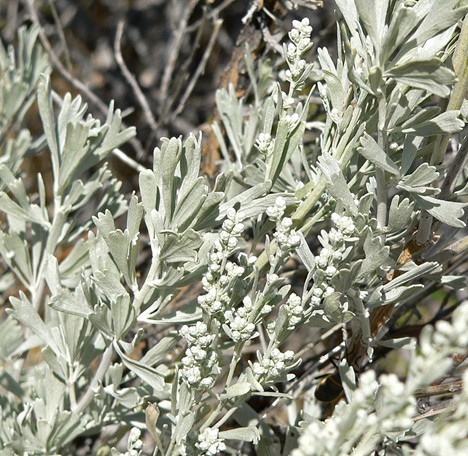
Fig 17.1: A Big Sagebrush (Artemisia tridentata) shrub displaying its characteristic silvery-gray foliage in its natural habitat.
General information
Big Sagebrush (Artemisia tridentata) is a large, woody perennial shrub in the sunflower family (Asteraceae) and is one of the most widespread and ecologically important plants in the American West. This hardy shrub can grow 3-15 feet tall with a distinctive silvery-gray appearance due to fine hairs covering its small, three-lobed (tridentate) leaves. The plant produces small, inconspicuous yellow flowers in late summer and has a characteristic pungent, aromatic scent from volatile oils in its leaves and stems. [8]
Traditional Indigenous Uses
Its fragrant leaves were used to treat many ailments of the body. When a person was troubled by coughs, congestion, or fever, the leaves were boiled for tea or inhaled as steam to clear the lungs and ease the breath. The same vapors were used to relieve headaches and general pain, while teas made from the leaves reduced inflammation from rheumatism and soothed women’s bodies after childbirth. [1, 4]
For wounds and injuries, the people would crush the leaves into a paste or salve and apply it directly to cuts or infections, knowing Sagebrush to be a strong antiseptic. It was also used as a wash for cleansing wounds or as a tea to help with stomach and digestive troubles, or even to stop internal bleeding. The bark and stems were warmed and applied to aching joints to ease the pain of arthritis. Some placed the dried leaves in their moccasins as a natural deodorant and for comfort during travel. [1, 4]
Beyond its medicinal strength, Big Sagebrush was deeply tied to ceremony. The whole plant was burned as smudge, its smoke purifying the body and spirit and driving away negative energy. The same smoke kept insects at bay and refreshed the air during healing rituals. [1, 4]
Biochemical Compounds and Their Medicinal Properties
Three Most Important Compounds:
(i) α-Thujone (C₁₀H₁₆O) – 0.1-76.1%
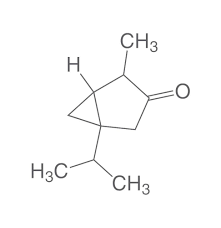
Fig 17.2: Chemical structure of α-Thujone, a primary bioactive monoterpene found in Big Sagebrush essential oil.
(ii) Camphor (C₁₀H₁₆O) – 20-45%
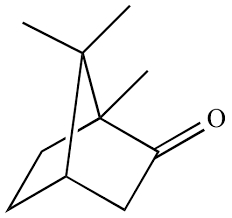
Fig 17.3: Chemical structure of Camphor, a major essential oil monoterpene in Big Sagebrush.
(iii) 1,8-Cineole/Eucalyptol (C₁₀H₁₈O) – 12-52.1%
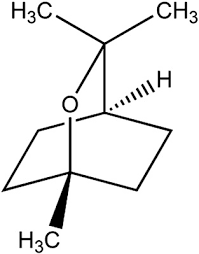
Fig 17.4: Chemical structure of 1,8-Cineole (Eucalyptol), an important respiratory and anti-inflammatory monoterpene in Big Sagebrush.
Medicinal Properties:
- Respiratory support: Expectorant and bronchodilator effects [3]
- Anti-inflammatory: Inhibits inflammatory mediators [3, 6]
- Antimicrobial: Broad-spectrum antibacterial and antifungal activity [5]
- Analgesic: Pain-relieving properties through multiple pathways [7]
2. Oxygenated Monoterpenes (Supporting Compounds) [9, 10]
Three Most Important Compounds:
(i) β-Thujone (C₁₀H₁₆O) – 13.6-14.5%
(ii) Borneol (C₁₀H₁₈O) – 5%
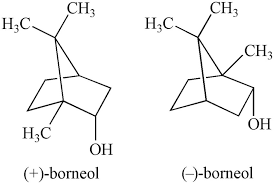
Fig 17.5: Chemical structure of Borneol, an oxygenated monoterpene present in Big Sagebrush.
(iii) Camphene (C₁₀H₁₆) – 3-21.5%

Fig 17.6: Chemical structure of Camphene, a supporting oxygenated monoterpene in Big Sagebrush.
3. Sesquiterpenes (Minor but Important) [9, 10]
Most Important Compound:
Caryophyllene (C₁₅H₂₄) – 1-2.5%
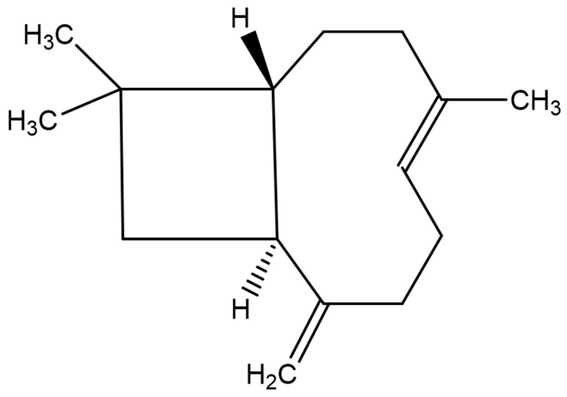
Fig 17.7: Chemical structure of Caryophyllene, a minor but important sesquiterpene in Big Sagebrush.
Proposed Biochemical Mechanisms for Traditional Uses
Respiratory Support (Leaf Inhalations/Teas)
- α-Thujone and 1,8-Cineole act as:
- Camphor provides:
Pain Relief and Anti-inflammatory Effects (Vapors/Topical)
- Thujones (α and β) inhibit:
- Camphor acts through:
Antimicrobial and Wound Healing (Topical Applications)
- Essential oil components provide:
- 1,8-Cineole promotes:
Chemical Reactions and Molecular Interactions
Anti-inflammatory Mechanism (Thujones)
α-Thujone → COX-2 enzyme inhibition → ↓ PGE₂, PGI₂ → Reduced inflammation and pain signaling [6]
β-Thujone → NF-κB pathway inhibition → ↓ TNF-α, IL-1β → Decreased inflammatory mediator production [6]
Respiratory Relief Mechanism (Cineole)
1,8-Cineole → β2-adrenergic receptor activation → ↑ cAMP → Bronchial smooth muscle relaxation → Improved airflow [3]
1,8-Cineole → Mucin gene expression ↑ → Enhanced mucus clearance [3]
Antimicrobial Action (Multiple Components)
Essential oils → Bacterial membrane lipid disruption → Increased membrane permeability → ATP leakage → Cell death [5]
Camphor + Thujones → Protein sulfhydryl group binding → Enzyme inactivation → Metabolic disruption → Microbial death [5]
Analgesic Pathway (Camphor)
Camphor → TRPM8 cold receptor activation → Gate control mechanism → Pain signal inhibition at spinal cord level [7]
Camphor → Voltage-gated Na+ channel blockade → ↓ Action potential → Local anesthetic effect → Reduced pain sensation [7]
GABA System Modulation (Thujones) – Neurological and Psychoactive Effects
α-Thujone → GABA-A receptor antagonism → CNS stimulation [2]
β-Thujone → GABA-A receptor antagonism → Altered consciousness [2]
Note: Traditional ceremonial use may involve these neurological effects
Safety Considerations and Traditional Wisdom
Traditional Indigenous use emphasizes proper preparation methods and dosages, recognizing that while these compounds are therapeutically beneficial, concentrated forms require careful handling. The traditional practice of using whole plant preparations rather than isolated compounds provides natural buffering effects and reduces potential toxicity. [1, 2, 6]
References
- Elders and Community members of the Cayoose Creek Band of Sekw’el’was. (n.d.).
- Höld, K. M., Sirisoma, N. S., Ikeda, T., Narahashi, T., & Casida, J. E. (2000). α-Thujone (the active component of absinthe): GABAA receptor modulation and metabolic detoxification. Proceedings of the National Academy of Sciences of the United States of America, 97 (8), 3826–3831. https://doi.org/10.1073/pnas.070042397
- Juergens, U. R. (2014). Anti-inflammatory properties of the monoterpene 1,8-cineole: Current evidence for co-medication in inflammatory airway diseases. Drug Research, 64 (12), 638–646. https://doi.org/10.1055/s-0034-1372609
- Moerman, D. E. (n.d.). Native American Ethnobotany database: Artemisia tridentata (big sagebrush). Botanical Research Institute of Texas. https://naeb.brit.org/uses/5699/
- Nagy, J. G., & Tengerdy, R. P. (1967). Antibacterial action of the volatile oils of Artemisia tridentata and Artemisia nova on aerobic bacteria. Applied Microbiology, 15 (4), 819–821. https://doi.org/10.1128/am.15.4.819-821.1967
- Patočka, J., & Navrátilová, Z. (2020). Thujone, a widely debated volatile compound: What do we know about it? Phytochemistry Reviews, 19 (5), 1083–1107. https://doi.org/10.1007/s11101-020-09701-z
- Selescu, T., Ciobanu, A. C., Dobre, C., Reid, G., & Babes, A. (2013). Camphor activates and sensitizes transient receptor potential melastatin 8 (TRPM8) to cooling and icilin. Journal of Biological Chemistry, 288 (11), 7505–7517. https://doi.org/10.1093/chemse/bjt027
- Shultz, L. M. (2006). Artemisia tridentata. In Flora of North America North of Mexico (Vol. 19). Flora of North America Association. https://floranorthamerica.org/Artemisia_tridentata
- Swor, K., Satyal, P., Timsina, S., & Setzer, W. N. (2022). Chemical composition and terpenoid enantiomeric distribution of the essential oil of Artemisia tridentata tridentata from southwestern Idaho. Natural Product Communications, 17, Article 1934578X221117417. https://doi.org/10.1177/1934578X221117417
- Zheljazkov, V. D., Zhao, S., Li, Y., Cantrell, C. L., Khan, S., Astatkie, T., & Pokharel, R. (2022). Essential oil yield, composition, and bioactivity of sagebrush species in the Bighorn Mountains, USA. Plants, 11 (9), 1228. https://doi.org/10.3390/plants11091228