101 Pacific Willow
Names
Common name – Pacific Willow
Scientific name – Salix lucida, subspecies lasiandra
Other names – Shining Willow, txálhpaz’
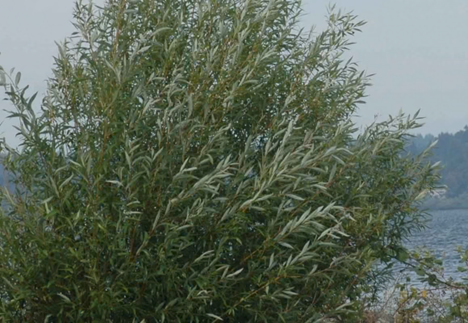
Fig 51.1: View of Pacific Willow (Salix lucida) leaves and branches.
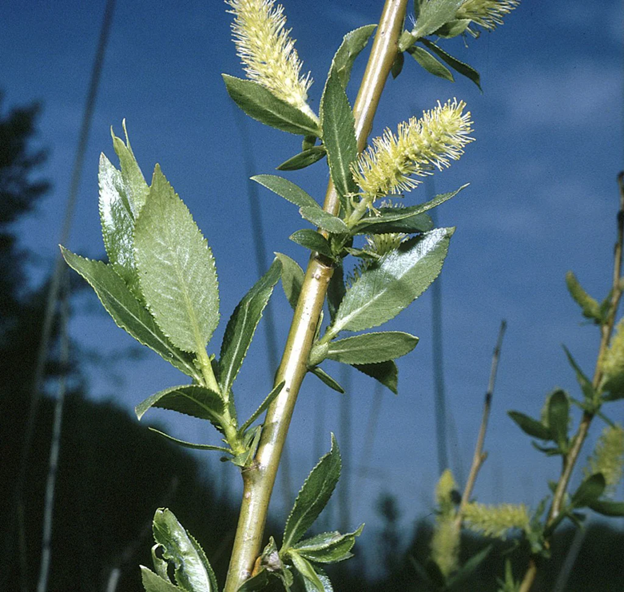
Fig 51.2: Close-up view of Pacific Willow foliage.
General Information
Pacific Willow is a deciduous tree or large shrub of the Salicaceae (Willow) family, native to western North America [7]. This species has been extensively used by Indigenous peoples for medicinal purposes, particularly for pain relief and anti-inflammatory treatments [2, 9]. The Pacific Willow is one of several willow species traditionally utilized, all containing the bioactive compound salicin [8, 12].
Traditional Medicinal Uses by Indigenous Peoples
The Elders spoke of Pacific Willow as one of the old medicines of the land – a tree whose spirit carried both strength and comfort [2]. Its bark, when chewed or brewed into tea, was known to ease pain throughout the body, calming headaches, joint aches, and the soreness that came after hard work [2, 3]. Those suffering from arthritis would boil the bark or make poultices to lay over swollen joints, feeling the pain ease as the medicine drew out the inflammation [2, 13]. The leaves, too, could be chewed to quiet everyday pains and bring relief when the body was tired [2]. When fevers came, a tea made from the bark helped to cool the body and restore balance, its medicine working gently but surely [2].
The people also used Pacific Willow for back pain and stiffness, drinking the decoction or applying it to sore muscles after long days of travel or work [2]. Its bark carried strong healing power – an anti-inflammatory gift that reached deep into the body to settle discomfort and bring rest [2]. Beyond its medicine, the bark had other uses: when stripped and prepared carefully, it could be made into strong twine, used for weaving or binding [6].
Biochemical Basis for Medicinal Properties
Primary Bioactive Compounds
Pacific Willow contains several classes of bioactive compounds, with phenolic glycosides being the most therapeutically significant:
- Primary Active Compounds
- Salicin (β-D-salicin) – Primary bioactive compound (1-10% in bark) [12]
- Salicortin – Secondary salicylate glycoside [12]
- Tremulacin – Related phenolic glycoside [12]
- Populin – Supporting glycoside compound [12]
- Salicyl alcohol (Saligenin) – Metabolite of salicin [14]
- Supporting Compounds
- Tannins – Astringent and anti-inflammatory properties [13]
- Flavonoids – Antioxidant and anti-inflammatory effects [13]
- Catechins – Polyphenolic compounds with bioactivity [13]
- Other phenolic acids – Supporting therapeutic compounds [13]
Chemical Structure and Properties of Key Compounds
Salicin (β-D-Salicin) – Primary Active Compound
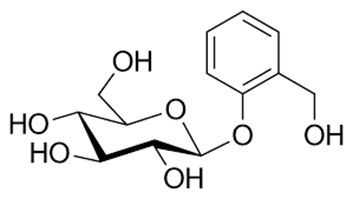
Fig 51.3: Chemical structure of Salicin (β-D-Salicin), the primary active compound found in Pacific Willow.
Chemical Name: 2-(Hydroxymethyl)phenyl β-D-glucopyranoside [12]
Molecular Formula: C 13 H 18 O 7 [12]
Molecular Weight: 286.28 g/mol [12]
Classification: Phenolic glycoside (salicylate glycoside)
Structural Features:
Salicin Structure:
– Glucose moiety (β-D-glucopyranoside)
– Phenolic aglycone (salicyl alcohol/saligenin)
– Glycosidic bond linking sugar to phenol
– Hydroxyl groups providing water solubility
– Aromatic benzene ring with ortho-hydroxymethyl substitution
Key Structural Components:
- Sugar Unit: β-D-glucose providing water solubility and stability
- Aglycone: Salicyl alcohol (2-hydroxybenzyl alcohol)
- Glycosidic Bond: β-1 linkage between glucose C1 and phenolic oxygen
- Functional Groups: Primary alcohol, phenolic OH, multiple secondary OH groups
Salicylic Acid – Active Metabolite
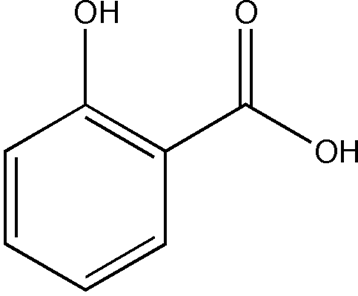
Fig 51.4: Chemical structure of Salicylic Acid, the active metabolite of salicin.
Molecular Formula: C 7 H 6 O 3 Molecular Weight: 138.12 g/mol [12]
- Structure: Benzoic acid with ortho-hydroxyl substitution [12]
- Key feature: Carboxyl group (-COOH) and phenolic hydroxyl (-OH) [12]
Metabolic Pathway and Bioactivation
Salicin to Salicylic Acid Conversion
Step 1: Hydrolysis of Salicin
Salicin + H2O → β-D-Glucose + Salicyl alcohol (Saligenin)
Enzyme: β-glucosidase (intestinal or bacterial)
Location: Small intestine and colon
Mechanism: Cleavage of β-glycosidic bond
Step 2: Oxidation of Saligenin
Salicyl alcohol → Salicylaldehyde → Salicylic acid
Enzymes: Alcohol dehydrogenase, Aldehyde dehydrogenase
Location: Liver, intestinal mucosa
Mechanism: Two-step oxidation via aldehyde intermediate
Overall Conversion:
Salicin → [Hydrolysis] → Saligenin → [Oxidation] → Salicylic Acid [14]
Molecular Mechanisms of Action
- Anti-inflammatory Mechanisms
Cyclooxygenase (COX) Inhibition:
Salicylic Acid → COX-1/COX-2 inhibition → Reduced prostaglandin synthesis [11, 13]
– Competitive inhibition of COX active site [11]
– Decreased PGE2, PGF2α, PGI2 production [11]
– Reduced inflammation, pain, and fever [13]
– Non-selective COX inhibition (unlike aspirin) [11]
Nuclear Factor κB (NF-κB) Suppression:
Salicylic Acid → NF-κB pathway inhibition → Reduced inflammatory gene expression [4, 13]
– Prevents NF-κB nuclear translocation [4]
– Decreased TNF-α, IL-1β, IL-6 production [13]
– Reduced inflammatory cytokine synthesis
– Anti-inflammatory gene regulation
- Analgesic (Pain Relief) Mechanisms
Peripheral Pain Reduction:
Salicylic Acid → Prostaglandin inhibition → Reduced nociceptor sensitization [11, 13]
– Decreased PGE2 at nociceptors
– Reduced peripheral pain sensation
– Lower inflammatory pain signals
– Tissue-level analgesia
Central Pain Modulation:
Salicylic Acid → CNS effects → Central pain pathway modulation [13]
– Spinal cord anti-nociceptive effects
– Modulation of pain transmission
– Central analgesic mechanisms
– Enhanced pain threshold
- Antipyretic (Fever Reduction) Mechanisms
Hypothalamic Thermoregulation:
Salicylic Acid → Hypothalamic PGE2 reduction → Temperature set-point normalization [11]
– Inhibition of COX in thermoregulatory center
– Reduced hypothalamic PGE2 levels
– Restoration of normal temperature set-point
– Enhanced heat loss mechanisms
Safety Considerations and Traditional Wisdom
Traditional Preparation Methods:
- Slow extraction (tea preparation) provides gradual salicin release [1]
- Lower gastric irritation compared to synthetic salicylates [13]
- Whole plant matrix effects enhance tolerance [13]
- Traditional dosing based on empirical knowledge [2]
Modern Safety Profile:
- Generally well-tolerated in traditional preparations [13]
- Lower incidence of gastric side effects vs. aspirin [3, 13]
- Contraindicated in salicylate sensitivity [13]
- Drug interactions similar to other salicylates [13]
References
- Art of Manliness. (2021, June 1). Using willow bark as natural aspirin. https://www.artofmanliness.com/skills/outdoor-survival/how-to-harvest-and-use-natures-aspirin/
- Elders and Community members of the Cayoose Creek Band of Sekw’el’was. (n.d.).
- Healthline. (2024, September 30). Willow bark: Nature’s aspirin. https://www.healthline.com/health/willow-bark-natures-aspirin
- Kopp, E., & Ghosh, S. (1994). Inhibition of NF-kappa B by sodium salicylate and aspirin. Science, 265 (5174), 956–959. https://doi.org/10.1126/science.8052854
- McGill University Office for Science and Society. (2024, April 5). Sordid medicine shows exploited Indigenous cures. https://www.mcgill.ca/oss/article/medical-history/sordid-medicine-shows-exploited-indigenous-cures
- Native Languages of the Americas. (n.d.). Native American Indian willow medicine, meaning and symbolism. http://www.native-languages.org/legends-willow.htm
- Portland State University. (n.d.). Salix lucida (ssp. lasiandra) – Pacific willow. https://web.pdx.edu/~maserj/ESR410/SalixLucida.htm
- Split Rock Environmental. (2025). Pacific willow (txálhpaz’). <a href="https://splitrockenvironmental.ca/products/pacific-willow-txalhpaz” rel=”noopener” target=”_new”> https://splitrockenvironmental.ca/products/pacific-willow-txalhpaz https://doi.org/10.1007/978-1-4020-4585-1_2743
- The Pipettepen. (n.d.). The ample pharmacopeia of Indigenous medicine. https://www.thepipettepen.com/the-florid-pharmacopeia-of-indigenous-medicine/
- U.S. Embassy & Consulates in Italy. (2021, November 19). Native Americans’ many contributions to medicine. https://it.usembassy.gov/native-americans-many-contributions-to-medicine/
- Vane, J. R. (1971). Inhibition of prostaglandin synthesis as a mechanism of action for aspirin-like drugs. Nature New Biology, 231 (25), 232–235. https://doi.org/10.1038/newbio231232a0
- Wikipedia. (2025, June 2). Salicin. https://en.wikipedia.org/wiki/Salicin
- Wölfle, U., Strobach, D., & Schempp, C. M. (2023). Willow bark (Salix) used for pain relief in arthritis: A meta-analysis of randomized controlled trials. Phytotherapy Research, 37 (11), 5142–5155. https://doi.org/10.1002/ptr.8097
- Xie, Y., Zhang, Y., & Xu, J. (2017). Biosynthesis and metabolism of β-D-salicin: A novel molecule that exerts biological function in humans and plants. Frontiers in Plant Science, 8, Article 925. https://doi.org/10.1016/j.btre.2014.08.005