102 Paper Birch
Names
Common name – Paper Birch
Scientific name – Betula papyrifera
Other names – White Birch or Canoe Birch
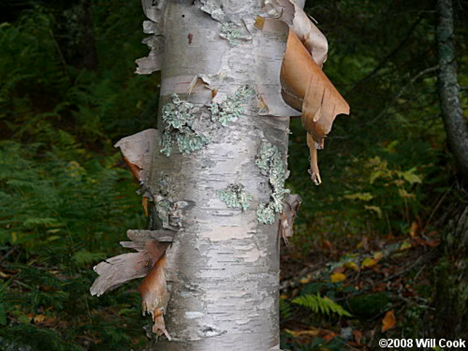
Fig 52.1: A mature Paper Birch (Betula papyrifera) tree displaying its characteristic bright white bark in a natural woodland setting.
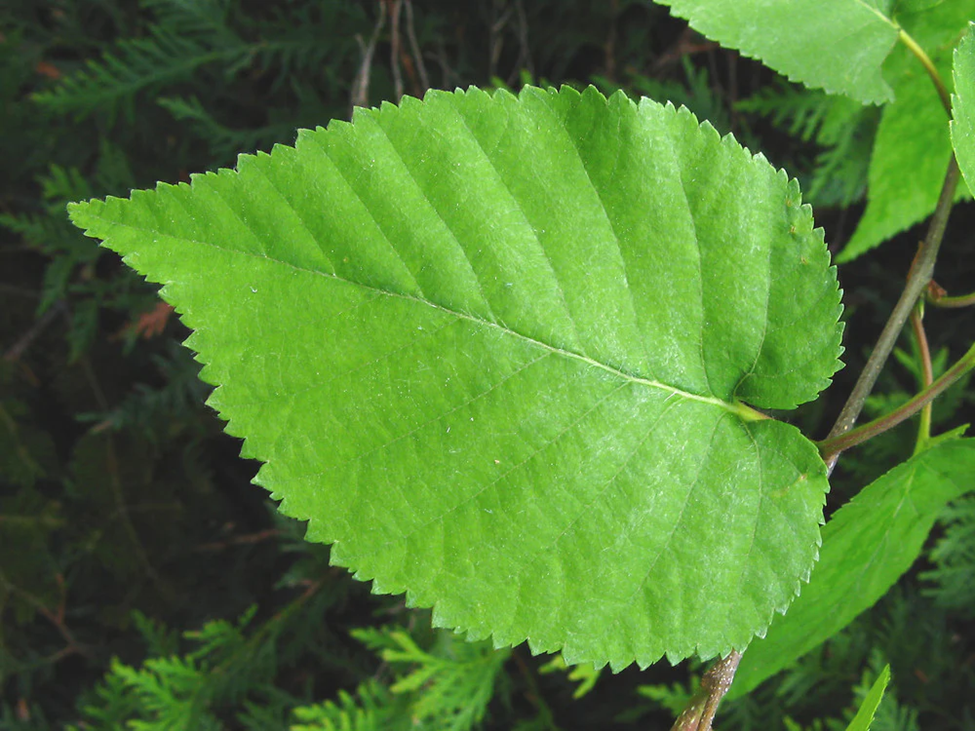
Fig 52.2: Detailed texture of the iconic white, peeling bark of the Paper Birch tree, highlighting its horizontal lenticels.
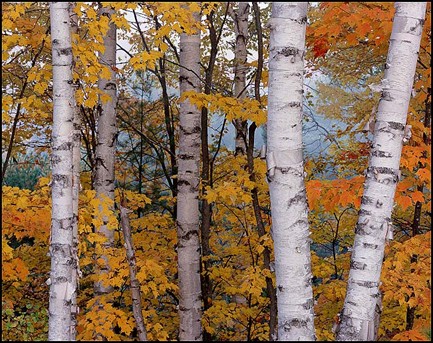
Fig 52.3: Traditional harvesting marks on a Paper Birch trunk, demonstrating sustainable peeling practices.
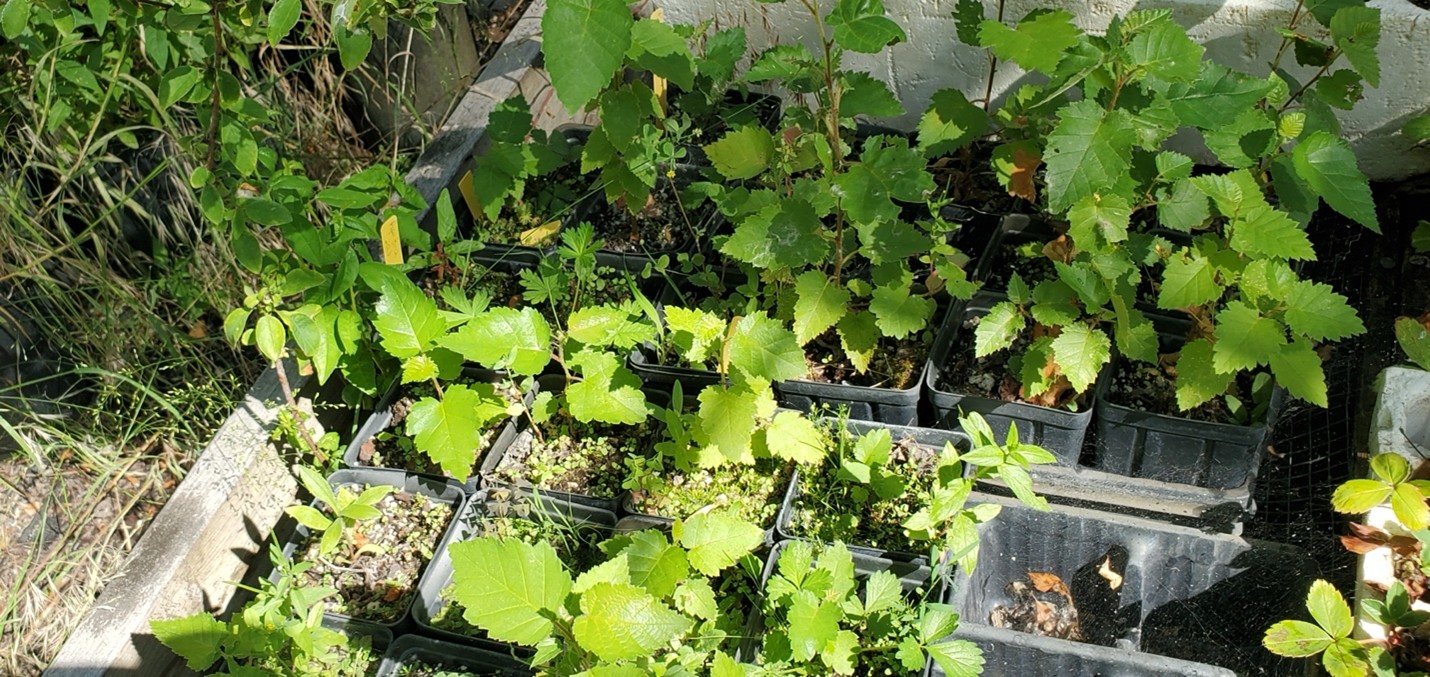
Fig 52.4: Close-up view of Paper Birch (Betula papyrifera) foliage showing its distinctive ovate, doubly serrated leaves.
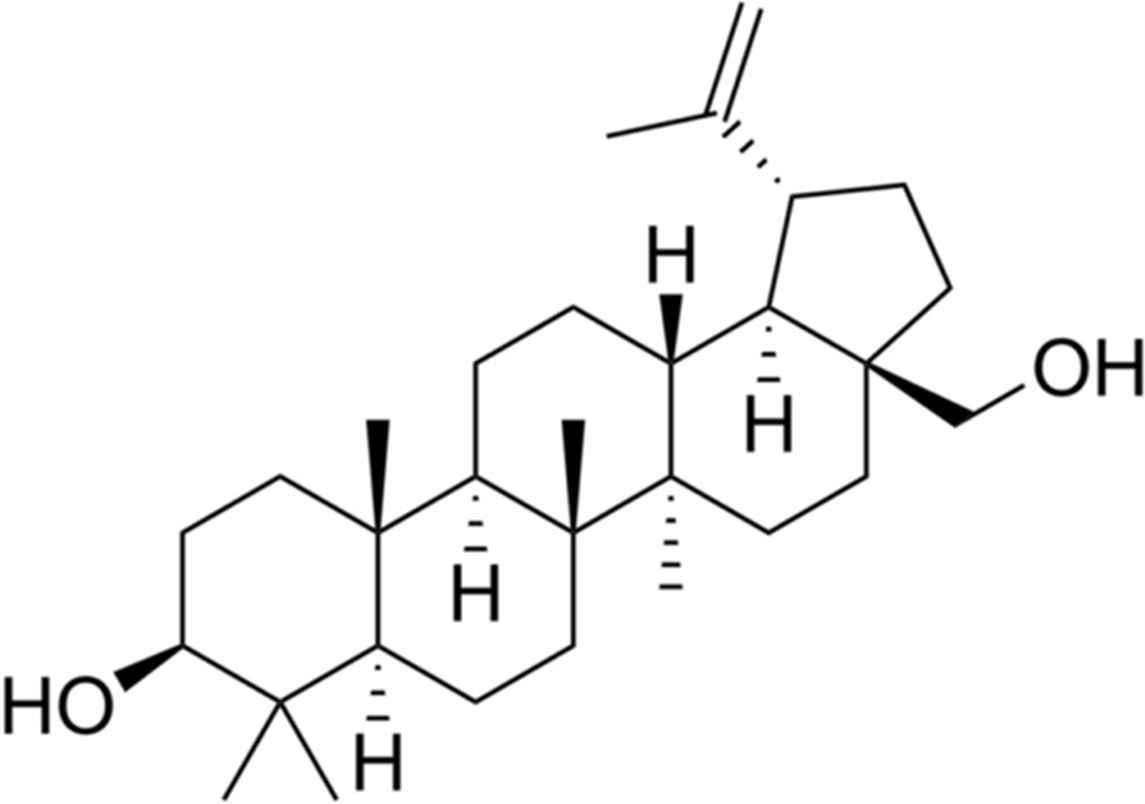
Fig 52.5: Chemical structure of Betulin, a lupane-type pentacyclic triterpene primarily responsible for the therapeutic properties of Paper Birch bark.

Fig 52.6: Chemical structure of Betulinic Acid, an oxidized derivative of betulin with enhanced solubility and bioactivity.
General Information
Paper Birch (Betula papyrifera), also known as White Birch or Canoe Birch, is a deciduous tree of the Betulaceae (Birch) family, native to northern North America [7, 9]. This iconic tree has been extensively used by Indigenous peoples throughout its range for medicinal purposes, particularly for treating skin conditions and various inflammatory disorders [3, 4]. The bark contains unique triterpene compounds, primarily betulin and betulinic acid, which provide its therapeutic properties [1, 8].
Traditional Medicinal Uses by Indigenous Peoples
The Elders speak of Paper Birch as a medicine of great versatility and strength, a tree that offered healing for both the body and the spirit [3]. Its bark was used for many ailments e.g. boiled into teas or made into poultices to ease pain, soothe wounds, and heal the skin [3]. When the bark was prepared as a tea, it cleansed the digestive tract, fighting infections and calming disorders of the stomach and intestines [3, 6]. People relied on it when their bodies ached; its pain-relieving and blood-thinning powers helped those troubled by rheumatism, arthritis, or general soreness [3, 7]. For fevers, a decoction from the bark brought down heat and restored balance, while its cleansing properties helped dissolve kidney stones and flush toxins from the body [3, 4].
The inner bark was prized for treating frostbite and burns, applied gently to draw out the pain and promote healing [3]. The leaves and twigs, when boiled, created a medicine that reduced swelling and inflammation, bringing comfort to weary joints and sore muscles [3, 7]. Some also used the bark to clean and strengthen the blood, believing it carried a cool, purifying energy from the tree’s white skin [3].
Biochemical Basis for Medicinal Properties
Primary Bioactive Compounds
Paper Birch bark contains several classes of bioactive compounds, with pentacyclic triterpenes being the most therapeutically significant [1, 11]:
- Primary Active Compounds
- Betulin (Birch Camphor) – Primary triterpene compound (10-25% in outer bark) [8, 11]
- Betulinic Acid – Oxidized derivative of betulin with enhanced bioactivity [1, 14]
- Lupeol – Supporting triterpene compound [8]
- Oleanolic Acid – Secondary triterpene with therapeutic properties [8]
- β-Sitosterol – Plant sterol with multiple bioactivities [8]
- Supporting Compounds
- Flavonoids – Antioxidant and anti-inflammatory compounds [13]
- Tannins – Astringent and antimicrobial properties [7]
- Phenolic acids – Supporting antioxidant compounds [13]
- Essential oils – Volatile compounds with antimicrobial effects [9]
- Suberin – Protective waxy compound in bark [11]
Chemical Structure and Properties of Key Compounds
Betulin – Primary Active Compound
Key Structural Components: [8]
- Ring System: Lupane-type pentacyclic framework
- Hydroxyl Groups: C3 secondary OH and C28 primary alcohol
- Double Bond: C20=C29 exocyclic methylene group
- Methyl Groups: Six methyl substituents providing rigidity
- Stereochemistry: Defined 3β configuration
Betulinic Acid – Active Metabolite
- Structure: Betulin with C28 oxidized to carboxylic acid (-COOH) [1]
- Enhanced Activity: More potent biological effects than betulin [1, 12]
- Improved Solubility: Carboxylic acid group increases water solubility [1]
Molecular Mechanisms of Action
- Anti-inflammatory Mechanisms
NF-κB Pathway Inhibition:
Betulin/Betulinic Acid → NF-κB suppression → Reduced inflammatory gene expression [8, 13]
– Prevents IκBα degradation [8]
– Blocks NF-κB nuclear translocation [8, 14]
– Decreases TNF-α, IL-1β, IL-6 production [8, 14]
– Reduces cyclooxygenase-2 (COX-2) expression [13]
– Anti-inflammatory cytokine regulation [14]
MAPK Pathway Modulation:
Betulinic Acid → MAPK inhibition → Reduced inflammatory signaling [12]
– p38 MAPK suppression [12]
– ERK1/2 pathway modulation [12]
– JNK signaling inhibition [12]
– Downstream anti-inflammatory effects [12]
- Antimicrobial Mechanisms
Cell Membrane Disruption:
Betulin → Bacterial membrane interaction → Membrane permeabilization [5]
– Lipophilic triterpene inserts into membrane [5]
– Disrupts membrane integrity [5]
– Increases permeability [5]
– Cellular content leakage [5]
– Bacterial cell death [5]
Antifungal Activity:
Betulin → Fungal cell wall/membrane targeting → Growth inhibition [5]
– Ergosterol biosynthesis interference [5]
– Cell membrane disruption [5]
– Inhibition of fungal growth [5]
– Broad-spectrum antifungal effects [5]
- Wound Healing and Tissue Repair
Collagen Synthesis Stimulation:
Betulinic Acid → Fibroblast activation → Enhanced collagen production [2, 10]
– Increased Type I collagen synthesis [10]
– Enhanced wound tensile strength [10]
– Accelerated healing process [2, 10]
– Reduced scar formation [10]
Angiogenesis Promotion:
Betulin → VEGF upregulation → New blood vessel formation [2]
– Vascular endothelial growth factor increase [2]
– Enhanced tissue perfusion [2]
– Improved nutrient delivery [2]
– Faster healing rates [2]
- Hepatoprotective Mechanisms
Antioxidant Defense Enhancement:
Betulinic Acid → Nrf2 activation → Antioxidant enzyme upregulation [12]
– Glutathione S-transferase increase [12]
– Catalase and SOD enhancement [12]
– Reduced oxidative stress [12]
– Liver protection [12]
Extraction and Concentration in Bark
- Highest betulin content in late spring/early summer [11]
- Outer bark contains 15-25% betulin by dry weight [11]
- Inner bark has lower but significant concentrations [11]
- Age of tree affects compound concentration [6]
Traditional Extraction Methods: [3, 4]
- Hot water extraction (tea preparation) [3]
- Alcohol-based tinctures [4]
- Direct bark chewing [3]
- Poultice preparations [3]
- Steam distillation for essential oils [7]
Safety and Traditional Wisdom
Traditional Safety Profile: [3, 7]
- Extensive historical use without significant toxicity [3]
- Topical applications generally well-tolerated [3]
- Internal use in traditional dosages appears safe [3]
- Pregnancy/lactation: Traditional caution advised [7]
References
- American Chemical Society. (n.d.). Betulinic acid. https://www.acs.org/molecule-of-the-week/archive/b/betulinic-acid.html
- Ebeling, S., Naumann, K., Pollok, S., Wardecki, T., Vidal-y-Sy, S., Nascimento, J. M., Boerries, M., Schmidt, G., Brandner, J. M., & Merfort, I. (2014). From a traditional medicinal plant to a rational drug: Understanding the clinically proven wound healing efficacy of birch bark extract. PLOS ONE, 9 (1), Article e86147. https://doi.org/10.1371/journal.pone.0086147
- Elders and Community members of the Cayoose Creek Band of Sekw’el’was. (n.d.).
- Garden Guides. (n.d.). Medicinal uses for paper birch trees. https://www.gardenguides.com/115425-medicinal-uses-paper-birch-trees.html
- Hamion, G., et al. (2024). Action of betulinic acid on the membrane of Staphylococcus aureus and Candida albicans biofilms. International Journal of Antimicrobial Agents. https://doi.org/10.1021/acschembio.5c00681.s001
- Minnesota Public Radio. (2005, March 10). Birch bark promises better health. http://news.minnesota.publicradio.org/features/2005/03/10_hemphills_birchbark/
- Natural Medicinal Herbs. (n.d.). Paper birch – Betula papyrifera. http://www.naturalmedicinalherbs.net/herbs/b/betula-papyrifera=paper-birch.php
- Shanmugam, M. K., Nguyen, A. H., Kumar, A. P., & Sethi, G. (2022). Anti-inflammatory and anticancer properties of birch bark-derived betulin: Recent developments. Frontiers in Pharmacology, 13, 8705846. https://doi.org/10.3390/plants10122663
- Song of the Woods. (2025, February 7). White birch syn. paper birch – Betula papyrifera. https://www.songofthewoods.com/white-birch-betula-papyrifera/
- Wang, Y., et al. (2022). Betulinic acid accelerates diabetic wound healing by modulating hyperglycemia-induced oxidative stress, inflammation and glucose intolerance. Burns & Trauma, 10, tkac007. https://doi.org/10.1093/burnst/tkac007
- Wikipedia contributors. (2025, October 9). Birch bark. Wikipedia. https://en.wikipedia.org/wiki/Birch_bark
- Yi, J., Xia, W., Wu, J., Yuan, L., Wu, J., Tu, D., & Qiu, Y. (2020). Betulinic acid protects against cyclophosphamide-induced liver injury through Nrf2/HO-1 and MAPKs/NF-κB pathways. Food and Chemical Toxicology, 142, 111458. https://doi.org/10.1016/j.biopha.2016.11.028
- Yoon, J., Kim, J., Lee, H., & Choi, S. (2013). Study of the betulin enriched birch bark extracts effects on human carcinoma cells and ear inflammation. Phytotherapy Research, 27 (12), 1814–1821. https://doi.org/10.1186/1752-153x-6-137
- Zhao, W., Zhang, H., Chen, H., & Xu, L. (2012). Betulinic acid regulates generation of neuroinflammatory mediators responsible for tissue destruction in multiple sclerosis in vitro. Acta Pharmacologica Sinica, 33 (10), 1241–1249. https://doi.org/10.1038/aps.2012.181