103 Pasture Sage
Names
Common name – Pasture Sage
Scientific name – Artemisia frigida
Other names – Prairie Sage or Fringed Sagebrush or mountain sage
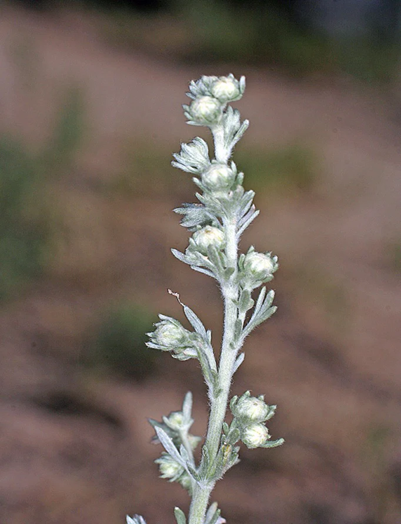
Fig 53.1: Close-up of Pasture Sage (Artemisia frigida), showcasing its distinctive silvery-green, finely divided leaves covered in soft hairs.
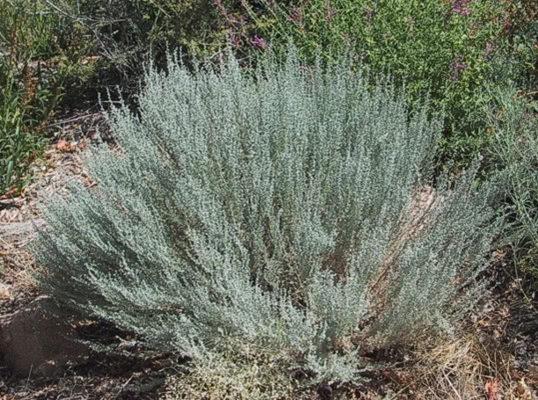
Fig 53.2: “Photograph of Pasture Sage in its natural habitat, displaying its low-growing, mound-forming structure.” (The image is a real photograph, not an illustration).
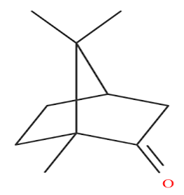
Fig 53.3: Chemical structure of camphor (C₁₀H₁₆O), a primary monoterpene in Pasture Sage.
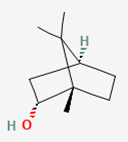
Fig 53.4: Chemical structure of borneol (C₁₀H₁₈O), one of the active monoterpenes in Pasture Sage.
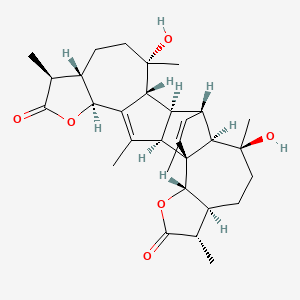
Fig 53.5: Chemical structure of absinthin (C₃₀H₄₀O₆), a bitter principle found in Pasture Sage.
General Information
Pasture Sage is a low-growing perennial subshrub in the sunflower family (Asteraceae) native to North America and northern Asia [10, 11]. This aromatic plant forms compact silvery mounds 4-16 inches tall (10-40 cm), spreading through rhizomes and creating attractive groundcover [12, 13]. The plant is covered with an abundance of fine, silky, silvery-white hairs giving it a distinctive grey-green appearance and soft, velvety texture [10, 12]. The leaves are deeply dissected and finely divided 3-5 times, appearing feather-like and clustered toward the base with scattered leaves along the stems. Small nodding yellow flower heads bloom from July to September in loose, leafy panicles [13]. The plant emits a strong aromatic scent, particularly when bruised, due to its high concentration of essential oils [4, 7].
Traditional Indigenous Uses
The Elders speak of Pasture Sage as a sacred and healing plant, one that carried both physical and spiritual medicine [2]. Its leaves were gathered with care, brewed into tea to clear the chest and lungs, easing coughs, colds, and heavy breathing [2]. The same tea helped settle the stomach, soothing heartburn and indigestion, while its strength brought down fevers and cooled the body during illness [2]. When the leaves were made into a wash or applied as a poultice, they drew out infection from wounds, reduced swelling, and kept the skin clean [2]. The whole plant, braided or crushed, could be placed across the forehead to ease headaches and stop nosebleeds, calming the flow of blood and pain alike [2].
Pasture Sage was also a companion in women’s medicine [2]. Its tea was used to bring comfort during menstruation and support balance in the body [2]. When burned as a smudge, its smoke cleans spaces and spirits, chasing away heaviness and bringing peace [2]. The people also burned it to drive away insects e.g. mosquitoes, fleas, and lice, all of which disliked the strong scent of its smoke [2]. Drunk regularly, its tea served as a general tonic, keeping the body well and the mind clear [2].
Biochemical Compounds and Their Medicinal Properties
Three Most Important Compounds:
(i) Camphor (C₁₀H₁₆O) – 6-20% of essential oil
(ii) 1,8-Cineole/Eucalyptol (C₁₀H₁₈O) – 12-30% of essential oil
(iii) Borneol (C₁₀H₁₈O) – 5-15% of essential oil
Medicinal Properties
- Respiratory support: Expectorant and bronchodilator effects [6]
- Anti-inflammatory: Reduces tissue inflammation [6, 8]
- Antimicrobial: Broad-spectrum antibacterial and antifungal activity [4, 7]
- Analgesic: Pain-relieving properties [9]
Three Most Important Compounds:
(i) Artemisinin-related compounds (C₁₅H₂₂O₅)
(ii) Absinthin (C₃₀H₄₀O₆) – Bitter principle
(iii) Artemisitene (C₁₅H₂₀O₃)
Most Important Compound:
Quercetin (C₁₅H₁₀O₇) – Major flavonol
Proposed Biochemical Mechanisms for Traditional Uses
Respiratory Support (Tea and Inhalation)
- Camphor and 1,8-cineole act as: [6]
- Expectorants increasing mucus secretion and clearance
- Bronchodilators relaxing airway smooth muscle
- Decongestants reducing nasal and bronchial inflammation
- Borneol provides: [4, 7]
- Antitussive (cough suppressant) effects
- Local anesthetic properties for throat irritation
- Antimicrobial action against respiratory pathogens
Wound Healing and Antimicrobial Action (Topical Applications)
- Essential oil monoterpenes provide: [4]
- Bacterial membrane disruption and cell death
- Anti-inflammatory effects reducing wound inflammation
- Enhanced tissue regeneration
- Sesquiterpene lactones contribute: [1, 8]
- Antimicrobial synergy with monoterpenes
- Anti-inflammatory effects via NF-κB inhibition
- Immune system modulation
Digestive Support (Teas and Decoctions)
- Bitter compounds (absinthin) stimulate: [1]
- Gastric secretions and digestive enzyme production
- Bile flow enhancing fat digestion
- Gastric motility improving overall digestion
- Camphor and cineole provide: [6, 7]
- Smooth muscle relaxation reducing cramping
- Anti-inflammatory effects on digestive tract
- Antimicrobial activity against gut pathogens
Chemical Reactions and Molecular Interactions
Respiratory Relief Mechanism (Monoterpenes)
1,8-Cineole → β₂-adrenergic receptor activation → ↑ cAMP → Bronchial smooth muscle relaxation → Improved airflow [6]
Camphor → TRPM8 cold receptor activation → Gate control mechanism → Pain signal inhibition → Reduced throat irritation [9]
Monoterpenes → Mucin gene expression ↑ → Enhanced mucus clearance [6]
Anti-inflammatory Mechanism (Multiple Compounds)
Sesquiterpene lactones → NF-κB pathway inhibition → ↓ Pro-inflammatory cytokines → Reduced tissue inflammation → Symptom relief [1]
Quercetin → COX-2 enzyme inhibition → ↓ Prostaglandin synthesis → Anti-inflammatory and analgesic effects [8]
Antimicrobial Action (Essential Oils)
Camphor + Cineole → Bacterial membrane disruption → Cell lysis → Increased membrane permeability → ATP leakage → Cell death [4]
Borneol → Bacterial protein sulfhydryl group binding → Enzyme inactivation → Metabolic disruption → Growth inhibition [4]
Digestive Stimulation (Bitter Compounds)
Absinthin → Bitter taste receptor activation → ↑ Gastric secretions → Enhanced digestive enzyme release → Improved digestion [1]
Monoterpenes → Smooth muscle calcium modulation → Reduced cramping → Relief of digestive discomfort [6, 7]
Analgesic Pathway (Camphor)
Camphor → TRPM8 cold receptor activation → Counter-irritant effect → Pain gate control at spinal cord → Reduced pain sensation [9]
Camphor → Voltage-gated Na+ channel blockade → ↓ Action potential → Local anesthetic effect → Pain relief [9]
Traditional Preparation Methods and Biochemical Optimization
Tea Preparation (Primary Traditional Method)
- Hot water infusion: Extracts water-soluble compounds and some volatile oils [2]
- Covered steeping: Prevents loss of volatile essential oils [2]
- Fresh vs. dried: Traditional knowledge distinguishes potency differences [2]
- Dosage timing: Multiple small doses throughout the day [2]
Inhalation/Steam Therapy
- Hot water with fresh leaves: Maximizes volatile compound release [2]
- Direct inhalation: Delivers monoterpenes to respiratory tract [2]
- Smudging: Releases antimicrobial compounds into air [2]
Topical Applications
- Fresh leaf poultice: Maximum essential oil content for wound healing [2]
- Decoction wash: Concentrated antimicrobial solution [2]
- Direct application: Simple and effective wound treatment [2]
Cultural and Ecological Significance
Ceremonial and Practical Uses
Pasture sage holds multiple cultural roles:
- Smudging ceremonies: Spiritual purification and blessing [2]
- Insect repellent: Burned to drive away mosquitoes and biting insects [2]
- Bedding material: Used in bedding to repel bedbugs, fleas, and lice [2]
- Aromatic purposes: Stuffed into pillows by pioneer women [11]
Ecological Role
- Drought tolerance: Thrives in dry, harsh conditions [10]
- Soil stabilization: Spreading rhizomes prevent erosion [10]
- Wildlife value: Provides food and cover for small mammals and birds [13]
- Grazing resistance: Aromatic oils deter excessive browsing [10]
Safety Considerations and Traditional Wisdom
Traditional Guidelines
Indigenous preparation methods emphasize:
- Appropriate dosing: Moderate use due to potent compounds [2]
- Duration limitations: Typically short-term applications [2]
- Proper preparation: Traditional methods optimize safety and efficacy [2]
- Individual sensitivity: Recognition of personal tolerance [2]
References
- Bora, K. S., & Sharma, A. (2021). Phytochemistry and pharmacological activity of the genus Artemisia. Pharmacognosy Reviews, 15 (30), 49–63. https://doi.org/10.4103/0973-7847.156353
- Elders and Community members of the Cayoose Creek Band of Sekw’el’was. (n.d.).
- Everwilde Farms. (2025). Artemisia frigida (fringed sage) wildflower seed. https://www.everwilde.com/store/Artemisia-frigida-WildFlower-Seed.html
- Frontiers in Chemistry. (2024). Chemical composition, antimicrobial, and antioxidant properties of essential oils from Artemisia species. Frontiers in Chemistry, 12. https://doi.org/10.1016/j.biortech.2007.09.002
- Grigore, A., Istudor, V., & Colceru-Mihul, S. (2023). Essential oils of Artemisia frigida plants (Asteraceae): Conservatism and lability of the composition. Plants, 12 (19), 3422. https://doi.org/10.3390/plants12193422
- Juergens, U. R. (2014). Anti-inflammatory properties of the monoterpene 1,8-cineole: current evidence for co-medication in inflammatory airway diseases. Drug Research, 64 (12), 638–646. https://doi.org/10.1055/s-0034-1372609
- Lopes-Lutz, D., Alviano, D. S., Alviano, C. S., & Kolodziejczyk, P. P. (2018). The Artemisia L. genus: A review of bioactive essential oils. Molecules, 23 (11), 2956. https://doi.org/10.3390/molecules23112956
- Phytochemical treasure troves—Insights into bioactivities, phytochemistry, and uses of Artemisia species. (2025). Phytochemistry Reviews. https://doi.org/10.1007/s11101-025-10163-0
- Selescu, T., Ciobanu, A. C., Dobre, C., Reid, G., & Babes, A. (2013). Camphor activates and sensitizes transient receptor potential melastatin 8 (TRPM8) to cooling and icilin. PLoS ONE, 8 (5), e64592. https://doi.org/10.1093/chemse/bjt027
- U.S. Department of Agriculture, Natural Resources Conservation Service. (2025). Plant fact sheet: Prairie sagewort (Artemisia frigida). https://plants.usda.gov/DocumentLibrary/factsheet/pdf/fs_arfr4.pdf
- Wikipedia. (2025). Artemisia frigida. https://en.wikipedia.org/wiki/Artemisia_frigida
- Wild Bloom Nursery. (2025). Artemisia frigida / mountain sage / pasture sagebrush. https://wildbloomnursery.com/products/artemesia-frigida-praririe-sagewort
- Wild Ones Front Range Chapter. (2024). Colorado native plant focus: Artemisia frigida. https://frontrange.wildones.org/colorado-native-plant-focus-artemisia-frigida/